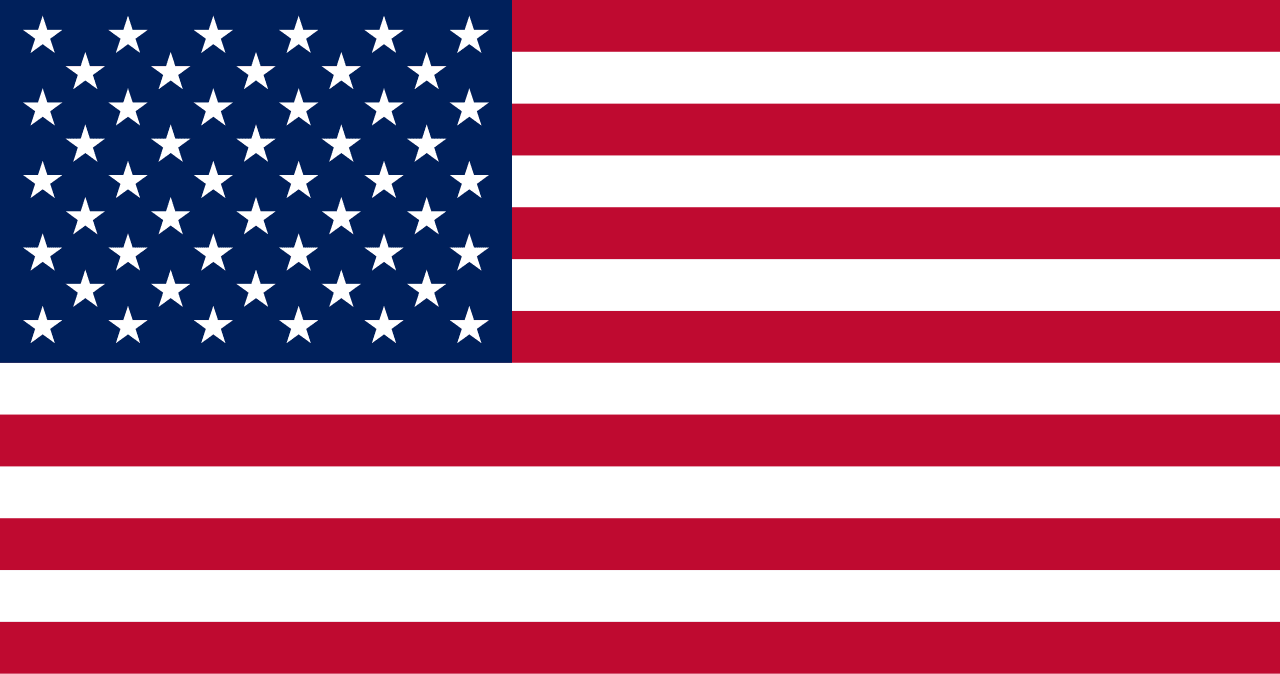
In the late eighteenth century, thirteen British colonies along the Atlantic seaboard of North America turned the philosophical currents of the American Enlightenment into armed rebellion.
On January 2, 1776, Stephen Moylan, an Irish-born merchant serving as an aide to General George Washington, sat down to draft a letter to Washington’s aide-de-camp, Joseph Reed. Seeking to travel to Spain to negotiate for arms and financial assistance in the opening months of the armed rebellion against the British Crown, Moylan wrote of his desire to go "with full and ample powers from the United States of America." It is the earliest documented written appearance of a name that, within months, would be broadcast to the world. By April, the phrase had migrated to the public sphere, appearing anonymously in the pages of the Williamsburg Virginia Gazette. By June, Thomas Jefferson was scratching the words onto a rough draft of the Declaration of Independence. On July 4, 1776, the Second Continental Congress adopted that declaration, discarding their status as colonial subjects to assume a collective identity that was as much a rhetorical gamble as a political reality.
This new entity was born into a landscape of ancient and complex human design. At least fifteen thousand years before the first European vessels sighted the Atlantic coastline, Paleo-Indians had crossed from North Asia into North America, migrating along the Pacific coast and through ice-free corridors that opened between the great glacial sheets. These first inhabitants formed highly sophisticated civilizations: the agricultural and architectural societies of the Mississippian cultures in the Midwest, East, and South; the Algonquian peoples of the Great Lakes and the Eastern Seaboard; and the Hohokam and Ancestral Puebloans in the arid Southwest. By the time Spanish explorers chartered Florida in 1513 and founded Saint Augustine in 1565—the first permanent European town in the modern contiguous territory—the Native population numbered between half a million and ten million. France followed, establishing footholds along the Great Lakes, the Mississippi River, and the Gulf of Mexico, while the Dutch and Swedes briefly claimed the Hudson and Delaware valleys. Yet it was the British settlements, beginning with Virginia in 1607 and Plymouth in 1620, that laid the structural, legal, and demographical foundations of the thirteen colonies that would eventually break the empire.
By the early 1780s, the fragile union of these colonies had survived the crucible of war, but its survival as a singular political organization remained deeply uncertain. In 1781, the surrender of the British army at Yorktown effectively ended major military operations, and two years later, the 1783 Treaty of Paris brought formal international recognition of the new nation's sovereignty, securing borders that stretched west to the Mississippi River, north to British Canada, and south to Spanish Florida. But the government that inherited this vast territory was not the robust federal republic of modern times. It was a highly decentralized confederation governed by the Articles of Confederation, drafted in 1777 but not fully ratified until 1781. The articles established a national structure so weak that it functioned more as a treaty of friendship among thirteen independent republics than a single sovereign state.
This was the delicate state of the Union in 1784. The year began with a quiet milestone: on January 14, 1784, the Confederation Congress, meeting in Annapolis, Maryland, ratified the Treaty of Paris, officially closing the war and setting the parameters of the post-revolutionary frontier. Throughout that year, the "United States" existed in a state of profound political suspension. The central government lacked an executive branch, a national judiciary, and—most critically—the power to levy taxes or regulate commerce directly. It was an organization defined by its anxieties: a deep-seated philosophical dread of monarchy and centralized corruption, balanced against the chaotic reality of thirteen separate states enacting their own tariffs, printing their own currencies, and conducting their own foreign policies. The revolutionary leaders who had designed this system—figures like George Washington, Thomas Jefferson, John Adams, Benjamin Franklin, Alexander Hamilton, John Jay, and James Madison—found themselves presiding over a peace that threatened to dissolve the very union they had fought to secure.
The intellectual architecture of this fragile republic was a product of the American Enlightenment, which had swept through the colonies during the eighteenth century. Drawing deeply from Classical, Renaissance, and European Enlightenment philosophies, the founders championed a radical set of political values: the sovereignty of the people, the preservation of inalienable natural rights, civic virtue, and a fierce commitment to republicanism over hereditary power. Yet these high-minded ideals existed alongside stark, unresolved paradoxes. The rapid growth of the colonial population—which by the 1770s was expanding primarily through natural increase rather than foreign birth—had systematically displaced Native American populations through warfare, treaty-breaking, and forced assimilation. Furthermore, the economic prosperity of the Southern colonies was built directly upon the Atlantic slave trade, which trafficked millions of Africans to labor on plantations. The new nation was thus founded upon a fundamental contradiction between the universal promise of liberty and the legal, racialized subjugation of enslaved people and Indigenous nations.
In 1784, these domestic contradictions were shadowed by the vast, unmapped expanse of the West. The Treaty of Paris had suddenly transferred millions of acres of Indigenous-controlled and European-claimed land to the United States, sparking an era of rapid, often violent territorial expansion. The Confederation Congress spent much of 1784 trying to devise a system to survey, sell, and govern these western lands, aiming to pay off staggering war debts without triggering renewed conflict with Native tribes or European neighbors. The challenge of organizing this territory highlighted the limits of the Articles of Confederation and accelerated the calls among nationalists like Hamilton and Madison for a more powerful central authority.
This tension between local autonomy and national cohesion would define the trajectory of the United States for the next century. The weak confederation of 1784 eventually gave way to the Constitutional Convention of 1787, which replaced the Articles with a new federal constitution. This document created a representative democracy with a separation of powers across three branches—legislative, executive, and judicial—while preserving substantial autonomy for the states. Yet the unresolved compromise over slavery embedded within that very Constitution eventually fractured the nation. In 1861, eleven Southern states attempted to secede to preserve the institution of slavery, launching the American Civil War. The victory of the Union forces in 1865 reunited the country, abolished slavery nationally, and cemented the federal government's supremacy over the individual states.
By the turn of the twentieth century, the nation that had struggled to assert its authority over its own territory in 1784 had transformed into a major global power. This status was solidified during the world wars, culminating in the mid-twentieth century when the United States emerged as a global superpower, first competing with the Soviet Union during the Cold War and later standing as the sole superpower after the Soviet collapse in 1991. What began as a precarious league of thirteen former British colonies on the Atlantic seaboard grew into a massive federal republic of fifty states, spanning from the Atlantic to the Pacific, encompassing over 340 million people, and wielding unprecedented economic, cultural, and military influence. The organization devised in the revolutionary crucible of the late eighteenth century ultimately reshaped the geopolitical landscape of the modern world, its enduring institutions still carrying the birthmarks of the ideals and compromises of its founding era.
+ 8 further connections to entries not yet ingested