Haitian Revolution
- Also known as
- Cách mạng Haiti
- Den Haitianske Revolution
- Den haitiske revolusjon
- Den haitiske revolusjon
- Den haitiske revolusjonen
- Den haitiske revolusjonen
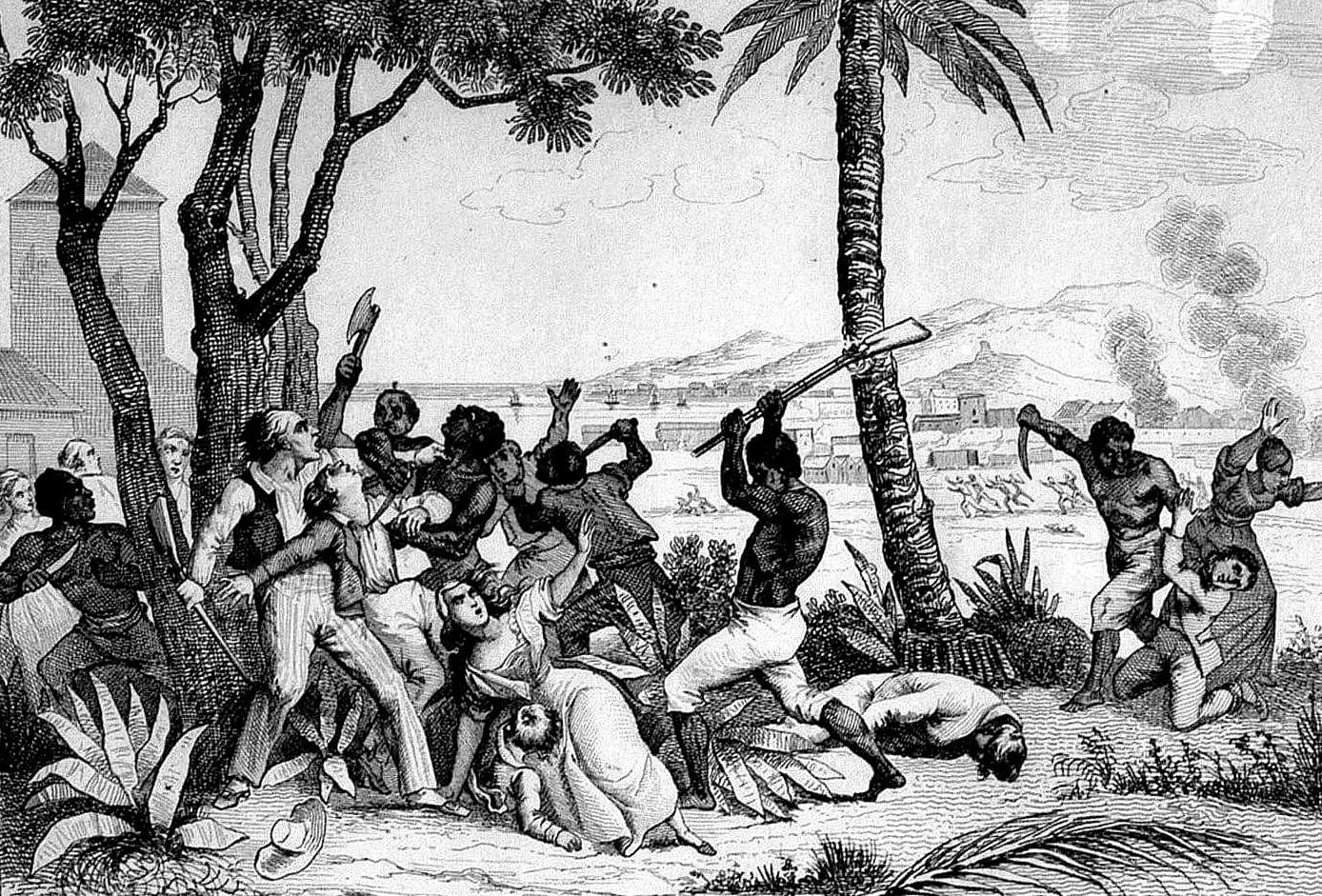
No other event in the history of the Atlantic world so radically upended the global order as the night of August 22, 1791, when enslaved Africans rose up in the French colony of Saint-Domingue.
By the final decades of the eighteenth century, the French colony of Saint-Domingue was both the economic marvel of the Atlantic world and its most terrifying underworld. A mere speck of territory occupying the western third of Hispaniola, it was the engine of French colonial wealth, producing sugar, coffee, indigo, and cocoa on a scale that eclipsed the output of the entire British Caribbean. Some six hundred ships crossed the Atlantic annually to carry these riches to European ports, sustaining the livelihoods of millions of French citizens. Yet this staggering wealth was conjured out of a slaughterhouse. Under the tropical sun, half a million enslaved Africans labored under a regime of unparalleled violence, where French planters openly flaunted the regulatory limits of the royal Code Noir. The calculus of the plantations was brutally simple: because yellow fever and malaria decimated newly arrived laborers within a year, it was deemed more profitable to work them to death and import fresh replacements than to provide them with adequate food, shelter, or medical care. In this feverish, highly stratified colony, a tiny white elite (les blancs) ruled over a massive, seething majority of enslaved people by a ratio of ten to one, while a wealthy, educated class of free people of mixed-race and African descent (gens de couleur libres) occupied a precarious middle ground, envied, despised, and legally restricted by the white ruling class. Saint-Domingue was a society structured by mutual hatred, where everyone, quite rightly, lived in terror of everyone else.
The catalyst for the unraveling of this lucrative hellscape came from the metropole itself. When the French Revolution erupted in 1789, its foundational promises of liberty, equality, and the rights of man reverberated across the Atlantic, carrying entirely different meanings to each tier of Saint-Domingue’s population. While white colonists saw an opportunity to gain home rule, the free people of color demanded the civic equality promised by the new French National Assembly. In 1790, a wealthy free man of color named Vincent Ogé led a brief, armed revolt to secure voting rights for his class. Though his rebellion was crushed and Ogé was executed, the destabilization of the white colonial administration shook the foundations of the slave regime. The deep structural fractures of the colony burst wide open. The enslaved majority, who spoke a common language in Haitian Creole and maintained a shared, resilient spiritual identity through Vodou—a syncretic belief system that implicitly rejected their subhuman status—recognized that the white authorities were divided and vulnerable.
The spark was struck on the night of August 22, 1791, in the northern plain of the island, where the concentrations of sugar plantations and enslaved laborers were densest. The conspirators, drawing on networks of communication that ran through plantations, forest hideouts, and maroon camps, launched a massive, coordinated insurrection. Within weeks, the highly organized rebels turned the tools of their torment into weapons, burning cane fields, destroying mills, and executing planters. The scale of the uprising was unlike anything the Americas had ever witnessed; it was the largest slave revolt since the failed campaign of Spartacus against the Roman Republic nearly nineteen centuries prior. Unlike earlier, localized maroon raids, this was a systematic war to dismantle the slave system. Despite European assumptions of Black intellectual inferiority, the rebels demonstrated a sophisticated grasp of military strategy and geopolitical maneuvering, holding their ground against local militias and French troops alike.
Connected to
9 links to entries not yet ingested in the Library.