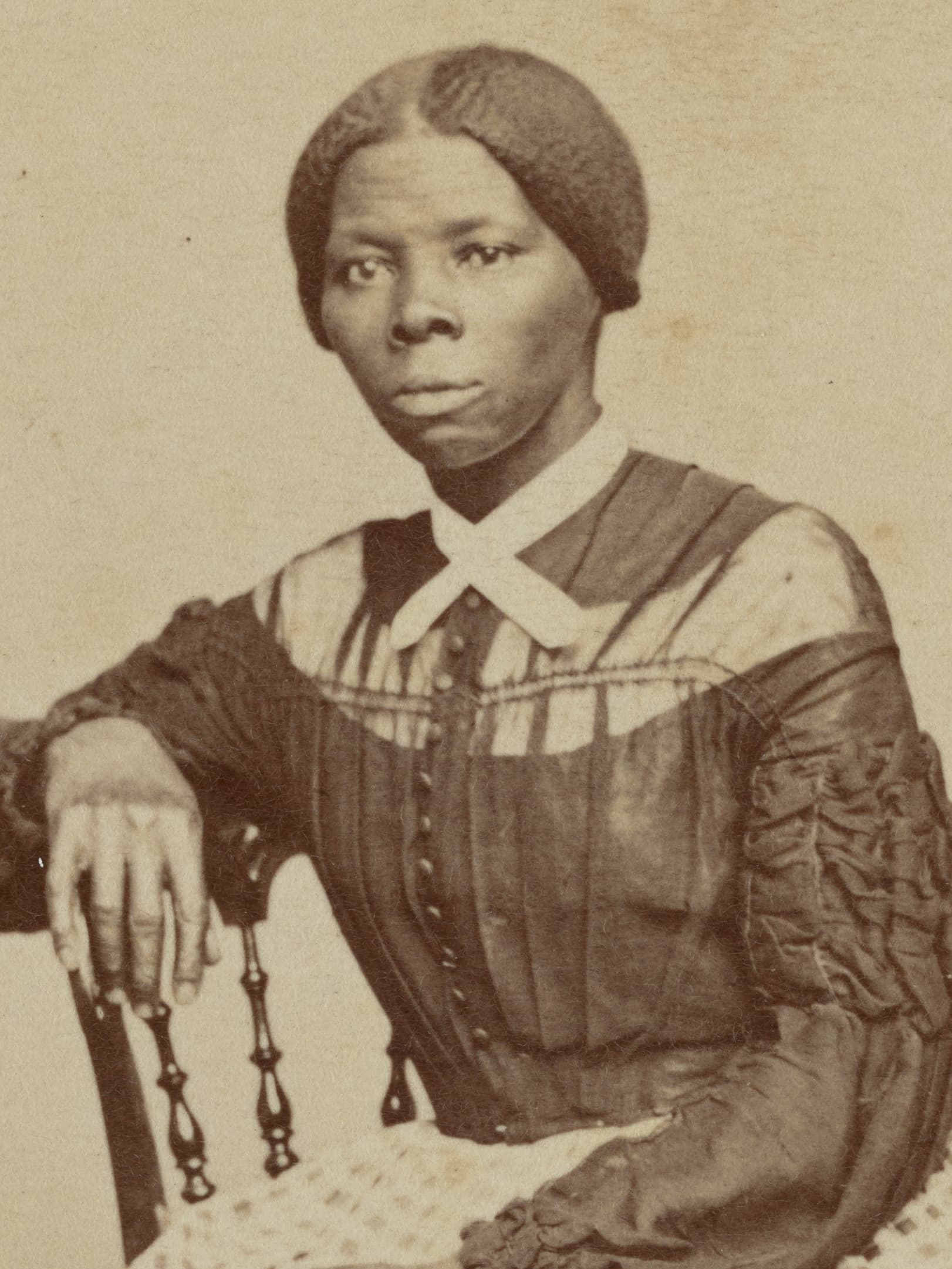
A heavy metal weight, thrown by an angry overseer at another enslaved person, struck the young Araminta Ross in the head instead, fracturing her skull.
To survive childhood on the Eastern Shore of Maryland in the 1830s, Araminta Ross had to learn how to absorb violence and turn it into something else. She was born into the marshy, timber-heavy expanse of Dorchester County around March 1822, a world where the boundaries between slavery and freedom were constantly shifting but always brutal. Her maternal grandmother had arrived in the Americas on a slave ship from Africa; her mother, Rit, was a cook who fought with fierce, desperate courage to keep her nine children from being sold south. She once hid her youngest son in the woods for a month and threatened to split open the head of the first man who came to take him. Araminta inherited this spirit of resistance, but she also inherited the physical reality of her condition. Hired out as a nursemaid at just five or six years old, she was whipped repeatedly whenever the baby she tended cried—scarred so deeply that the marks remained on her back for the rest of her life. She was forced to check muskrat traps in frozen marshes while suffering from measles, and later dragged logs and drove oxen in the forests alongside her father, a skilled woodsman.
The defining physical trauma of her life arrived during her adolescence. Standing inside a dry-goods store, she found herself in the middle of a confrontation between an enraged overseer and a young enslaved man who had left his plantation without permission. When the young man ran, the overseer grabbed a heavy, two-pound metal weight from the counter and hurled it. It missed its target and struck Araminta squarely in the skull. She was carried back to her owner’s house bleeding and unconscious, laid unceremoniously on the seat of a loom, and left there without medical attention for two days before her mother was allowed to nurse her. She remained in a comatose state for weeks. When she finally woke, she was changed. For the rest of her life, she suffered from intense headaches, sudden seizures, and bouts of hypersomnia that would cause her to fall into deep, trance-like sleeps in the middle of a conversation, though she maintained she remained aware of the world around her during these episodes.
Yet, out of this fractured skull came something mystical. The physical trauma precipitated a lifetime of vivid dreams, auditory hallucinations, and ecstatic premonitions that she interpreted as direct communications from God. Raised in the Methodist tradition and steeped in the Bible stories her mother told her, the young woman—who would soon adopt her mother’s name, Harriet—rejected the passive, submissive Christianity preached by white ministers. Instead, she aligned her spirit with the Old Testament God of the Hebrews, a deity of active deliverance, plagues, and parted waters. When she married John Tubman, a free Black man, around 1844, the structural impossibility of her life became even more acute. Under Maryland law, any children they had would inherit her status as property. By the late 1840s, half of the Black population on the Eastern Shore was free, creating a landscape where liberty was always visible, just out of reach, and constantly threatened.
+ 12 further connections to entries not yet ingested
The catalyst for her flight came in 1849. After a long illness that diminished her market value, her enslaver, Edward Brodess, died, leaving his estate in debt and his widow, Eliza, preparing to sell off the family's human property. Knowing she would likely be sent to the deep South, Tubman decided to take her destiny into her own hands. She later recalled the absolute clarity of her choice: "There was one of two things I had a right to, liberty or death; if I could not have one, I would have the other." Her first attempt, in September of that year, was made alongside her brothers, Ben and Henry. But as they navigated the dark roads, her brothers, terrified of the consequences and perhaps reluctant to leave the families they had left behind, forced her to turn back with them.
A few weeks later, Tubman set out again, entirely alone. Before she vanished into the autumn night, she walked past the slave quarters singing a farewell song to a trusted friend, her voice carrying a double meaning through the dark: “I’ll meet you in the morning... I’m bound for the promised land.”
Using the complex, clandestine network of safe houses, sympathetic free Black communities, and white abolitionists known as the Underground Railroad, Tubman traveled by night, guided by the North Star and her own quiet, intuitive sense of direction. When she finally crossed the border into Pennsylvania, a free state, she looked down at her hands to see if she was the same person. "There was such a glory over everything," she later reflected. "The sun came like gold through the trees, and over the fields, and I felt like I was in Heaven."
But the glory of personal survival was not enough. Finding work as a domestic in Philadelphia, she saved her money with a singular focus: she was going back. Over the next decade, Tubman made approximately thirteen separate expeditions back into the heart of Maryland’s slave territory. She became "Moses," a legendary, elusive figure who operated with a cold, military precision. She traveled during the winter when the nights were longest, used disguised identities, and employed strict operational security. She never lost a single passenger on her journeys. When the Fugitive Slave Act of 1850 made even northern free states unsafe for escaped slaves by requiring their return to their owners, Tubman simply extended her route, guiding her charges all the way to British North America—modern-day Canada—where they could find genuine legal safety and employment.
Her reputation as an organizer of immense courage caught the attention of the radical abolitionist John Brown, who met her in 1858. Brown, who referred to her respectfully as "General Tubman," sought her deep intelligence of the Southern landscape and her recruitment skills as he planned his fateful 1859 raid on the federal armory at Harpers Ferry. Though Tubman did not join the raid itself, her collaboration with Brown marked her transition from a regional rescuer to a national revolutionary figure.
When the American Civil War broke out, Tubman offered her services to the Union Army. She traveled south to South Carolina, where she initially worked as a nurse and a cook, treating soldiers suffering from dysentery and smallpox with traditional herbal remedies. But her unique talents lay in espionage. Because she could move unnoticed through the Southern countryside, she organized a highly effective scout and spy ring for the Union forces, gathering critical intelligence on Confederate troop movements and river fortifications.
This intelligence work culminated in June 1863, when Tubman helped plan and lead an armed assault along the Combahee River. Accompanying Colonel James Montgomery and a regiment of Black Union soldiers, Tubman guided three federal gunboats past Confederate mines and river obstacles. The raid caught the local plantations completely by surprise. As the steam whistles blew, hundreds of enslaved people rushed to the riverbanks to be rescued. In a single, chaotic, triumphant morning, the operation liberated more than 700 people, securing Tubman’s place in history as the first woman to plan and help execute an armed military operation in the United States.
When the war ended, Tubman retired to a modest piece of land she had purchased in Auburn, New York, where she spent her remaining decades caring for her elderly parents and opening her home to anyone who needed shelter. She threw herself into the women's suffrage movement, attending conventions and speaking alongside leaders like Susan B. Anthony, reminding audiences that Black women had stood on the front lines of the nation's bloodiest struggle for freedom and deserved a voice in its future.
As her health failed, a consequence of the lingering effects of the brain injury she had received as a teenager, she entered a home for aged and indigent African Americans that she had spent years raising funds to establish. She died there in March 1913, having lived to see the system that once claimed her as property dismantled, and leaving behind a legacy as one of the great strategists of American liberty.