Event · 1760 CE – 1820 CE · Industrial Revolution
Industrial Revolution
- Also known as
- an Réabhlóid Thionsclaíoch
- Cách mạng công nghiệp
- den industrielle revolusjon
- den industrielle revolusjonen
- den industrielle revolusjonen
- Den industrielle revolution
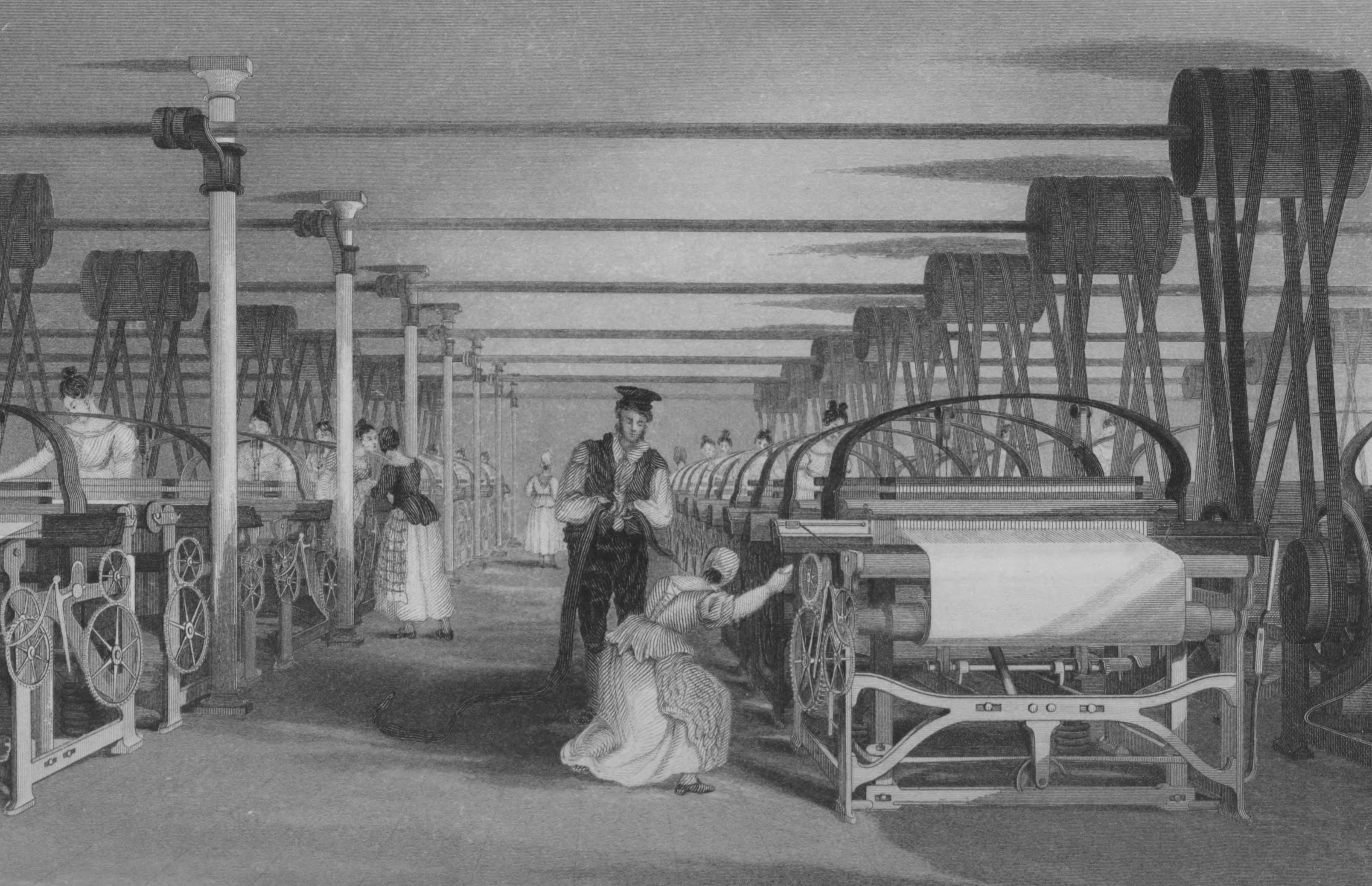
For millennia, the material limits of human existence were defined by the muscle of beasts and the strength of a worker's hand.
In the 1790s, the visionary poet William Blake looked out at the changing English landscape and wrote of "dark Satanic Mills" rising where green fields once stood. He was among the first to sense that a tectonic shift was underway, though he lacked the vocabulary to name it. In 1799, a French envoy named Louis-Guillaume Otto officially announced that his country had entered a race to industrialize, using the phrase révolution industrielle. It was a quiet linguistic birth for a phenomenon that would eventually shatter millennia of human economic continuity. For almost all of recorded history, the limits of human achievement had been bound by the muscles of men and beasts, the flow of rivers, and the whims of the wind. Within a span of sixty years, beginning around 1760, those ancient limits dissolved. Historians look back on this transition as the most profound transformation in human history, comparable only to the prehistoric adoption of agriculture. It was an era that took a world of hand-carved wood, muscle, and thatch, and recast it in iron, steam, and coal.
The crucible of this transformation was Great Britain, a nation that by the mid-eighteenth century enjoyed a unique alignment of geographical, geological, and social fortunes. It was a period succeeding the Second Agricultural Revolution, which had dramatically raised farming productivity, freed up massive amounts of labor, and secured consistent food surpluses. Britain was already the world’s leading commercial power, possessing a legal system favorable to business, political stability, and an abundant supply of financial capital. Underneath its soil lay vast, easily accessible deposits of coal and iron ore, while its surface was carved by an intricate, highly efficient network of rivers, canals, ports, and roads. Before the machine took over, proto-industrialization in various corners of the globe—from Mughal India and Qing Dynasty China to the Islamic world and continental Europe—had prepared the global economic soil. But it was in the damp valleys of Lancashire and the busy workshops of the English Midlands that these forces catalyzed into something entirely new.
No industry felt the shock of this transformation earlier or more violently than textiles. In 1750, Britain’s textile trade was a quiet, domestic affair. Raw cotton, amounting to a modest 2.5 million pounds, was imported and distributed to families working in their cottages. In these homes, mothers and daughters spun thread on simple wheels, and fathers wove cloth on hand looms. It was a slow, decentralized process, and British producers found it impossible to compete with the exquisite, inexpensive hand-woven cottons of India, where labor costs were low and expertise was ancient. To survive, the British industry had to mechanize. What followed was a cascade of inventions that systematically broke every bottleneck in production. By the 1780s, water-powered spinning machines were being gathered under the roofs of massive, multi-story factories. By 1800, raw cotton consumption in Britain had skyrocketed to 52 million pounds; by 1850, it reached a staggering 588 million pounds. The number of spindles in British mills grew from a mere 50,000 in 1788 to seven million over the next thirty years. Mechanized spinning, powered first by water and later by steam, increased an individual worker’s output by a factor of five hundred.
Connected to
9 links to entries not yet ingested in the Library.