Event · Enlightenment and Revolutions
abolitionism
- Also known as
- Abalishanizam
- aboliciismo
- abolicionisme
- abolicionismo
- Abolicionismo
- abolicionismo
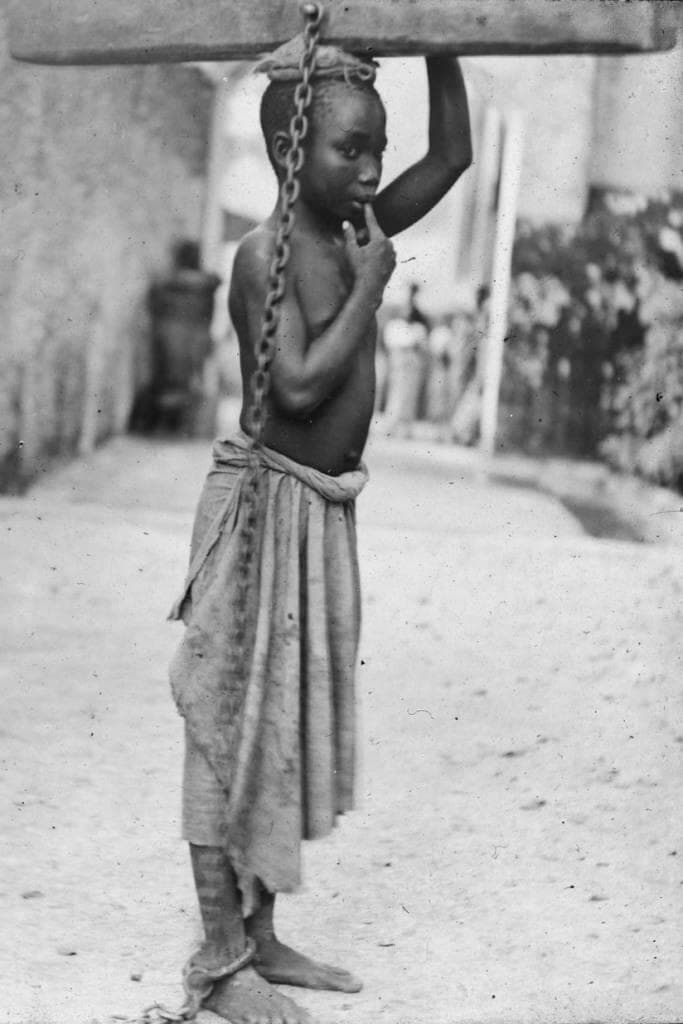
The global dismantling of slavery did not begin as a single, coordinated campaign, but rather as a centuries-long sequence of local ruptures and legal shifts.
In 1315, Louis X of France published a decree that carried the weight of a theological and geographical revelation: "France signifies freedom." He proclaimed that any slave setting foot on French metropolitan soil should instantly be set free. It was a beautiful, severe piece of legal philosophy, but it contained a quiet, geography-dependent escape hatch. Over the next five centuries, as France and other European empires stretched their arms across the Atlantic, they proved that they could believe in absolute human dignity at home while building the most lucrative, brutal system of chattel slavery the world had ever seen in their overseas colonies. The history of abolitionism is not a neat, linear march toward enlightenment; it is a violent, halting story of contradictions, where the legal ideals of the metropole were repeatedly shattered, rewritten, and forced into reality not by the benevolence of kings and philosophers, but by the desperate, armed resistance of the enslaved themselves.
For centuries, European empires operated under a dual moral reality. In 1571, when a Norman merchant docked in Bordeaux attempting to sell a cargo of human beings, he was promptly arrested. The Parlement of Guyenne declared that slavery was intolerable within the kingdom, reaffirming the ancient free-soil principle. Yet, across the ocean, the French Crown codified the horrors of colonial sugar plantations with the Code Noir in 1685. The code was a bizarre document of legal schizophrenia. It authorized and systematized brutal corporal punishments, yet it also granted enslaved people the right to marry, forbade owners from separating families, and insisted that enslaved Africans receive instruction in the Catholic faith—acknowledging, in a way the English colonies never did, that these laborers were human beings endowed with eternal souls. This small legal crack allowed a unique social structure to emerge, particularly in Louisiana and Saint-Domingue, where a literate, property-owning class of free people of color grew to prominence. But the core of the system remained a monstrous engine of labor and death, sustained by the Atlantic slave trade.
The intellectual assault on this engine began in earnest during the eighteenth century. In England, James Oglethorpe articulated an early Enlightenment critique, banning slavery in the colony of Georgia on humanitarian grounds and taking his arguments to Parliament. In France, the intellectual vanguard of the Age of Enlightenment began to chip away at the moral foundations of the trade. Montesquieu turned his sharp wit against the justifications for bondage in The Spirit of the Laws (1748), while Denis Diderot used the pages of his massive Encyclopédie to attack the economic and moral validity of owning humans. By 1788, Jacques Pierre Brissot had founded the Société des Amis des Noirs (Society of the Friends of the Blacks) in Paris, joining a growing transatlantic network of abolitionists who believed that the slave trade could be argued out of existence through pamphlets, assemblies, and appeals to Christian conscience.
But the enslaved did not wait for the philosophers to win the debate. In August 1791, the northern plains of Saint-Domingue—the wealthiest sugar colony on earth—erupted in the largest and most successful slave revolt in human history. Led by figures like Georges Biassou, Toussaint L’Ouverture, and Jean-Jacques Dessalines, the rebellion turned the island’s sugar fields into a crucible of war. Confronted with a massive uprising and desperate to keep the colony loyal to revolutionary France amidst wars with Britain and Spain, the French Civil Commissioners Léger-Félicité Sonthonax and Étienne Polverel issued the first emancipation proclamation of the modern world in 1793. Seeking to codify this strategic and moral necessity, the National Convention in Paris, under the leadership of Maximilien Robespierre, formally abolished slavery across France and all its colonies on February 4, 1794. The decree promised financial compensation to slave owners, but its true historical weight lay in its radicalism: it was the first time a major colonial empire had declared slavery universally illegal.
This triumph was tragically brief. As the French Revolutionary Wars raged on, colonial planters lobbied desperately for a return to the old order. Terrified of losing the Caribbean islands to the British—who still actively permitted slavery—and influenced by his wife Josephine’s slaveholding family, Napoleon Bonaparte decided to undo the revolution’s greatest moral achievement. With the law of May 20, 1802, Napoleon re-established slavery and dispatched more than twenty thousand troops to the Caribbean to enforce it. In Guadeloupe, Colonel Louis Delgrès launched a heroic but doomed rebellion against the French forces, choosing death over re-enslavement. In Saint-Domingue, however, the French expedition met a disastrous end. Yellow fever decimated two-thirds of the French troops, and the fierce resistance of L’armée indigène culminated in the decisive Battle of Vertières. On January 1, 1804, Saint-Domingue declared its independence as Haiti—the first and only nation in history born of a self-liberated slave rebellion. This humiliating defeat forced Napoleon to abandon his dreams of an American empire, prompting him to sell the vast Louisiana Territory to the United States. Yet France exacted a bitter vengeance, refusing to recognize Haitian independence until 1825, and only then in exchange for a crushing indemnity that impoverished the young republic for generations.
The fall of Napoleon did not immediately end the struggle in the remaining French colonies. While Great Britain outlawed the slave trade in 1807 and liberated the enslaved in its colonies in 1833, France lagged behind. The French government signed the multilateral Treaty for the Suppression of the African Slave Trade in 1841, but King Louis Philippe I, wary of domestic planters, refused to ratify it. It was not until the revolution of 1848 and the birth of the Second Republic that a decree-law, penned by the radical abolitionist Victor Schœlcher, abolished slavery in the French empire for the second and final time. The state purchased the enslaved people from the white colonists (Békés) and set them free.
As the nineteenth century drew to a close, the geography of abolition shifted. The focus turned to ending the institution in the last remaining holdouts of the Americas, with Brazil becoming the final nation in the Western Hemisphere to outlaw slavery in 1888. Simultaneously, European powers used the language of abolition as a moral justification for the partition and colonization of Africa. By 1900, France had claimed vast territories in West Africa, officially outlawing slavery in most of French West Africa in 1905, though local practices in Senegal, Soudan, and the Sahel persisted for years due to lax enforcement.
The twentieth century transformed abolitionism from a series of national battles into a campaign of international law. The League of Nations established various committees in the 1920s and 1930s to investigate forced labor, leading to the 1926 Slavery Convention. By 1948, the United Nations enshrined the absolute prohibition of slavery in the Universal Declaration of Human Rights. The last legal bastions of institutional chattel slavery fell in the mid-to-late twentieth century, as Saudi Arabia and Yemen abolished the practice in 1962, followed by Oman in 1970, and finally Mauritania, which issued a presidential decree banning slavery in 1981.
Though modern international law declares human bondage illegal everywhere, the legacy of the struggle remains active and unresolved. In 2001, France passed the Taubira law, officially recognizing the Atlantic slave trade and slavery as a crime against humanity, designating May 10 as a national day of remembrance. It was a formal acknowledgment of a truth that the rebels of Saint-Domingue had asserted with their lives centuries earlier: that the promise of human liberty cannot be bounded by borders, geography, or the convenience of empires.
Connected to
2 links to entries not yet ingested in the Library.