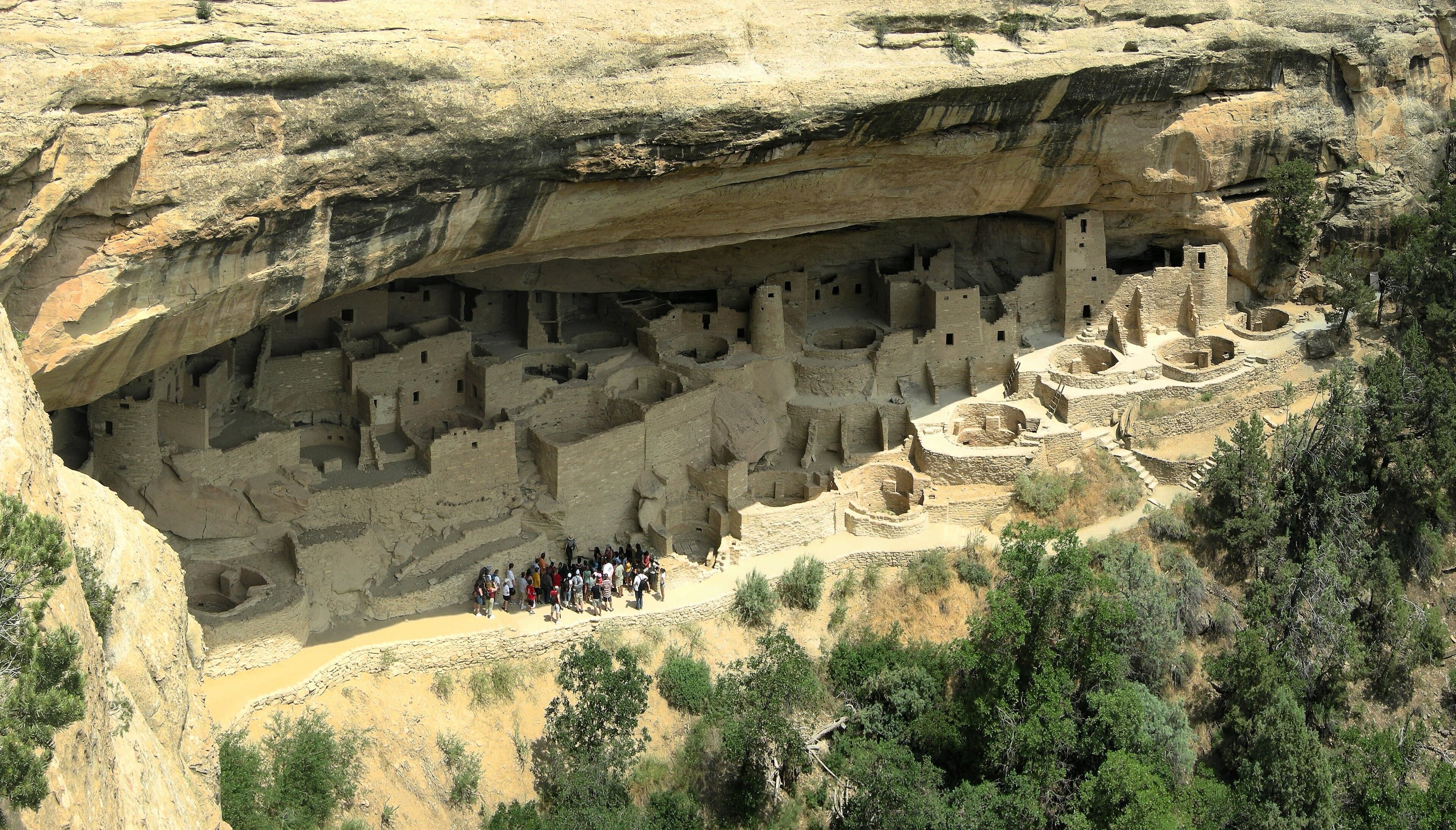
Built directly into the sheer rock faces of southwestern Colorado, the sandstone ruins of Mesa Verde stand as the largest archaeological preserve in the United States.
High on the sandstone tables of the American Southwest, where the land splits into deep, shadow-carved canyons, lies a silent architecture built into the very bones of the earth. Long before these canyon walls were designated as Mesa Verde National Park in 1906, they held the physical memory of a civilization that rose, flourished, and vanished into the southern horizons. To stand before Cliff Palace—the largest of these structures, a sprawling complex of multi-storied rooms, towers, and circular ceremonial chambers tucked beneath a massive alcove of pale stone—is to confront a profound historical mystery. It is a monument of dense, urban permanence built by a people who, for thousands of years, had survived by knowing exactly when to move.
The human story of this "green table" began not with masonry and mortar, but with the quiet, seasonal rhythms of nomadic Paleo-Indians. Around 9500 BCE, as the massive glaciers blanketing the nearby San Juan Mountains began their slow retreat, nomadic bands belonging to the Clovis and Folsom traditions drifted through the lowlands of the Four Corners region, following herds of big game along rivers that would eventually run dry. For millennia, Mesa Verde itself remained largely a backdrop to this highly mobile existence. It was only after 7500 BCE, as the climate warmed and dried, that a group known as the Foothills Mountain Complex began to ascend the mesa in greater numbers. The spears of these early hunters, tipped with projectile points reflecting stylistic influences from the Great Basin, the San Juan Basin, and the Rio Grande Valley, were soon aided by the atlatl—a throwing board that gave hunters the leverage to bring down smaller, swifter game in the newly established pine forests.
As the centuries rolled into the Archaic period around 6000 BCE, these nomadic patterns slowly consolidated. Confronted by a major warming and drying trend between 5000 and 2500 BCE, families migrated toward the cooler, higher elevations of the mesa, where winter snowpack and spring rains offered a rare and reliable supply of water. By the late Archaic period, the ancestors of the Puebloans were no longer merely passing through; they were inhabiting semi-permanent rock shelters, leaving behind remarkably preserved remnants of their daily lives. In the dry dust of these alcoves lay finely woven sandals, sleeping mats, and small twig figurines shaped like deer and sheep. They traded with distant networks, bringing obsidian, turquoise, and shimmering Pacific abalone shells into the canyons. By 1000 BCE, the first seeds of corn made their way to the mesa, initiating a slow but irreversible shift from foraging to farming.
9 links to entries not yet ingested in the Library.
This botanical import sparked the transition to the Basketmaker culture, so named for the exquisite, watertight baskets woven in the era before pottery. By 300 CE, corn had conquered the local diet. The physical toll of this agricultural transition is written clearly in the skeletal remains of the Basketmakers: short, muscular men and women whose bones bear the scars of hard labor, degenerative joint disease, and the moderate anemia of an iron-deficient, grain-heavy diet. Yet, their lives were rich with symbolic expression. They pecked images of animals, abstract figures, and the hunchbacked, flute-playing Kokopelli into the varnished sandstone walls. Around 500 CE, the introduction of the bow and arrow replaced the atlatl, while the invention of pottery revolutionized food preservation. Clay pots shielded seeds from dampness and rodents, and allowed the Basketmakers to simmer stews over open hearths, fostering a more sedentary, village-centric life.
The true transformation of the landscape, however, began with the Pueblo I period around 750 CE. It was during this era that the Ancestral Puebloans abandoned their subterranean pit-houses as primary residences and began constructing above-ground, interconnected homes made of wood, mud, and stone. They doubled their food storage capacity, preparing for two years of crop failures rather than one. This transition to a sedentary, communal existence forever altered their society. In the span of a single generation, the typical hamlet grew from a few isolated households to villages of two hundred people. The old pit-houses were repurposed into deep, subterranean ceremonial chambers called kivas and protokivas, serving as the spiritual heart of the community. Within these plazas, the Puebloans dug massive, 800-square-foot pit structures that could accommodate hundreds of people—precursors to the great architecture of the region.
By 860 CE, the population of Mesa Verde had swelled to approximately 8,000 residents, but this early golden age was fragile. A series of unpredictable monsoons and dry spells at the end of the ninth century forced a sudden, massive migration south toward Chaco Canyon, which supplanted the mesa as the cultural center of the region. Yet, the people eventually returned, and by the late twelfth century, they began constructing the spectacular cliff dwellings that define the modern imagination of Mesa Verde. For reasons still debated by archaeologists—ranging from defense against rivals to thermal efficiency and the preservation of arable mesa-top land—the Puebloans moved their homes down from the flat mesa tops into the natural alcoves of the canyon walls. Here, they built architectural wonders like Cliff Palace, shaping sandstone blocks with stone tools and mortar made of dirt and water, living in multi-level complexes that housed hundreds of people side-by-side.
This cliff-bound climax was brilliant but brief. By 1285 CE, a series of severe, prolonged droughts, compounded by social instability and depleted resources, forced the Ancestral Puebloans to make a final, permanent departure. They abandoned their stone cities intact, leaving their pottery, their kivas, and their towers to the dry canyon air, and migrated south to Arizona and New Mexico, where their descendants live to this day. When President Theodore Roosevelt signed the act establishing Mesa Verde National Park on June 29, 1906, it was a landmark moment for American preservation—the first national park created specifically to protect the cultural works of human beings rather than merely natural wonders. Today, the park preserves over 5,000 archaeological sites, including 600 cliff dwellings, spanning more than 50,000 acres. These stone cities, built into the silence of the cliffs, stand as a monument to a society that mastered a challenging landscape, flourished in communion with it, and possessed the wisdom to walk away when the earth demanded it.