Organization · 1949 CE · Modern Europe
Germany
- Also known as
- A' Ghearmailt
- A-lê-ma-nha
- Alamagn
- Alemagne
- Alemagnes
- Alemaina
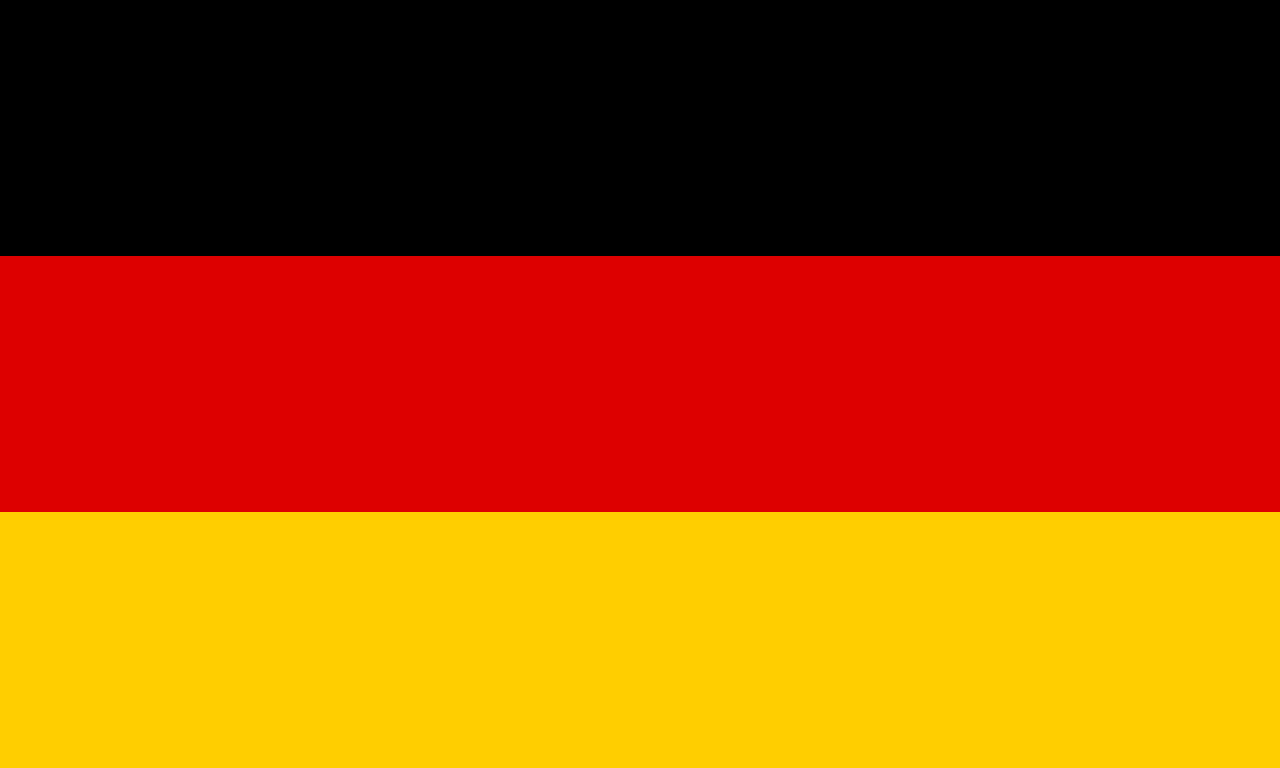
Long before it existed as a single nation, the territory that would become Germany was defined by its language.
In the late spring of 1949, a new geography of European power was formalized not by the movement of armies, but by the quiet assembly of jurists, politicians, and occupying administrators. Four years after the total collapse of the Third Reich, the land that Roman chroniclers had called Germania—a territory defined for centuries by its fluid borders, its deep internal divisions, and its central position on the European continent—was systematically severed. The year witnessed the birth of two distinct political entities: the Federal Republic of Germany in the west, and the German Democratic Republic in the east. This division was not merely a local administrative rearrangement but the hardening of a global geopolitical fault line, transforming a defeated empire into the primary theater of the Cold War. For the next four decades, the question of what Germany was, and where its loyalties lay, would be answered in duplicate, with each half reflecting the competing ideological visions of the superpowers that occupied them.
The fracturing of 1949 was the latest chapter in a long history of fragmentation. For much of its existence, the German-speaking world had resisted centralized statehood, existing instead as a dense mosaic of duchies, principalities, ecclesiastical territories, and free imperial cities. The Holy Roman Empire, established in the tenth century under Otto I and consolidated by successive dynasties, provided a loose constitutional framework for this diversity, but it lacked the centralized authority of neighboring France or England. The Protestant Reformation of the sixteenth century, ignited by Martin Luther, permanently fractured this fragile unity along religious lines, establishing the principle that a ruler’s faith would dictate the religion of his subjects. This sectarian division culminated in the devastation of the Thirty Years’ War, which decimated the population and left the German lands politically exhausted and economically shattered. It was only in the eighteenth century, through the rise of a highly disciplined Prussian state, that a formidable rival emerged to challenge the traditional hegemony of the Austrian Habsburgs, initiating a century-long struggle for dominance over the German-speaking peoples.
When unification finally arrived in 1871, it was achieved not through popular democratic consensus but through the deliberate, calculating diplomacy of Otto von Bismarck and the military might of Prussia. The German Empire, proclaimed in the mirrors of Versailles after the defeat of France, was a federal state dominated by its Prussian core, with its capital in Berlin. This new empire rapidly transformed into an industrial and scientific colossus, seeking its place among the global empires through colonial acquisitions in Africa and the Pacific. Yet this rapid ascent fostered deep anxieties among its neighbors, culminating in the catastrophic alignments of the First World War. The subsequent collapse of the empire in 1918 gave birth to the Weimar Republic, a noble but fragile democratic experiment plagued by hyperinflation, political violence, and the humiliating legacy of the Treaty of Versailles. The fragile stability of the mid-1920s was ultimately shattered by the global Great Depression, clearing the path for the rise of a totalitarian regime that would plunge the nation, and the world, into unparalleled destruction.
The devastation of the Second World War left Germany physically ruined, its cities reduced to rubble and its territory divided into four Allied occupation zones. By 1949, the temporary wartime alliance between the Western powers and the Soviet Union had dissolved into open hostility, rendering the joint administration of the occupied territory impossible. In the west, the American, British, and French zones were consolidated, leading to the drafting of a new constitution, the Basic Law, and the establishment of the Federal Republic of Germany, with its provisional capital in the quiet Rhineland city of Bonn. Months later, the Soviet zone was transformed into the German Democratic Republic, a socialist state aligned with Moscow. This dual statehood institutionalized a profound cultural and political schism. The West German state, a founding member of the European Economic Community, integrated itself into the capitalist framework of Western Europe, while East Germany became a vital node in the Eastern Bloc and a founding member of the Warsaw Pact.
For the millions of citizens living within these newly defined borders, the division of 1949 reshaped the texture of daily life, separating families, disrupting ancient trade routes, and forcing a painful reckoning with the immediate past. In the West, the focus shifted toward economic reconstruction and democratic consolidation, laying the groundwork for an industrial resurgence that would establish the nation as the economic engine of Europe. In the East, a highly centralized state apparatus sought to construct a socialist society from the ground up, emphasizing collective labor and ideological conformity. Berlin, itself split into Allied and Soviet sectors, stood as a microcosm of this divided nation—a city where the tensions of a bipolar world were visible on every street corner, eventually physicalized by the construction of a border wall that would stand for nearly three decades as the ultimate symbol of global division.
The legacy of 1949 was not resolved until the autumn of 1989, when popular protests in East Germany led to the opening of the border and the eventual collapse of the communist administration. On October 3, 1990, the former East German states officially joined the Federal Republic, marking the formal reunification of the country. This contemporary Germany, stretching from the sandy coasts of the North and Baltic Seas to the snow-covered ridges of the Bavarian Alps, is a highly decentralized federation of sixteen states, possessing a cultural landscape deeply shaped by its federalist history. With its main financial center in Frankfurt, its industrial heartland in the Ruhr valley, and its political capital once again in a transformed Berlin, the nation has emerged as a central pillar of the European Union. Yet the memories of its mid-century division remain etched into its landscape, its architecture, and its political consciousness, serving as a reminder of how quickly a shared heritage can be severed by the currents of global power.
Connected to
- in country · containsGermany1949 CE
- containsMartin Luther University Halle-Wittenberg1933 CE
+ 6 further connections to entries not yet ingested