Place · 1048 CE · Early Modern Europe
Oslo
- Also known as
- ao si lu
- asalo
- Asloa
- Asloa
- aslw
- Aw-s-lu
Before it became a capital of global trade, the land at the head of the Oslofjord belonged to the Viking region of Viken.
At the end of the eleventh century, a small, muddy trading post known as Ánslo sat nestled at the quiet, innermost tip of the Oslofjord. To a traveler sailing up the long inlet of the North Sea, the settlement would have appeared as a modest clearing of timber buildings framed by a giant, rising amphitheater of dark, forested hills. Its name, derived from Old Norse, carried a dual whisper of the landscape and the sacred: modern linguists debate whether it meant "the meadow at the foot of the hill" or "the meadow consecrated to the gods." For centuries, popular myth held that the name meant "the mouth of the Lo river," a convenient etymology invented by the sixteenth-century writer Peder Claussøn Friis, who went so far as to invent the river "Lo" to support his theory. In truth, the settlement’s lifeblood was not a fictitious river but the shifting tides of Norse power, trade, and faith. Though the medieval sagas attribute the formal establishment of Oslo as a kaupstad, or trading place, to the fierce King Harald Hardrada in 1048, modern shovels have revealed a deeper past. Christian graves unearthed beneath the coastal clay date to before the year 1000, revealing that a community of prayer and commerce was already quietly breathing here at the very twilight of the Viking Age, long before the crown took notice.
This borderland between the wild interior and the maritime highways of Northern Europe soon became a crucible for the young Norwegian kingdom. During the Viking Age, this region, known as Viken, was the northernmost province of Denmark, a territory perpetually contested between Danish and Norwegian monarchs who fought for control until Denmark finally relinquished its claims in 1241. To anchor Norwegian authority in the east, Olaf III made Oslo a cultural and religious center for eastern Norway in the late eleventh century. The town was elevated to a bishopric in 1070, and its spiritual identity was sealed with the martyrdom of Hallvard Vebjørnsson. St. Hallvard became the city's patron saint, immortalized on the civic seal that Oslo still uses in place of a traditional coat of arms: a seated figure on a lion-decorated throne, holding his attributes of a millstone and arrows, with a naked woman at his feet. The landscape of faith expanded dramatically with the construction of Hovedøya Abbey in 1174, initiating an era in which churches and monasteries acquired massive tracts of land, driving the local economy. It was from Hovedøya that King Sverre and his men launched a daring attack on the town in 1197, proving the strategic value of the fjord's inner waters.
The town’s golden age arrived with King Haakon V, who ruled from 1299 to 1319. Haakon was the first Norwegian monarch to make Oslo his permanent residence, effectively establishing it as the kingdom's capital. To secure his seat against foreign threats, he commenced construction on the formidable Akershus Fortress and the Oslo Kongsgård. But this medieval flowering was fragile. In the fourteenth century, the Hanseatic League—powerful merchants from Rostock—entrenched themselves in the city, gradually monopolizing foreign trade. When the Black Death struck in 1349, the mortality was so severe that the church's revenues from its vast landholdings collapsed, leaving the economy almost entirely dominated by these German traders. Worse followed in 1380 when Norway entered into a personal union with Denmark. Reduced to the weaker partner in the alliance, Norway saw its royal court depart. Oslo’s status as a true capital withered; the monarchs henceforth resided in Copenhagen, and the old fjord-side town was relegated to a provincial administrative outpost.
For centuries, Oslo remained a city of timber, vulnerable to the dry winds and domestic hearths that regularly reduced its streets to ash. No fewer than fourteen great fires ravaged the settlement over the generations. The final, catastrophic blow came in 1624, when a blaze raged unchecked for three days, reducing the medieval city to embers. Weary of rebuilding on the same unstable, ash-choked site, King Christian IV of Denmark and Norway made a radical, autocratic decree: the old town east of the Aker River would be abandoned. He ordered his subjects to relocate their homes, shops, and lives to a new site on the opposite side of the bay, situated under the protective guns of Akershus Castle. The new city was laid out on a strict, orthogonal grid of regular, square blocks—a Renaissance layout known today as Kvadraturen—and renamed Christiania in the king's honor. To prevent future disasters, the king demanded brick and timber-framed construction, a style preserved in the historic Anatomigården, built in 1640 on Christiania Torv. Yet, despite the royal plan, the poor could not afford the expensive plots within the grid. Outside the gates, in districts like Vaterland, Grønland, and the ruins of the old town, a sprawling, unmanaged shadow-city grew, populated by the lower classes.
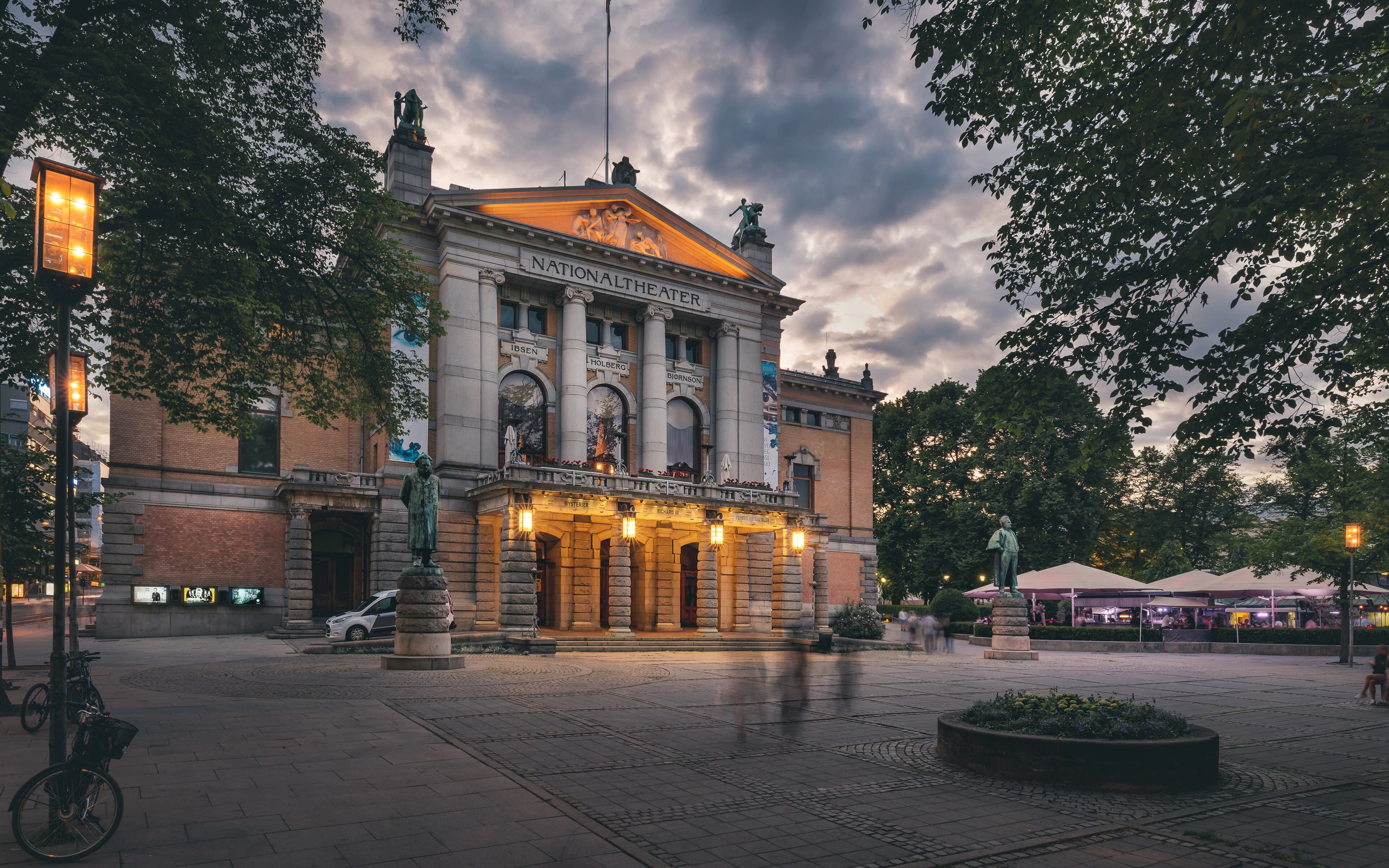
The transformation of Christiania from a quiet garrison town into a bustling commercial hub was slow, hindered by another visitation of the Black Death in 1654. However, the eighteenth century brought a economic boom fueled by timber, shipbuilding, and international trade. By the dawn of the nineteenth century, the geopolitical landscape fractured and reformed. In 1814, as the Napoleonic Wars reshaped Europe, the long union with Denmark dissolved. Christiania was declared the capital of an independent Kingdom of Norway, which was immediately thrust into a new, looser personal union with Sweden. This newfound administrative status triggered a desperate need for the infrastructure of statehood. Though the late founding of the Royal Frederick University in 1811 had historically slowed the nation’s academic development, the nineteenth century saw an explosion of civic construction. Monumental stone structures rose along new boulevards: the Royal Palace was built between 1825 and 1848, followed by the Stock Exchange, the Bank of Norway, the Storting parliament building, and the National Theatre. This was the city of the Norwegian cultural renaissance, the stomping grounds of literary titans like Henrik Ibsen and Knut Hamsun, who captured the psychological tensions of a provincial society transforming into a modern nation.
Throughout this period of growth, the original site of medieval Oslo was never entirely forgotten. It persisted as a poor suburb on the margins of the grander, stone-built Christiania. Over time, the expanding capital absorbed these peripheral villages. In 1877, the government modernized the spelling of the capital to Kristiania, a change the municipal authorities formally adopted in 1897. But a deeper historical reclamation was underway. On January 1, 1925, the municipality officially discarded the Danish king’s name entirely, restoring the ancient name "Oslo" to the entire city, while the original medieval site was renamed Gamlebyen—"the Old Town"—to preserve its distinct identity. This symbolic reclamation of the past preceded a massive mid-century expansion; in 1948, the city merged with Aker, a surrounding rural municipality twenty-seven times its size, creating the vast geographic footprint of the modern metropolis.
Today, Oslo is a sprawling, fast-growing European hub where history, maritime trade, and modern globalism converge. The city proper, situated at the head of the fjord, extends outward in three distinct corridors—inland to the northeast and along both shores of the water—resembling an upside-down, reclining "Y" when viewed from the forested hills of the Marka. It remains the undisputed economic and political heart of Norway, a center for international shipping, maritime insurance, and finance. Once a provincial outpost under the shadow of Copenhagen and Stockholm, it has grown into a diverse global city, recognized as an intercultural pilot city by the Council of Europe. It is a place of stark contrasts: celebrated for its exceptional quality of life, yet frequently ranked among the most expensive cities on Earth. In its journey from a vulnerable wooden outpost of the Viking Age to a modern, glass-and-steel capital, Oslo has consistently rebuilt itself, balancing the deep, quiet heritage of the Old Norse meadow with the relentless demands of the modern world.
Connected to
12 links to entries not yet ingested in the Library.