Concept · 33 CE · Roman Republic and Empire
Christianity
- Also known as
- Agama Kristen
- agama Kristen
- Agama Kristen
- Agama Kristian
- Agama Kristian
- akum
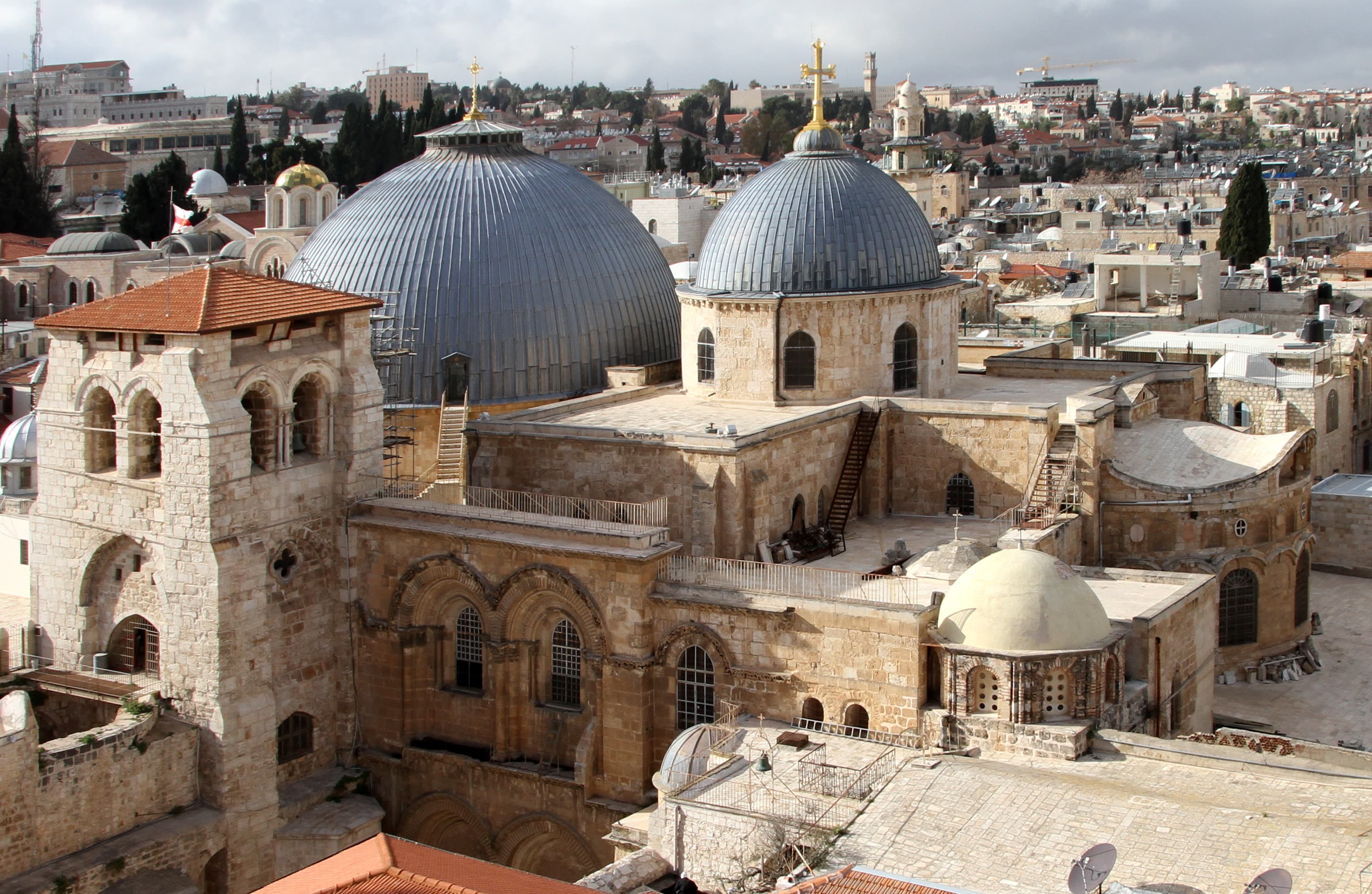
A minor Judaic sect with Hellenistic influences, emerging from the Roman province of Judaea in the first century, would go on to shape the course of global history.
In the year 33 CE, in the volatile Roman province of Judaea, a provincial execution took place that would slowly, unpredictably, rewrite the grammar of human civilization. The victim was a Jewish carpenter from Galilee named Yeshua, known to Greek speakers as Iēsous and later to the world as Jesus. He had lived without a formal technical education, yet possessed a deep, intimate mastery of the Hebrew sacred texts. His public ministry had lasted perhaps only eighteen months, a brief flash of street-preaching, healing, and radical ethical teaching that ended when his own countrymen accused him before the Roman authorities, who nailed him to a cross. To the Roman prefect Pontius Pilate, it was a routine maintenance of the Pax Romana during the tense Passover season. To the small circle of Jesus’s devastated followers, however, the story did not end with the grave. They became fiercely convinced that he had risen from the dead. Calling themselves followers of "The Way," they gathered in Jerusalem under the leadership of James the Just, Peter, and John, expecting their master’s imminent return and the apocalyptic renewal of Israel. They did not believe they were starting a new religion; they were simply Jews who believed the Messiah—the Christ, the "Anointed One"—had arrived.
Had this movement remained within the geographic and cultural borders of Judea, it might have vanished when Roman legions put Jerusalem to the torch in 70 CE, scattering or killing the original community. Instead, the faith slipped its Jewish moorings. As the message traveled along the stone-laid roads and sea lanes of the Roman Empire, it began to attract "God-fearers"—Gentiles who frequented synagogues but stopped short of full conversion. This transition sparked a profound internal crisis. It was Paul of Tarsus, a Pharisee who had once actively persecuted the movement, who became its most radical transformer. Paul argued that non-Jews did not need to adopt the heavy demands of the Jewish Torah, such as circumcision, to share in the promises of Israel; they needed only faith in Christ, baptism, and participation in his death and resurrection. By decoupling the movement from strict Mosaic law, Paul set Christianity on a trajectory of self-definition. In the cosmopolitan city of Antioch, non-Jewish onlookers coined a new term for these disciples: Christianoi, the followers of Christ. By the turn of the second century, the bishop Ignatius of Antioch would use the term "Christianity" to describe a faith that was no longer a sect of Judaism, but something entirely its own.
To the pagan neighbors of these early Christians, the new faith was both baffling and deeply antisocial. In the ancient Mediterranean, religion was not a matter of private belief but of civic duty, ancestral tradition, and ethnic identity. By refusing to sacrifice to the local gods or to the genius of the Emperor, Christians were seen as atheists whose impiety threatened to bring down the wrath of the heavens in the form of plagues, famines, and droughts. The Roman state reacted with sporadic, local, and often reactive violence. Nero blamed them for the Great Fire of Rome in 64 CE; later, during times of systemic crisis in the third century, emperors like Decius and Diocletian launched organized, empire-wide purges, demanding sacrifices to the traditional gods on pain of death or imprisonment. Yet the movement grew, not as a monolith, but as a vibrant, chaotic ecosystem of competing ideas. Early thinkers, later termed the Church Fathers, wrote brilliant, urgent treatises defending their faith against pagan critics and rival Christian sects. Figures like Marcion argued that the wrathful God of the Jewish scriptures was a completely different entity from the loving Father of Christ, while the philosopher Justin Martyr countered that the God of the Hebrew scriptures was Christ himself before his human incarnation. In Alexandria, Valentinus taught a complex Gnostic theology where Christ came to deliver secret, saving knowledge () to rescue human souls from a corrupt material world.
Connected to
- followerBantu people
- followerCharlemagne748 CE
- followerConstantine the Great272 CE
- followerHarriet Tubman1821 CE
- followerMāori people