Place · 1550 CE · Early Modern Europe
Helsinki
- Also known as
- Baro fooros
- bela hči Baltika
- elcinki
- Elisinki
- Elsin'ki
- Elsingki
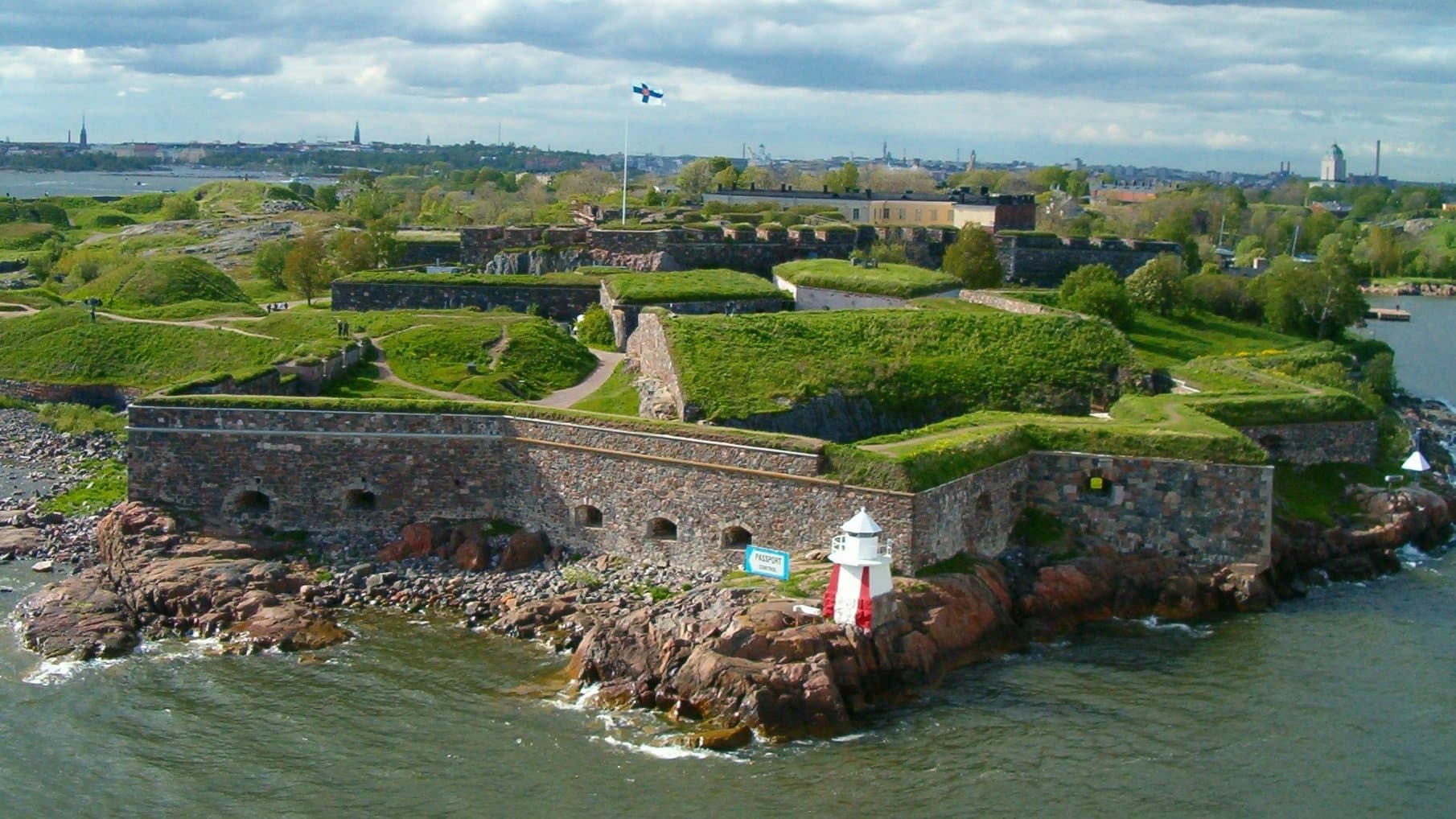
Clinging to the shore of the Gulf of Finland, the world’s northernmost metropolitan area of over one million people began its life in 1550 CE.
In the middle of the sixteenth century, the Baltic Sea was less a barrier than a crowded highway, its lanes dominated by the German merchants of the Hanseatic League. Foremost among their strongholds on the northern shipping lanes was Reval, the walled port on the southern shore of the Gulf of Finland. To King Gustav I of Sweden, Reval was a persistent economic grievance. The wealth of the northern forests—furs, timber, and the highly prized tar used to seal the hulls of Europe’s great sailing ships—flowed through channels he could not control. To break this monopoly, the Swedish king resolved to build a rival, a royal trading post on the rugged, pine-fringed northern shore of the gulf. On June 12, 1550, he signed the decree that established Helsingfors, the city that would eventually be known to the world as Helsinki.
The site chosen was the mouth of the Vantaa River, near the rushing waters of the Vanhankaupunginkoski rapids. The choice was not made in a vacuum; the region had long been a place where cultures overlapped and collided. For centuries, the local Tavastians had hunted and fished these waters, eventually establishing agricultural settlements by the tenth century. They were followed by Swedish colonists, who began settling the coastline in earnest during the late thirteenth century, bringing with them the language and laws of the Swedish crown. By the late Middle Ages, a network of nearly thirty small farming and fishing villages, including Koskela and Töölö, dotted the landscape. Despite the northern latitude, it was a surprisingly prosperous frontier. Wealthy peasants, priests, and nobles traded fish, cattle, and animal skins across the sea. In the local taverns and harbors, one might hear a shifting tapestry of tongues: Finnish, Swedish, Latin, or the Low German of the Baltic traders.
Yet, founding a city by royal decree is a far simpler matter than making it breathe. Gustav I quickly realized that merchants would not abandon their established homes for a cold, undeveloped northern estuary on their own accord. To solve his population problem, the king resorted to royal coercion. He ordered the entire bourgeoisie of four existing coastal towns—Porvoo, Raseborg, Rauma, and Ulvila—to pack up their lives and relocate to his new settlement.
The forced migration did not yield the bustling commercial capital the king envisioned. The estuary of the Vantaa River proved to be a geographical trap; the bay was too shallow to accommodate the deep-drafted merchant ships of the era. Unable to anchor near the shore, traders stayed away, and the forced settlers found themselves stranded in an isolated, marshy outpost. Recognizing the failure of his original plan, the king eventually relented, allowing many of the disgruntled inhabitants to return to their home regions. For nearly a century, the settlement languished as a quiet, provincial backwater. It was not until 1640 that Count Per Brahe the Younger, seeking to rescue the town from obscurity, ordered the city center moved south to the Vironniemi peninsula. Here, on the deep, cold waters of the open sea—in the area known today as Kruununhaka—the modern port of Helsinki finally found its anchor.
Even in its new location, survival was a fragile proposition. Throughout the late seventeenth and early eighteenth centuries, Helsinki remained a modest, vulnerable collection of wooden houses, routinely ravaged by fires. In 1710, a devastating outbreak of the plague decimated the population. Three years later, during the Great Northern War, Russian forces marched on the city; the retreating Swedish administration chose to burn the town to the ground rather than leave its shelter to the enemy. It was only the construction of the massive island fortress of Sveaborg—Viapori to the Finns—in the mid-eighteenth century that began to anchor the town’s defense and elevate its strategic importance in the eyes of the Baltic powers.
The true transformation of Helsinki from a vulnerable northern outpost to a grand European capital was born out of geopolitical defeat. In 1809, Sweden lost the Finnish War to the Russian Empire, and Finland was annexed as an autonomous Grand Duchy under Emperor Alexander I. The Russian sovereign looked at the map of his newly acquired territory and saw that its traditional capital, Turku, lay far to the west, gazing across the Gulf of Bothnia toward Stockholm. To weaken Sweden's lingering cultural and political pull, and to bring the administration of the new Grand Duchy closer to his own imperial court in Saint Petersburg, Alexander I officially moved the capital of Finland to Helsinki on April 8, 1812.
This political promotion demanded a physical transformation. When a disastrous fire consumed Turku in 1827, the nation's sole university, the Royal Academy, was also relocated to the new capital, cementing Helsinki as the undisputed intellectual and administrative heart of Finland. To match its new status, the Russian authorities commissioned the German-born architect Carl Ludvig Engel to redesign the city center. Engel swept away the ramshackle remnants of the old wooden town, replacing them with a grand, unified neoclassical core modeled after the imperial scale of Saint Petersburg. Around the vast expanse of Senate Square, Engel raised the majestic, zinc-domed Helsinki Cathedral, the Government Palace, and the University of Helsinki—structures of pale stone and precise symmetry that gave the northern port a sense of timeless gravity.
As the nineteenth century gave way to the twentieth, industrialization and the arrival of the railway transformed the city from a bureaucratic capital into a modern metropolis. By the 1910s, its population had surpassed 100,000. It had become a bilingual city where the Swedish of its historical elite and the Finnish of the growing urban working class existed side-by-side, eventually giving rise to Stadi, a unique local slang that blended elements of both languages.
Today, Helsinki stands as the northernmost capital of an European Union member state, the heart of a metropolitan area of over one million people. It is a city defined by a remarkable paradox: it is an international hub of design, culture, and high-tech research, yet it remains intimately connected to the quiet geography of its origins. Its islands, peninsulas, and busy passenger ports—among the busiest in the world—still look out across the same cold Gulf of Finland that King Gustav I sought to dominate more than four and a half centuries ago. The shallow river rapids where the first settlers were forced to build their homes in 1550 are now a quiet, historic corner of a sprawling metropolis, a reminder of the fragile, reluctant beginnings of a city that eventually grew to command its own destiny.
Connected to
- in countryRussian Empire1721 CE
+ 12 further connections to entries not yet ingested