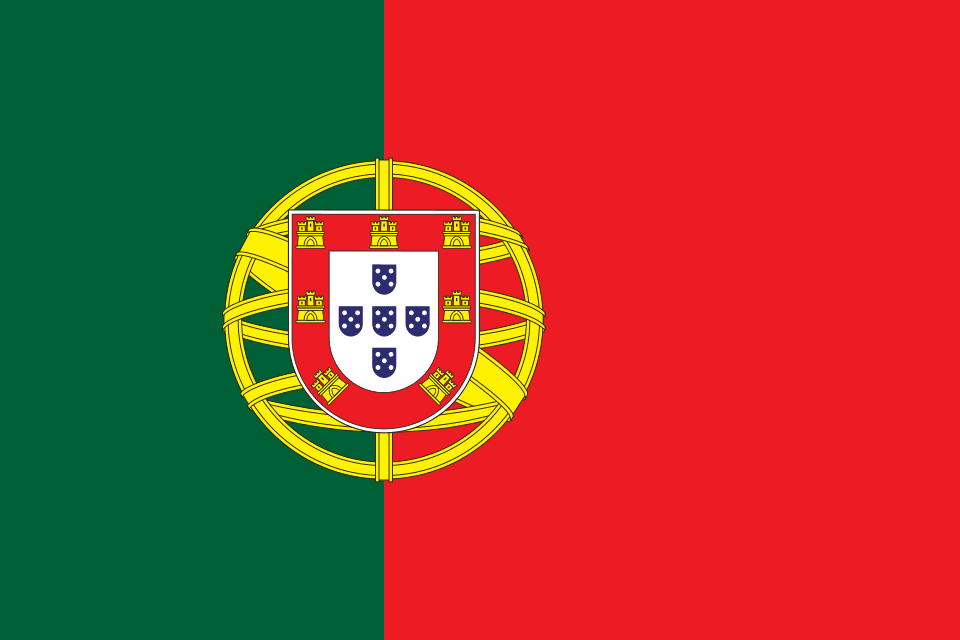
The name that defines the western edge of the Iberian Peninsula began as a Roman harbor.
The geography of western Iberia is a theater of dramatic transition, a narrow strip of land where the vast, arid interior of the peninsula falls toward the Atlantic Ocean. To travel from east to west is to watch the alpine desolation of the Serra da Estrela yield to high, wind-swept moorlands of sweet-scented cistus, which in turn tumble down to the terraced bush-vines of the Douro, the damp sand dunes of the silver coast, and the sun-drenched, North African heat of the Algarve. It is a landscape defined by its rivers—the Minho, the Douro, the Tagus, and the Guadiana—which cut deep gorges through mountain massifs of granite and shale as they run headlong to the sea. Historically, this rugged topography offered no natural, scientific frontier to separate its inhabitants from the rest of the peninsula; the mountain ranges of the northern and eastern borders are mere extensions of the Galician and Leonese highlands. Yet, out of this porous, deeply fragmented Atlantic facade emerged one of the oldest and most remarkably stable nation-states in Europe, a kingdom whose borders have remained virtually unchanged since the thirteenth century.
For centuries, this western shelf was a highway of empires and migrations. Neanderthals roamed its northern ranges; prehistoric peoples left behind the earliest known writing on the peninsula on Iron Age stone stelae in the south. The Romans invaded in 218 BCE, slowly conquering the indigenous Celtic and Lusitanian tribes over two centuries of bloody resistance led by figures like the guerrilla chieftain Viriathus. Under Roman rule, the town of Cale, nestled on the steep banks of the Douro River, was captured from the Carthaginians and rechristened Portus Cale—a name that would morph under the Visigoths into Portucale, and eventually give birth to both the city of Porto and the name of Portugal itself. Following the collapse of Rome, Germanic Suebi and Visigoths established kingdoms here, only to be swept away in 711 CE by the rapid, northward surge of the Umayyad Caliphate. For four centuries, most of what is now Portugal was integrated into the sophisticated, urbanized world of al-Andalus, falling under the control of the Taifa of Badajoz, and subsequently the Almoravid and Almohad empires.
The political seed of modern Portugal was planted not by peaceful evolution, but through the violent, sporadic crusading zeal of the Reconquista. In 868 CE, the Christian knight Vímara Peres, acting under the orders of King Alfonso III of Asturias, seized Porto from its Muslim rulers and was named the first Count of Portugal. This initial county was a marcher lord-ship, a volatile borderland nestled between the Douro and Minho rivers. It was abolished in 1071 after a rebellious count was defeated at the Battle of Pedroso, but the geopolitical necessity of a strong western bulwark remained. In 1096, Alfonso VI of León refounded the county, bestowing it upon Henry of Burgundy, a French crusader knight who had married the King’s illegitimate daughter, Teresa. When Henry died in 1112, Teresa assumed the regency, but her growing political alliance and personal intimacy with the Galician noble Fernão Peres de Trava alienated the local Portuguese nobility, who feared absorption into Galician spheres of influence.
+ 8 further connections to entries not yet ingested
The crisis culminated in 1128 at the Battle of São Mamede. There, Teresa’s young, ambitious son, Afonso Henriques, took up arms against his own mother and her lover, defeating their forces and establishing himself as the sole ruler of the county. Though Alfonso VII of León marched an army into Portugal to assert his imperial overlordship, he withdrew after realizing that the young count’s coup did not openly challenge Leonese sovereignty. Afonso Henriques, however, was playing a longer game. On July 25, 1139, he led his knights into the plains of southern Alentejo and won a crushing victory over a Muslim army at the Battle of Ourique. On the field of battle, flushed with triumph, his soldiers acclaimed him as their king. Armed with this new royal title, Afonso began a decades-long diplomatic campaign to secure international legitimacy. His cousin, Alfonso VII of León, recognized the title in 1143, and after years of careful lobbying and declarations of vassalage to the Holy See, Pope Alexander III issued the papal bull Manifestis Probatum in 1179, formally declaring Portugal an independent kingdom.
With its independence secured, the young kingdom pushed south with relentless momentum. Supported by northern European crusaders en route to the Holy Land and the formidable military orders of the Temple and the Hospital, the Portuguese kings systematically conquered the southern territories, culminating in the capture of the Algarve in 1249. By 1297, the signing of the Treaty of Alcanizes settled the border with Castile, establishing a frontier that stands as a monument of European political longevity. This geopolitical stability allowed Portugal to survive even the devastating arrival of the Black Death in 1348 and a severe dynastic crisis in 1383, when the King of Castile attempted to claim the Portuguese throne. Instead, John of Aviz led a national rebellion, shattering the Castilian forces at the Battle of Aljubarrota in 1385 and securing the crown for the House of Aviz. To cement this triumph and guard against future Castilian ambitions, Portugal signed the Treaty of Windsor with England in 1373—an agreement that remains the oldest active diplomatic alliance in the world.
From this narrow, coastal strip of Europe, the House of Aviz looked outward to the Atlantic. Hemmed in by Spain, Portugal turned its geographical position at the edge of the known world into its greatest asset. Beginning with the conquest of Ceuta in North Africa in 1415, and fueled by the scientific and maritime patronage of Prince Henry the Navigator, Portuguese caravels pushed further into the open ocean than any Europeans before them. They mapped the coast of Africa, established lucrative trading posts for gold and enslaved people, and made revolutionary advancements in cartography, astronomy, and ship design. In 1494, the Treaty of Tordesillas divided the non-European world between Spain and Portugal; by 1498, Vasco da Gama had rounded the Cape of Good Hope and reached India, breaking the Venetian monopoly on the spice trade. Two years later, Gaspar Corte-Real charted Greenland, while Pedro Álvares Cabral made landfall in South America, claiming Brazil for the Portuguese Crown. From Brazil to Nagasaki, across the Indian and Pacific Oceans, the Portuguese constructed a maritime trading empire of unprecedented global reach, introducing European diplomacy and commerce to Taiwan, Timor, and China.
Yet, this vast global reach stretched the demographic and economic resources of the small mother country to their absolute limits. When the young King Sebastian vanished in battle in North Africa in 1578, and his elderly successor died without heirs two years later, Portugal was plunged into a catastrophic succession crisis. Philip II of Spain seized the crown in 1580, dragging Portugal into a sixty-year personal union under the Spanish Habsburgs. This "Iberian Union" stripped Portugal of its independent foreign policy, exposing its global trade routes to the wrath of Spain's enemies, particularly the Dutch, who dismantled much of the Portuguese monopoly in the Indian Ocean. It was not until December 1, 1640, that a conspiracy of Portuguese nobles launched a successful palace coup, proclaiming John, Duke of Braganza, as king and initiating the bloody Restoration War, which eventually forced Spain to recognize Portuguese independence once more.
The restored kingdom found a new lease on life in the eighteenth century, fueled by a massive gold rush in Brazil that filled the royal treasury in Lisbon, sparking one of the largest transatlantic migrations in history. But this golden age was shattered on November 1, 1755, when a colossal earthquake and subsequent tsunami demolished Lisbon, killing tens of thousands. In the wake of the disaster, the brilliant, ruthless Marquis of Pombal was granted near-dictatorial powers to rebuild the capital on a modern, rational grid, ruling as an enlightened despot. Decades later, the Napoleonic Wars brought fresh ruin; refusing to join France’s continental embargo against Britain, Portugal was invaded by French forces in 1807. The Portuguese royal court fled across the Atlantic to Rio de Janeiro, transforming Brazil into the seat of the empire for over a decade. Though British intervention under the Duke of Wellington eventually expelled the French, the departure of the court permanently altered the balance of power. When King John VI finally returned to Lisbon in 1821 following a liberal constitutionalist uprising, his son declared Brazil’s independence, ending Portugal's golden Atlantic empire.
The nineteenth and twentieth centuries were characterized by deep domestic instability. The loss of Brazil triggered the Liberal Wars of the 1830s, pitting absolutists against constitutionalists in a devastating civil conflict. Though the constitutional monarchy survived, it was plagued by chronic bankruptcy, political corruption, and frequent coups, ultimately collapsing in 1910 with the proclamation of the Portuguese Republic. The young republic, however, proved highly unstable, paving the way for a military coup in 1926 and the subsequent establishment of a highly centralized, conservative dictatorship. This regime survived for nearly half a century, crumbling only in 1974 when a bloodless military coup—the Carnation Revolution—overthrew the dictatorship and paved the way for the establishment of a modern democratic republic in 1976. Today, Portugal stands as a developed, peaceful nation, its historical path shaped by the meeting of the Atlantic and the Mediterranean. The small medieval county born on the banks of the Douro has left an indelible mark on global history, leaving behind a linguistic and cultural legacy that unites more than 250 million Portuguese speakers across the globe.