Event · 15th c. CE – 18th c. CE · Early Modern Europe
Age of Discovery
- Also known as
- A expansão marítima européia
- Abad Penjelajahan Samudra
- Aevum Explorationis
- Age of Discoveries
- Age of Exploration
- Age of exploration
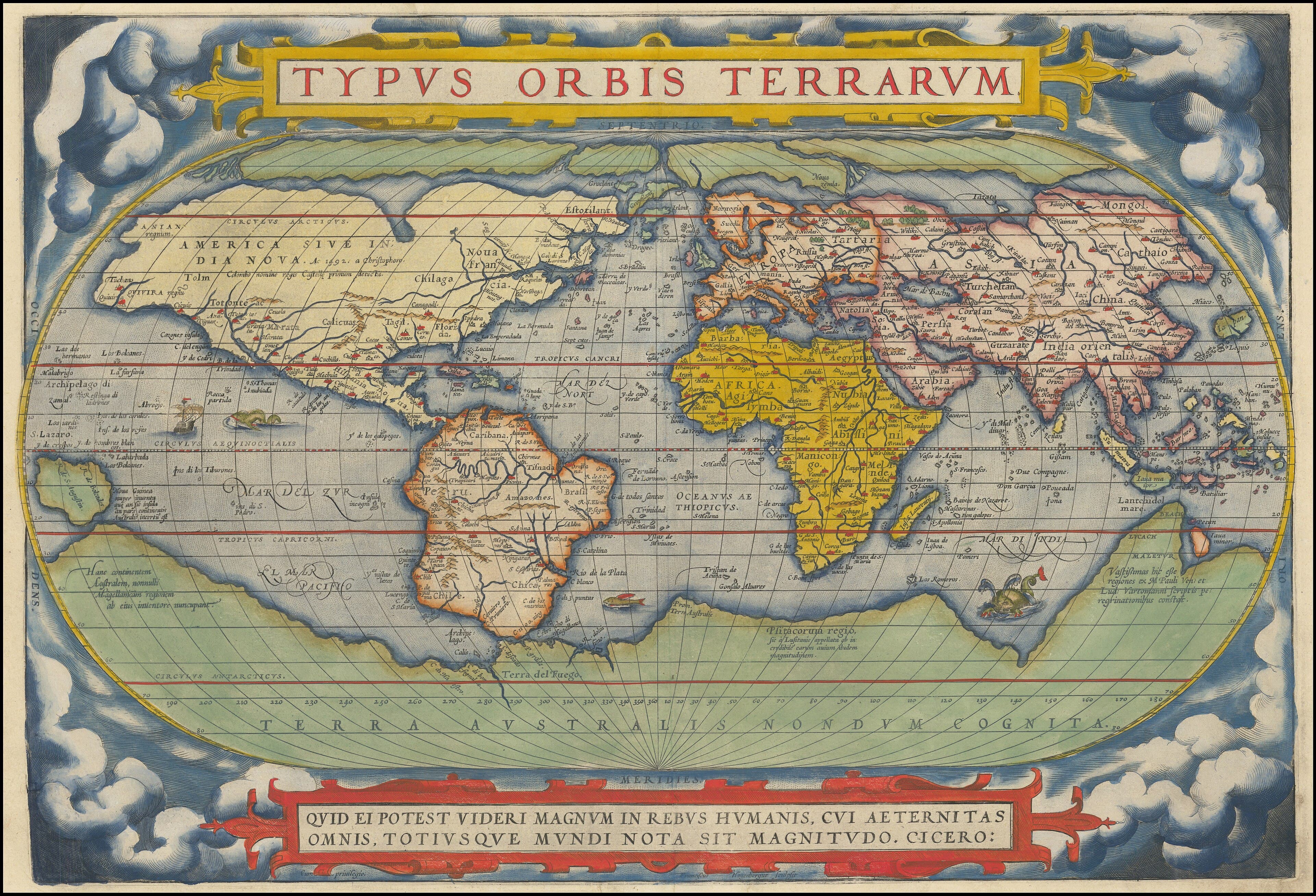
The impulse to sail beyond the horizon transformed a fragmented planet into a single, interconnected world-system, binding previously isolated civilizations together for the first time.
In the final decades of the thirteenth century, a Genoese merchant named Nicolòzzo Spinola did something that would have seemed madness to his grandfathers. He steered a fleet of heavily laden merchant galleys out of the Mediterranean, through the treacherous, Muslim-guarded currents of the Strait of Gibraltar, and turned north. He did not hug the familiar coasts; he sailed directly into the gray swell of the Atlantic, heading for the textile-rich markets of Flanders. Spinola’s voyage in 1277 marked the first recorded direct passage between the mercantile worlds of southern and northwestern Europe, bypassing the exhausting and expensive overland transshipment across the continent. For centuries, Europe had been a fragmented, inward-looking backwater, hemmed in by the collapse of the Western Roman Empire and the subsequent rise of powerful Islamic empires that dominated the Middle East and North Africa. But the opening of this Atlantic sea lane signaled a profound shift. The oceans, long viewed as terrifying, empty voids that marked the edge of the habitable world, were beginning to be reimagined as highways.
By the dawn of the sixteenth century, this tentative maritime curiosity had hardened into a relentless, state-sponsored campaign of global expansion. The ensuing three centuries—a period stretching from roughly 1500 to 1800—would see the disparate, isolated regions of the Earth violently and irrevocably stitched together into a single global system. It was an era initiated by the Iberian powers, Portugal and Spain, before being joined by the hungry, aggressive merchant fleets of England, France, and the Netherlands. Under the sponsorship of Prince Henry the Navigator in the fifteenth century, Portuguese mariners had systematically crept down the western coast of Africa, learning the complex wind patterns of the open ocean. By 1488, Bartolomeu Dias had rounded the southern tip of the continent, and in 1498, Vasco da Gama sailed into the harbor of Calicut, India, establishing a direct maritime trade route that bypassed the Ottoman-controlled overland routes entirely. Simultaneously, Christopher Columbus’s transatlantic voyages under the Spanish crown, aimed at reaching the East by sailing west, stumbled instead upon an entirely uncharted hemisphere. In a dizzying span of decades, the boundaries of the known world exploded. In 1513, Vasco Núñez de Balboa crossed the narrow, humid Isthmus of Panama to gaze upon the Pacific Ocean; by 1522, the remnants of Ferdinand Magellan’s expedition, led by Juan Sebastián Elcano, completed the first circumnavigation of the globe.
To make sense of this sudden deluge of geographic information, Europeans had to dismantle their ancient, authoritative worldviews and replace them with a culture of empirical inquiry. The medieval reliance on classical texts and biblical geography crumpled when confronted with continents, ecosystems, and human societies that no prior authority had ever mentioned. Mapmakers, struggling to synthesize the flood of new data, watched their charts evolve from abstract, theological "blobs" into the increasingly accurate, recognizable outlines of the modern world. Scholars have argued that this was not merely an era of "discovery"—a passive uncovering of things that had always been there—but rather an "invention" of new conceptual frameworks. To integrate these lands, European intellectual life underwent a revolution, marking the first major victories of practical, empirical observation over established dogma. This intellectual transformation was fueled by crucial technological adaptations. The magnetic compass, originally developed during the Chinese Han dynasty and transmitted through Arab traders in the Indian Ocean, was married to European advances in ship design, allowing mariners to navigate with confidence far from the safety of the coastline.
Connected to
4 links to entries not yet ingested in the Library.