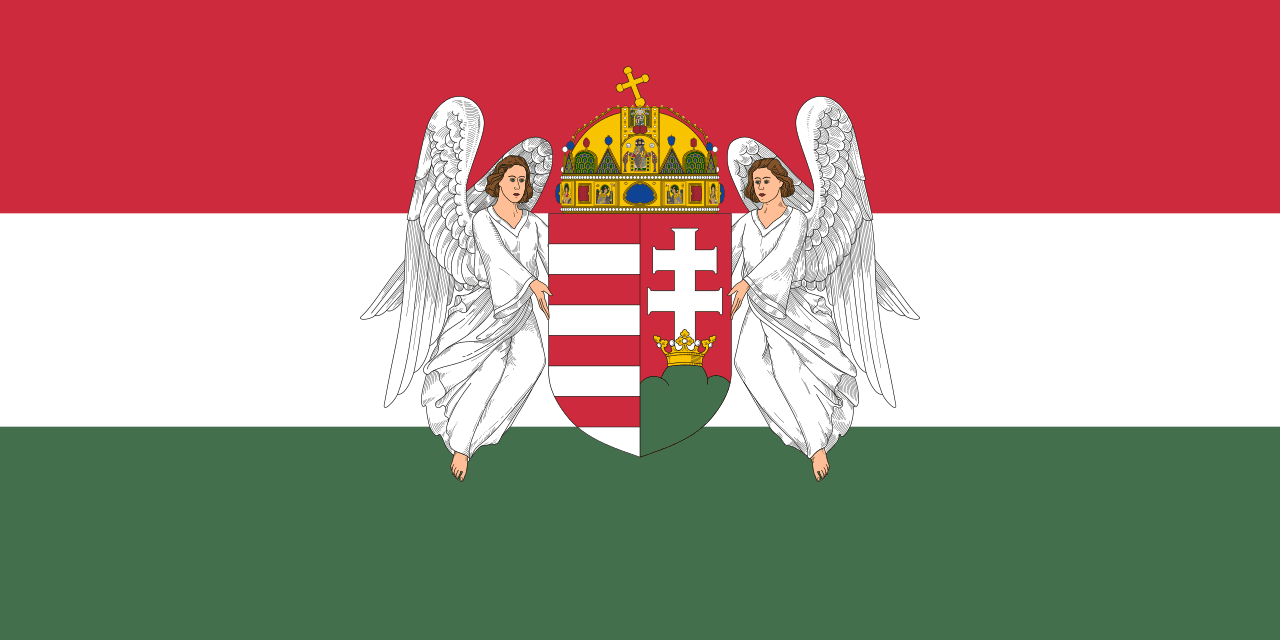
The extinction of the founding Árpád dynasty in 1301 CE ushered in a dynamic, turbulent era for the Kingdom of Hungary, a vast Central European power that stretched across a mosaic of modern-day borders.
When Andrew III, the last king of the House of Árpád, died in 1301, he left behind a Kingdom of Hungary that was less a unified state than a sprawling, fractured geography of rival ambitions. For three centuries, his dynasty had guided a semi-nomadic steppe people into the fold of Latin Christendom, transforming the fertile Carpathian Basin into a formidable medieval power. Yet by the dawn of the fourteenth century, the crown was a hollow prize. Real authority had dissolved into the hands of provincial oligarchs—the "little kings" who ruled their vast private domains with sovereign impunity, indifferent to the vacant throne in Buda. The kingdom, which stretched from the high Carpathians down to the Adriatic coast through its personal union with Croatia, was poised to either disintegrate into warlike principalities or be reforged by an outsider with the administrative genius to crush the barons.
The man who undertook this reconstruction was Charles Robert of Anjou, a claimant of Neapolitan descent who was finally crowned as Charles I in 1310. His path to the throne was a decade-long odyssey of shifting alliances, papal diplomacy, and brutal warfare. To secure his realm, Charles had to dismantle the power of the oligarchs piece by piece. The climax of this domestic pacification arrived at the Battle of Rozgony, a conflict of such desperate violence that contemporary chroniclers recorded it as the most savage engagement the kingdom had witnessed since the Mongol invasion nearly a century prior. Armed with military victory, Charles turned his mind to the structural rot of the state. He realized that the crown’s traditional reliance on royal landholdings was obsolete; instead, he initiated sweeping economic reforms that capitalized on Hungary’s natural geology. Under his administration, the kingdom’s rich gold deposits were aggressively mined, propelling Hungary to the forefront of European precious metal production. To stabilize commerce, he swept away debased coinage and introduced the gold forint, a currency of such reliable purity that it became a standard of international trade.
To bind the newly subdued nobility to his person rather than their regional fiefdoms, Charles instituted a culture of courtly chivalry, founding the Order of Saint George in 1326—the first secular chivalric order in the Western world. He skillfully cultivated the memory of Saint Ladislaus I, the legendary eleventh-century king, elevated as the supreme archetype of Hungarian knighthood, justice, and bravery. By the time Charles died in 1342, he had transformed a ruined, fractured realm into one of the most stable and affluent powers in Central Europe. The crown descended seamlessly to his eldest son, Louis, who inherited not only a filled treasury but also the formidable political counsel of his mother, Elizabeth of Poland. Elizabeth, the fourth wife of Charles, emerged as one of the most formidable matriarchs of the fourteenth century, exercising immense influence over court policy and foreign affairs.
8 links to entries not yet ingested in the Library.
The early years of Louis’s reign, however, were darkened by a dynastic tragedy in Italy that would consume Hungarian resources and attention for years. Charles I had meticulously arranged for his second son, Andrew, to marry his cousin Joanna, the granddaughter and heiress of King Robert of Naples. The union was intended to secure the Neapolitan crown for the Hungarian Angevins. But when King Robert died in 1343, his will bypassed Andrew’s claims, leaving Joanna as sole ruler. Tension curdled into conspiracy, and in 1345, Andrew was brutally murdered by a faction of Neapolitan nobles at Aversa. The assassination ignited a furious response from Buda. Louis declared war to avenge his brother’s death, launching a series of Italian campaigns that demonstrated the reach of Hungarian military power, even as they ultimately illustrated the difficulty of ruling a disjointed Mediterranean empire from the Carpathian Basin.
For all the dynastic glamour of the Angevin era, the Kingdom of Hungary remained an intricate, polyglot mosaic. It was a realm where Latin served as the language of statecraft and law, but where the daily business of life was conducted in Hungarian, Slovak, Romanian, Serbian, Croatian, Polish, and German. Travelers from the Byzantine and Arab worlds wrote with astonishment of the kingdom’s physical abundance: its dense, emerald pastures, its heavily cultivated wheat fields, and its forests and rivers teeming with game and fish. They described busy urban markets, prosperous cities, and a general material wealth that, even if it glossed over the harsh realities of the peasantry, reflected a kingdom enjoying a golden afternoon of medieval security. This security was underpinned by Hungary's complex constitutional relationship with Croatia. Joined in personal union under a single crown since the coronation of King Coloman in 1102, Croatia maintained its own distinct identity. Even as Hungarian jurists and statesmen like István Werbőczy later affirmed Croatia’s status as a separate kingdom with substantial internal autonomy, the union provided Hungary with an essential outlet to the Adriatic Sea, securing its place within the wider Mediterranean economy.
This medieval golden age reached its cultural and military zenith in the fifteenth century under Matthias Corvinus, the Renaissance king who established one of Europe's most brilliant humanistic courts in Buda, only for the kingdom to find itself directly in the path of the expanding Ottoman Empire. By the early sixteenth century, the internal cohesion forged by the Angevins had begun to erode under weak rulers and a resurgent, defensive nobility. The crisis culminated in 1526 on the marshy plains of Mohács. There, the young King Louis II and the flower of the Hungarian nobility met the grand army of Sultan Suleiman the Magnificent. The resulting Ottoman victory was swift, total, and catastrophic. King Louis drowned in his heavy armor during the retreat, and the Hungarian state was shattered into three distinct fragments: a western and northern rump ruled by the Austrian House of Habsburg, a central swath under direct Ottoman occupation, and the semi-independent Principality of Transylvania to the east.
The fall of the medieval kingdom at Mohács fundamentally reordered the geography of Central Europe. For over two centuries, the unified Kingdom of Hungary had stood as a grand bulwark, a wealthy and highly organized Catholic monarchy that bridged the cultural worlds of the Latin West, the Byzantine East, and the northern Slavic plains. Its sudden division initiated centuries of grueling frontier warfare, imperial partition, and Habsburg domination. Though the Hungarian crown would survive as an institution, integrated into the Habsburg Monarchy and eventually forming half of the Austro-Hungarian Empire, the independent, expansive medieval state that had been consolidated by Charles of Anjou was gone. It left behind a legacy of cultural synthesis and legal tradition that would define the national consciousness of the Carpathian Basin for the next four hundred years.