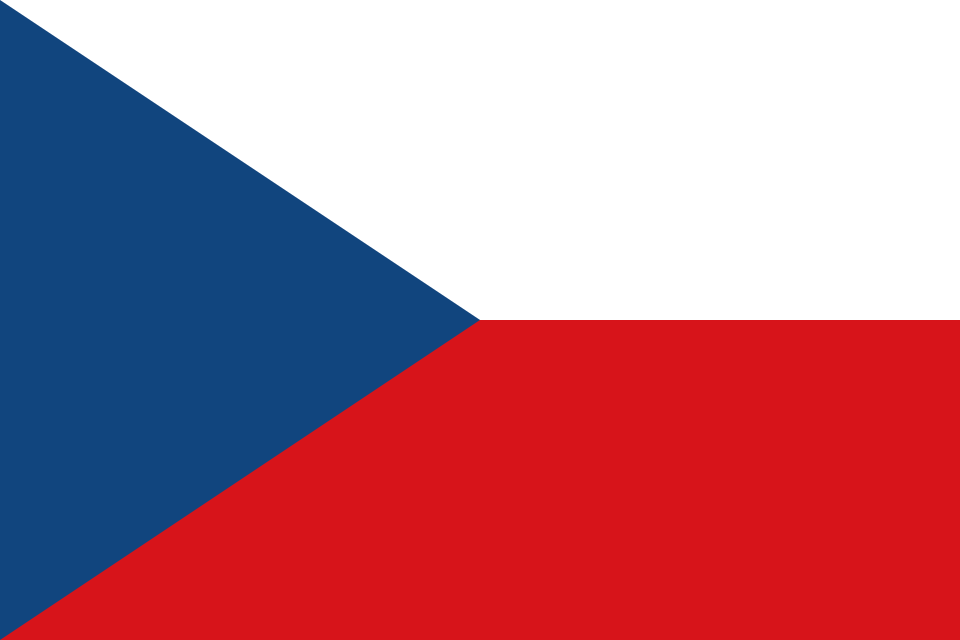
The landlocked hills of Central Europe have long served as a crucible of continental history, a terrain bordered by Germany, Austria, Poland, and Slovakia that has constantly renegotiated its political identity.
At the end of December 1992, a state dissolved not with the sound of gunfire, but with the quiet scratching of pens. The country of Czechoslovakia, born seventy-four years earlier in the ruins of the Austro-Hungarian Empire, split cleanly down its ethnic seam. On January 1, 1993, the Czech Republic emerged as an independent, landlocked state of some 78,871 square kilometers, nestled in the hilly, temperate heart of Central Europe. It was a separation so orderly, so devoid of the ethnic rancor then consuming the nearby Balkans, that historians immediately christened it the Velvet Divorce. Yet this peaceful partition masked a deeper, older paradox. The Czechs, who had spent centuries defending their language and culture against imperial absorption, had finally secured a state of their own, only to find themselves searching for its name.
For decades, the outside world knew these lands as Bohemia, a Latinate term derived from the Boii, a Gallic tribe that had settled the region’s rolling basin during the Celtic migrations of the third century BCE. Over the millennia, this territory—rimmed by mountains and bordered by what are now Germany, Poland, Slovakia, and Austria—became a crossroads of migrations and empires. After the Boii came the Germanic Marcomanni and Quadi, followed in the sixth century by Slavic tribes migrating from the Black Sea and Carpathian regions, pushed westward by the advance of the Huns. By the late ninth century, amid the rise and fall of the Great Moravian state, the Přemyslid dynasty unified the local Slavic tribes into the centralized Duchy of Bohemia. Raised to a kingdom in 1198 under the Golden Bull of Sicily, Bohemia became a crucial, wealthy pillar of the Holy Roman Empire, its rulers casting votes to choose the emperor himself.
Yet the geographic core of this land was always a trinity. Bohemia dominated the west, while Moravia occupied the east, and a small, southeastern slice of Silesia anchored the northeast. Together, they were the Lands of the Bohemian Crown, a realm defined by a fierce, early streak of religious and intellectual independence. In the early fifteenth century, decades before Martin Luther pinned his theses to the door in Wittenberg, the Prague theologian Jan Hus preached a radical reform of the Catholic Church. When Hus was burned at the stake, his followers seceded from Rome, launching the Hussite Wars. Under the brilliant generalship of Jan Žižka, the Hussite armies repeatedly defeated crusades sent by the Holy Roman Emperor. For nearly two centuries, the vast majority of the Bohemian population remained Hussite, fostering a distinct, reformist identity that resisted imperial conformity.
+ 12 further connections to entries not yet ingested
This independence came to a catastrophic end in the seventeenth century. In 1618, Protestant nobles in Prague threw royal Habsburg governors out of a palace window—the famous Defenestration of Prague—igniting the Thirty Years’ War. Two years later, at the Battle of White Mountain, the Bohemian rebellion was crushed. The Habsburgs consolidated a brutal, hereditary grip on the crown lands. Protestant elites were executed or exiled, estates were confiscated, and Catholicism was enforced as the sole legal faith. This period, stretching into the late eighteenth century, became known in Czech memory as the "Dark Age." The population shrank by a third through war, plague, and expulsion. When the Holy Roman Empire was dissolved in 1806, the Czech lands were absorbed directly into the Austrian Empire, their ancient electoral status erased, their political voice silenced.
It was against this historical erasure that the nineteenth-century Czech National Revival was launched. Writers, scholars, and politicians sought to rescue the Czech language from domestic obscurity and rebuild a modern national identity. As the region underwent rapid industrialization, transforming into the economic engine of the Austrian Empire, Czech political leaders agitated for autonomy. When the Austro-Hungarian Empire collapsed at the end of World War I, this cultural and industrial strength found political expression. In 1918, the independent republic of Czechoslovakia was born, uniting the Czech lands with Slovakia under the presidency of Tomáš Garrigue Masaryk.
The First Czechoslovak Republic was an anomaly in interwar Europe. Inheriting nearly eighty percent of the former empire’s industry, it became the tenth-largest industrial producer in the world. More remarkably, as neighboring states slid into authoritarianism, Czechoslovakia remained the only liberal parliamentary democracy in Central and Eastern Europe throughout the interwar years, maintaining democratic institutions despite significant German, Hungarian, and Ukrainian minority populations. This democratic experiment was dismantled not from within, but from without: first by Nazi Germany’s occupation and the establishment of the Protectorate of Bohemia and Moravia in 1939, and later, after a brief postwar restoration, by a communist coup d'état in 1948. For forty years, the nation existed behind the Iron Curtain, its brief, hopeful attempt at liberalization during the 1968 Prague Spring crushed by Soviet tanks, until the Velvet Revolution of November 1989 finally restored democracy.
When the peaceful separation of 1993 arrived, the newly independent Czech Republic inherited this rich, complicated legacy. It was a highly developed, high-income country with a skilled workforce, a strong social market economy, and a deep-seated democratic tradition. Yet, the loss of the "Slovakia" portion of the old national name created a lingering linguistic void. While the domestic term Česko was adopted as the short name in the Czech language, translating this into English proved clumsy. The official name, "the Czech Republic," felt formal and bureaucratic, lacking the easy, single-word convenience of names like France or Germany.
The historical name "Bohemia" was too narrow, excluding the proud inhabitants of Moravia and Czech Silesia. Though the Ministry of Foreign Affairs recommended "Czechia" as the official English short name as early as 1993, the term languished in obscurity, resisted by citizens and foreigners alike who found it unfamiliar. It was not until 2016 that the Czech government formally directed the use of Czechia in international databases, a change gradually adopted by the United Nations, the European Union, and international cartographers, even as many English speakers clung to the longer, post-1993 title.
Today, the Czech Republic stands as a stable, prosperous parliamentary democracy, its capital, Prague, once again serving as one of the cultural and intellectual hearts of Europe. It is a nation whose modern existence is defined by its ability to transition seamlessly between eras—from a medieval kingdom to an industrial powerhouse, from a communist satellite to a western-integrated member of NATO and the European Union. In navigating the transition of 1993, the country proved that borders could be redrawn and states could be born without the shedding of blood, leaving a legacy of political maturity that remains a rare benchmark in the history of modern statecraft.