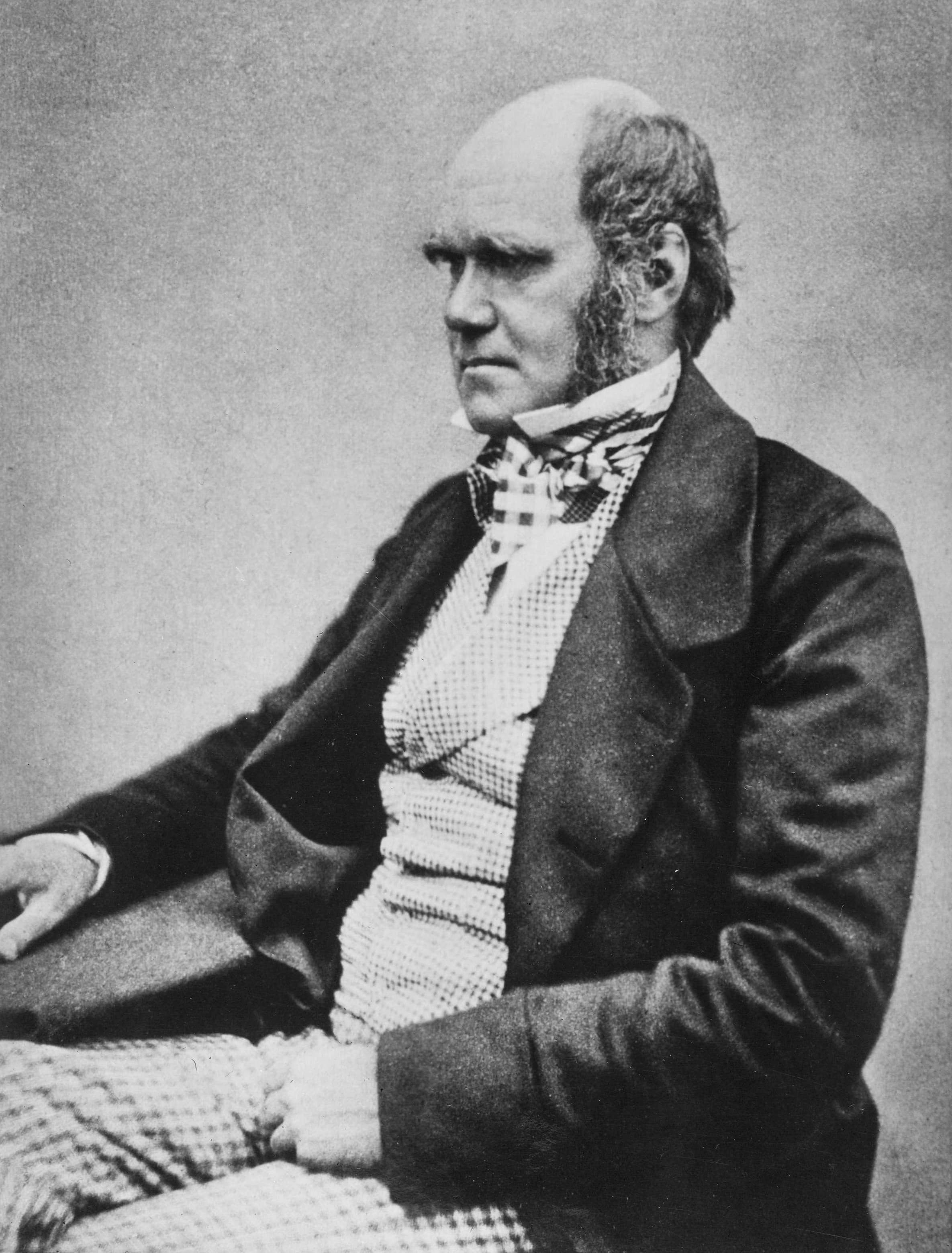
The medical lectures at the University of Edinburgh could not hold the attention of young Charles Robert Darwin; his mind belonged instead to the tidal pools, where he spent his hours alongside Robert Edmond Grant investigating the quiet lives of marine invertebrates.
On a late December morning in 1831, HMS Beagle slipped out of Devonport to begin a five-year voyage that would reshape the coordinates of human thought. On board was a twenty-two-year-old Cambridge graduate, Charles Robert Darwin, whose chief qualifications for the journey were an insatiable appetite for collecting beetles, a recently abandoned medical education, and a gentleman’s status that made him an acceptable dinner companion for the ship’s mercurial captain, Robert FitzRoy. Darwin had narrowly escaped a life as an Anglican country parson—a career his wealthy father, Robert Darwin, had proposed to cure his son’s apparent aimlessness. Instead, funded by his father and supported by his uncle Josiah Wedgwood II, Darwin took his place as a self-funded supernumerary naturalist. He packed with him a brass microscope, taxidermy skills learned from John Edmonstone—a freed Black man from the Demerara rainforest who had taught him in Edinburgh—and the first volume of Charles Lyell’s Principles of Geology.
Lyell’s book was a quiet revolution in itself, arguing that the Earth’s features were not the result of sudden, catastrophic biblical floods, but of unimaginable eons of gradual, uniform change. As the Beagle made its first stop at St. Jago in the Cape Verde islands, Darwin looked at the volcanic cliffs and noticed a white band of compressed seashells high above the water. It was a physical confirmation of Lyell’s theories: the land was slowly rising, millimeter by millimeter, over immense stretches of time. If the earth itself was mutable, Darwin began to wonder, what did that mean for the life that clung to its surface?
That question deepened into an obsession as the Beagle charted the jagged coastline of South America. At Bahía Blanca, in the wind-swept cliffs of Punta Alta, Darwin unearthed the fossilized bones of gigantic, extinct mammals. Among them was the Megatherium, alongside bony armor plating that looked like a colossal version of the shells belonging to the local armadillos scurrying through the nearby brush. The similarity was haunting. Why would extinct giants so closely resemble the living, diminutive residents of the very same region? Elsewhere on the continent, riding with gauchos through the interior, Darwin observed that two distinct species of rhea—large, flightless birds—occupied separate but overlapping territories, one replacing the other as he traveled south. These geographical patterns did not align with the prevailing orthodox belief that species were individually created in fixed "centres of creation" perfectly suited to their environments. The fossils and the living birds suggested a lineage of descent, a thread of continuity that stretched back through deep time and across shifting landscapes.
Connected to
12 links to entries not yet ingested in the Library.
When the Beagle finally returned to England in October 1836, Darwin was no longer the idle youth who had preferred shooting and riding to his studies. He had sent back crates of specimens that had already captivated the British scientific establishment. Settling first in Cambridge and then in London, where he served as secretary of the Geological Society, Darwin began to systematically unpack his observations. In March 1837, while analyzing the distribution of the Galápagos mockingbirds and the South American fossils, the spark ignited. By July of that year, he opened his first private notebook on the "Transmutation of Species."
For fifteen months, Darwin collected facts on how human breeders created new varieties of plants and domestic animals. He saw that human choice, or artificial selection, was the key to modifying domestic breeds, but how such a selective force could operate in the wild remained an enigma. The answer arrived in October 1838, not from a biology text, but from economics. Reading Thomas Malthus’s essay on population, Darwin realized that because organisms reproduce in numbers far exceeding the resources available to support them, there must be a constant, brutal struggle for existence. In this struggle, any variation that gave an individual even a slight advantage in surviving and reproducing would tend to be preserved. Unfavorable variations would be ruthlessly weeded out. The result of this continuous, automated filtering would be the gradual formation of new species. He had found his mechanism: natural selection.
Yet, rather than rushing to publish, Darwin retreated into a long, agonizing silence. He was acutely aware of the theological and social earthquake his theory would provoke. His grandfathers, Erasmus Darwin and Josiah Wedgwood, had been prominent abolitionists, and Erasmus had even penned early, poetic speculations on common descent. But the Victorian scientific and religious establishment viewed species as immutable, divine creations; to suggest that humans shared an ancestor with apes was regarded as a dangerous, politically radical heresy. Darwin’s health, always fragile, deteriorated under the stress. In 1842, he and his wife, Emma Wedgwood, fled the pressures of London for Down House in Kent, a quiet sanctuary where he would spend the rest of his life.
For nearly twenty years, Darwin accumulated mountains of evidence. He wrote a brief sketch of his theory in 1842 and expanded it into a massive, unpublished essay in 1844, leaving instructions for Emma to publish it only in the event of his death. To establish his credentials as a rigorous biologist rather than a speculative philosopher, he spent eight grueling years dissecting and classifying barnacles, a tedious task that won him the Royal Medal in 1853 but left him exhausted.
The comfortable isolation of Down House was shattered in June 1858. Darwin received a package from Alfred Russel Wallace, a young, impoverished naturalist working in the Malay Archipelago. Enclosed was an essay that described, with terrifying clarity, the exact same theory of evolution by natural selection that Darwin had spent two decades private-testing. Shocked and facing the loss of his life’s work, Darwin turned to his influential friends, the geologist Charles Lyell and the botanist Joseph Hooker. To avoid a bitter priority dispute, they arranged a joint presentation of Darwin’s and Wallace’s papers before the Linnean Society of London in July 1858. Neither author was present; Darwin was mourning the recent death of his infant son. The presentation passed with surprisingly little immediate sensation, but it forced Darwin to finally write what he called an "abstract" of his larger, planned work.
That abstract, published in November 1859 under the title On the Origin of Species by Means of Natural Selection, sold out its first print run immediately. It was a masterpiece of patient persuasion. Darwin did not merely assert evolution; he built an unassailable mountain of inductive proof from embryology, morphology, geographical distribution, and the fossil record. He anticipated and systematically answered his critics' objections, presenting his theory as a unifying framework that made sense of the chaotic diversity of the natural world.
Though many scientists and the educated public accepted the reality of evolutionary descent within a decade, the mechanism of natural selection remained highly controversial, with many favoring alternative explanations that kept a divine or teleological hand on the steering wheel. It would take the modern evolutionary synthesis of the mid-twentieth century to fully unite Darwin's insights with genetics, confirming natural selection as the undisputed engine of evolutionary change.
In the decades following The Origin, Darwin continued to explore the radical implications of his theory. He wrote on the coevolution of orchids and insects, and in The Descent of Man (1871), he finally applied his theories directly to humanity, arguing that sexual selection—the competition for mates—shaped human evolution and racial differences. His 1872 work, The Expression of the Emotions in Man and Animals, pioneered the field of psychology and was among the first scientific books to utilize photographs. Even his final book, published in 1881, which examined the humble work of earthworms in creating topsoil, was an homage to his lifelong conviction: that vast, monumental changes are the result of small, unnoticed forces operating over unimaginable spans of time.
When Darwin died on April 19, 1882, the world he left was fundamentally different from the one into which he had been born. He had unseated humanity from the center of the biological universe, demonstrating that we are not separate from nature, but bound to every living thing through a shared genealogy of descent with modification. For this subversion, he was not outcast, but embraced by the British establishment, which honored him with a state funeral and burial in Westminster Abbey. He lies there still, a stone’s throw from Isaac Newton, having given humanity a theory that explained the profound unity, and the endless, beautiful diversity, of all life on Earth.