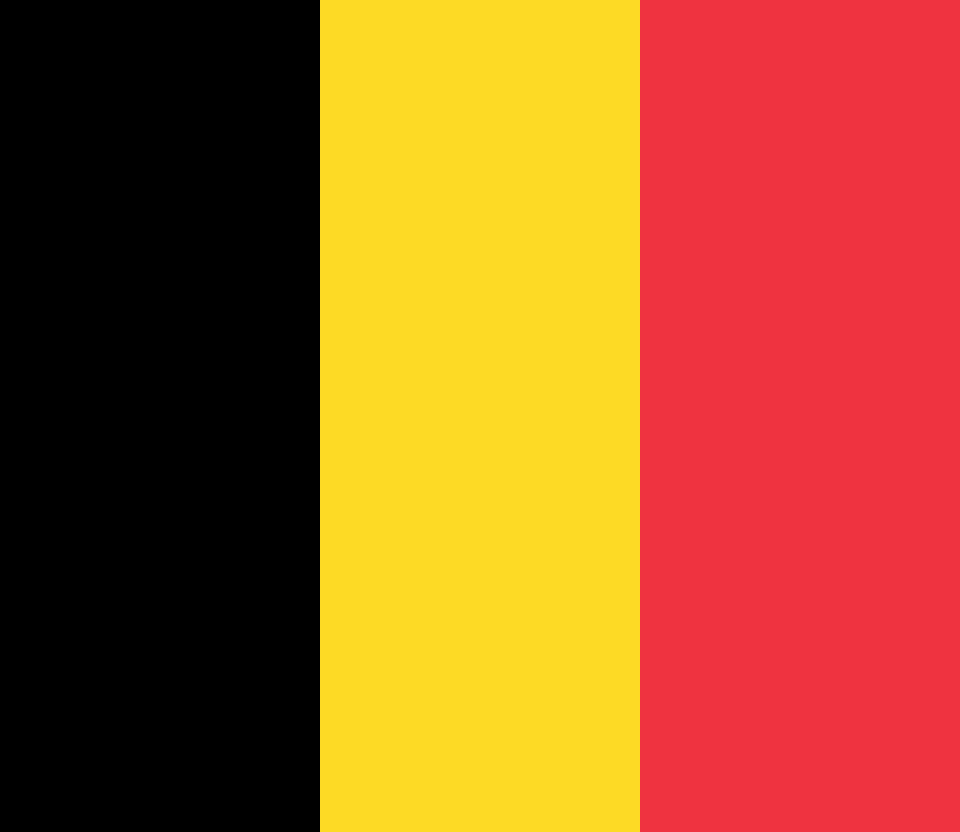
For centuries, the coastal lowlands of Northwestern Europe served as a continental crossroads, contested and controlled by a succession of external empires.
On a late August evening in 1830, the audience at the Théâtre de la Monnaie in Brussels rose in a frenzy, ignited by a duet in Daniel Auber’s opera La Muette de Portici. The singers’ call to arms—a theatrical cry for liberty—spilled from the playhouse into the rain-slicked streets, where a crowd of bourgeois youths, laborers, and disaffected citizens quickly swelled into an insurrection. Within hours, the symbols of Dutch authority were torn down, and the machinery of King William I’s government began to splinter. This was not merely a riot; it was the birth pang of a new state, the sudden crystallization of a distinct nation from a territory long contested, divided, and bartered by the dynastic houses of Europe. For centuries, the coastal lowlands lying between the Scheldt and the Meuse had been known as the "Battlefield of Europe," a landscape of rich merchant cities and fertile plains that served as the default arena where empires settled their grievances. Yet, in the autumn of 1830, the inhabitants of these Southern Provinces claimed the land for themselves, reviving an ancient Roman name to christen their fragile experiment: Belgium.
The name itself carried the weight of classical antiquity, first recorded by Julius Caesar when he encountered the Belgae tribes and declared them the bravest of all Gauls. Through the rise and fall of the Western Roman Empire, the land evolved into Gallia Belgica and eventually became a frontier zone where Romanized populations integrated with Germanic-speaking Franks. By the Middle Ages, the territory had fractured into a mosaic of wealthy, semi-independent counties, duchies, and prince-bishoprics. The County of Flanders, in particular, grew fabulously wealthy on the medieval cloth trade, its proud urban militias occasionally humbling foreign kings, as they did at the Battle of the Golden Spurs in 1302. This dense network of trading hubs—Bruges, Ghent, Antwerp, and Liège—retained their fierce municipal privileges even as they were coaxed or coerced into larger political unions. First came the Burgundians in the fifteenth century, who unified the region into the Burgundian Netherlands and fostered a glittering era of Northern Renaissance art. This inheritance passed to the global empire of the Habsburgs, under whom the Low Countries would be tragically severed. The Eighty Years' War, ignited by Spanish Catholic suppression of the Protestant Reformation, split the provinces in two. The northern United Provinces broke away to form the Dutch Republic, while the Southern Netherlands remained bound to the Catholic crown, ruled successively by Habsburg Spain and Habsburg Austria.
For nearly two centuries, these southern Catholic provinces existed as a prized geopolitical buffer, repeatedly marched over by the armies of Louis XIV and his rivals during the great dynastic wars of the seventeenth and eighteenth centuries. The French Revolutionary Wars shattered this old order. In 1794, French republican armies swept across the Meuse, ending Austrian rule and annexing the entire territory, including the independent Prince-Bishopric of Liège. Napoleon’s subsequent defeat on the battlefield of Waterloo in 1815 forced the victorious allied powers to redraw the map of Europe at the Congress of Vienna. Seeking to construct a formidable barrier against future French aggression, the diplomats merged the former Dutch Republic and the Southern Netherlands into a single, artificial state: the United Kingdom of the Netherlands, ruled by the Protestant King William I of Orange.
+ 6 further connections to entries not yet ingested
It was a marriage of convenience that pleased geopolitical architects but deeply alienated the southern population. Though the two regions shared a contiguous geography and, in many areas, linguistic ties, fifteen years of union exposed deep, systemic fractures. The Catholic south chafed under a northern, Protestant-dominated administration that controlled the civil service, enacted unpopular tax reforms, and attempted to impose Dutch as the sole official language of administration. Furthermore, the southern elite—a wealthy, French-speaking bourgeoisie—found themselves politically marginalized despite representing a larger share of the kingdom's population. When the spark of revolution jumped from Paris to Brussels in the summer of 1830, the provisional government and the national congress that emerged moved swiftly to establish a highly centralized, independent state. They drafted a progressive, laicist constitution based on the Napoleonic Code, declared French the sole official language of the new state, and, in 1831, installed Leopold I of Saxe-Coburg-Gotha as the first King of the Belgians.
The newly minted Kingdom of Belgium was an paradox: a state born of a revolution that was fundamentally conservative, bourgeois, and Catholic in its leadership, yet remarkably progressive in its constitutional framework. It was also a nation built upon a profound internal division. The northern half of the country, Flanders, was predominantly Dutch-speaking, while the southern half, Wallonia, was French-speaking, with Brussels sitting as a bilingual enclave in the middle. Initially, this division was masked by the total hegemony of the French-speaking elite. French was the language of the court, the parliament, the judiciary, and the high bourgeoisie. Yet, this cultural asymmetry was mirrored by a dramatic economic divergence. In the nineteenth century, Belgium became the first country on the European continent to fully embrace the Industrial Revolution. Wallonia, with its vast coal reserves and iron ore deposits along the Sambre and Meuse valleys, transformed into an industrial powerhouse of heavy metallurgy and mining. Flanders, by contrast, remained largely agrarian and economically disadvantaged, its traditional textile industries struggling to compete with mechanization.
This economic imbalance fueled a slow but inexorable cultural awakening in the north. Throughout the late nineteenth and twentieth centuries, the Flemish movement campaigned tirelessly for the linguistic and political recognition of Dutch. The struggle was waged in classrooms, courtrooms, and parliament, gradually dismantling the absolute monopoly of the French language. Landmark legislation in 1898 officially recognized Dutch as an equal language, and by 1967, the Belgian parliament finally adopted an official Dutch version of the Constitution. However, as Flanders steadily modernized and eventually surpassed Wallonia economically in the post-World War II era—transitioning into a highly prosperous, high-tech, and service-oriented economy while the old heavy industries of the south collapsed—the political dynamics of the nation shifted dramatically.
To prevent the outright fracturing of the state under the weight of these linguistic and economic tensions, Belgium underwent a series of profound constitutional transformations between 1970 and 1993. It dismantled its unitary structure, reinventing itself as a complex federal state. This intricate system was designed to balance two different types of autonomy: regional and linguistic. The country was divided into three highly autonomous regions—the Flemish Region in the north, the Walloon Region in the south, and the Brussels-Capital Region—which managed economic and territorial matters. Superimposed upon these regions were three linguistic communities—the Dutch-speaking, the French-speaking, and a tiny German-speaking minority in the east—responsible for cultural and educational affairs.
This elaborate architecture, comprising six different governments, succeeded in keeping the country together but resulted in one of the most fragmented and complicated political systems in the world. The deep divisions between the Dutch-speaking majority (roughly sixty percent of the population) and the French-speaking minority (around forty percent) continued to shape the national character, occasionally paralyzing the state entirely, as evidenced by a historic 589-day period without a federal government following the 2010 elections.
Yet, despite this perpetual internal negotiation, Belgium’s geographical position at the crossroads of Western Europe ensured that its destiny remained tied to the wider world. Its capital, Brussels, grew from the medieval seat of the Dukes of Brabant into the administrative heart of the modern Western alliance. Today, it hosts the headquarters of the North Atlantic Treaty Organization and serves as the de facto capital of the European Union, hosting the European Commission, the Council of the European Union, and the European Council. The battlefields that once defined the territory have been replaced by the glass-and-steel towers of international diplomacy. The state that was constructed in 1830 as a geopolitical buffer zone has become the very center where the nations of Europe attempt to transcend their borders, a monument to the delicate art of compromise.