Organization · 1910 CE · Age of Sail and Empire
South Africa
- Also known as
- Aafrikaa Kibbaa
- Abagatan nga Aprika
- Abibir Anaafo
- Aferika Borwa
- Aferika i Saute
- Afirika Osiki
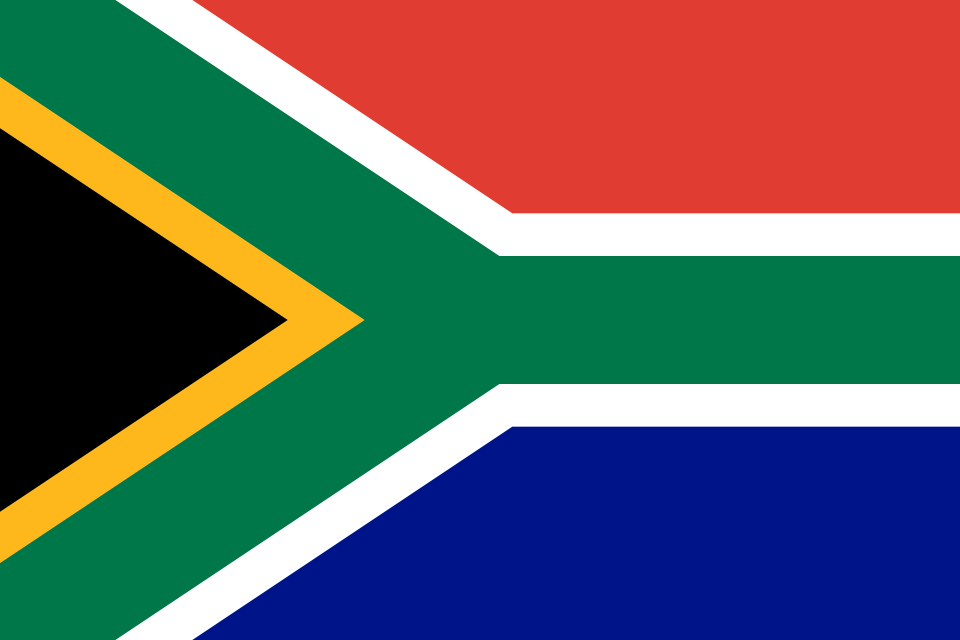
Two and a half million years before it became a modern state, the southern tip of the African continent was already home to some of the earth's earliest hominids, followed over a hundred thousand years ago by anatomically modern humans.
In May 1910, a new state was born at the southern tip of the African continent, not through the sudden triumph of a liberation movement, but through the exhausted compromise of former enemies. The Union of South Africa brought together under a single flag four British territories: the Cape and Natal colonies, and the defeated Boer republics of the Transvaal and the Orange River. For the British Empire, it was a triumph of reconciliation, a diplomatic masterpiece that seemed to heal the bitter scars of the Second Boer War, which had ended only eight years prior. Yet this act of political amalgamation contained a profound and deliberate silence. To forge a fragile peace between the white English-speaking and Dutch-speaking populations, the architects of the Union chose to sideline the political future of the overwhelming majority of the land's inhabitants. The birth of the Union of South Africa was a moment of profound structural closure, cementing a racial hierarchy that would dictate the course of the twentieth century.
The landscape over which this new dominion stretched was as vast and varied as it was rich. Spanning over 1.2 million square kilometres, the territory rose from a coastline along the South Atlantic and Indian Oceans into dramatic, terrace-like mountain ramparts, including the formidable Drakensberg range. These mountains shut off the interior, leading to a massive tableland with a mean elevation of four thousand feet. This physical conformation, with its dry, bracing high veld and the arid stretches of the Karroo and the Kalahari Desert, had long shaped the human history of the region. It was a land of ancient deep time, home to some of the oldest hominin fossil sites in the world, such as the limestone caves of the Cradle of Humankind. For hundreds of thousands of years, modern humans and their ancestors had walked this high plateau. By the time the Dutch East India Company established a modest victualling station at the Cape of Good Hope in 1652 under Jan van Riebeeck, the region was already a complex tapestry of indigenous Khoisan hunter-gatherers and pastoralists, as well as Bantu-speaking agriculturalists and metalworkers who had migrated southwards over the preceding millennia, establishing sophisticated polities like the thirteenth-century Kingdom of Mapungubwe.
The arrival of European settlers disrupted these ancient dynamics, setting off centuries of territorial conflict. As Dutch colonists, or Boers, pushed eastward in search of pastureland, they clashed with the Xhosa nation along the Great Fish River. The geopolitics of the region shifted permanently during the Napoleonic era when Great Britain, recognizing the Cape of Good Hope as the strategic key to India and the East, seized the colony by force in 1795 and consolidated its rule by 1806. The British victory dealt a death blow to the mercenary, monopolistic rule of the Dutch East India Company, but it also sowed the seeds of deep-seated Boer resentment. Desiring to escape British authority and the changing colonial laws, thousands of Boers embarked on the Great Trek into the interior, eventually establishing the independent South African Republic in the Transvaal and the Orange Free State.
Connected to
- containsJohannesburg1886 CE
- had as citizenNelson Mandela1918 CE
- in country · containsSouth Africa1910 CE
+ 4 further connections to entries not yet ingested