Event · 1430 CE – 1760 CE · Indian Ocean Trade
Kingdom of Mutapa
- Also known as
- Empire du Monomotapa
- Imperio de Monomotapa
- Impero di Monomotapa
- Império Monomopata
- Império Monomotapa
- Império Mwenemutapa
A desperate search for salt on the northern Zimbabwean Plateau may have birthed one of the most formidable powers of the southern African interior.
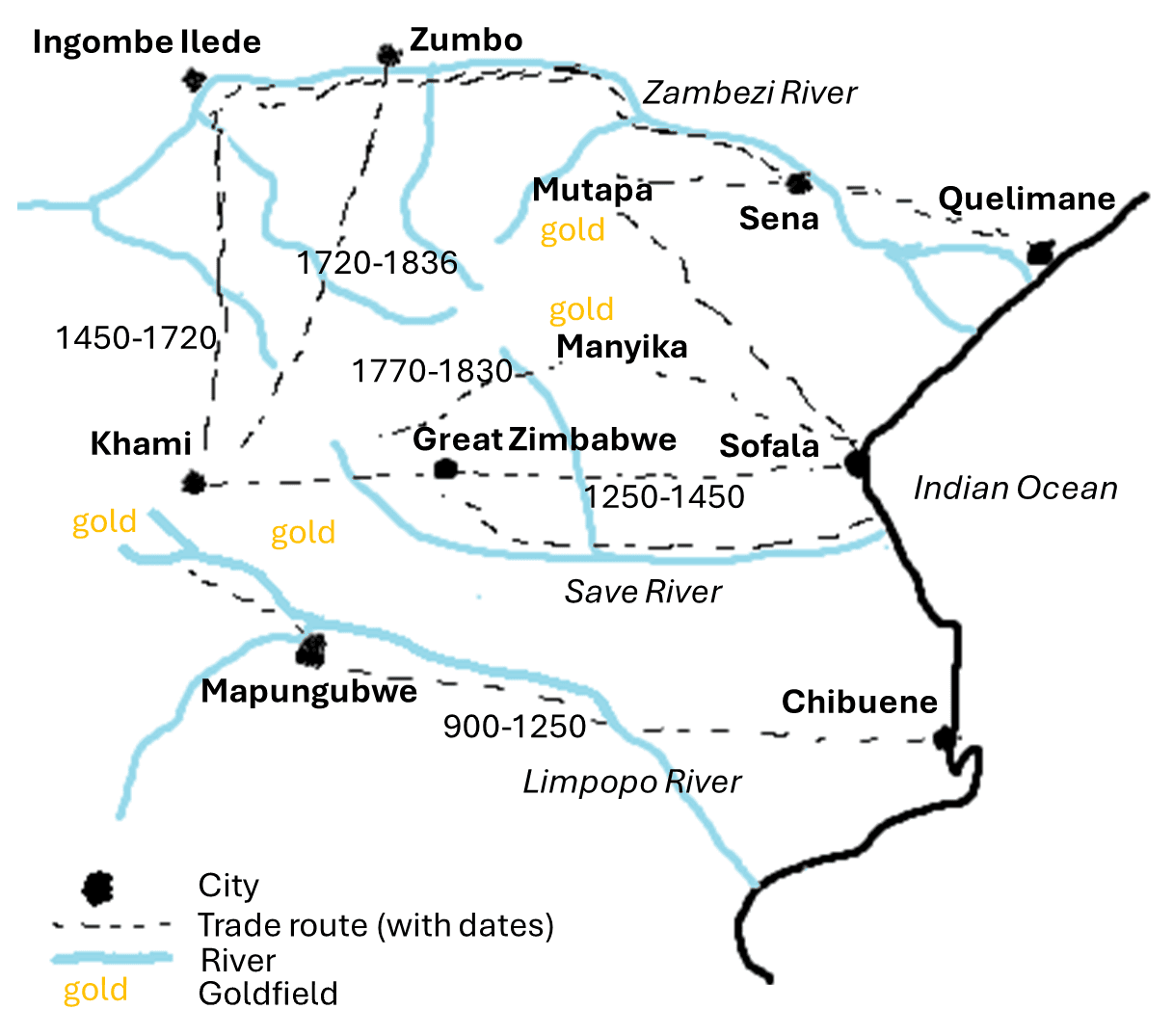
The transition of power on the high, windswept grasslands of the northern Zimbabwean Plateau began, according to Shona oral history, with a sudden, devastating quiet: the disappearance of salt. In the early fifteenth century, Great Zimbabwe—the monumental stone metropolis that had long anchored the trade of southeastern Africa—was faltering under the weight of resource depletion and agricultural exhaustion. Seeking new lands, a hunter-warrior of the militaristic Nzou Samanyanga clan named Mutota led a migration of Karanga people northward toward the Zambezi River. In the lowlands of Dande, Mutota found the vital salt deposits his people lacked, alongside a geography primed for commerce. Swahili merchants from the coastal enclave of Angoche had recently pioneered a new trade route along the Zambezi, bypassing older channels to reach the southern goldfields. By marrying into local Tavara and Tonga clans and exploiting their succession disputes, Mutota established a new hegemony. At Chitako-Changonya Hill, he built a stone enclosure—a zimbabwe—and took the title Mwene we Mutapa, the "Lord of the Conquered Land." To the Portuguese who would arrive decades later, this title would be transliterated into a singular, legendary name for both the king and his vast domain: Monomotapa.
This was a land of stark, dramatic contrasts, bounded by the great Zambezi and Limpopo river valleys, the Kalahari Desert to the west, and the Indian Ocean to the east. Across this savannah-woodland plateau, dominated by high-altitude musasa and munondo trees, the early Mutapa state grew through both military conquest and delicate ritual negotiation. Mutota’s legendary successor, Matope—who may represent a composite of several generations of early rulers—consolidated the empire through a series of sweeping campaigns. To secure his succession, tradition holds that Matope committed ritual incest with his sister Nyamhita, who became the revered spiritual medium Nehanda. Matope pushed the empire’s borders eastward toward the sea, subduing the Tavara rainmaking priest Karuva of the Dzivaguru cult and guaranteeing safe passage for Swahili-Muslim traders at the inland river bazaars of Sena. By the late fifteenth century, the Mutapa kings sat at the center of a complex network of vassal states, controlling the flow of gold, ivory, and copper from the interior to the global markets of the Indian Ocean.
Yet the vastness of the empire carried the seeds of chronic instability. The southern province of Guruuswa, rich in gold and cattle, was governed by Changamire I, an extraordinarily influential official whose lineage remained a subject of intense speculation and dread at court. Around 1490, fueled by rumors that the king intended to subject him to a traditional trial by poison, Changamire marched his army on the royal , killed Mwenemutapa Nyahuma Mukombero, and seized the throne. He systematically executed twenty-one of Mukombero’s sons, but one, Chikuyo Chisamarengu, escaped. Four years later, Chikuyo returned with a massive force, slaying Changamire I in a catastrophic battle. While Chikuyo reclaimed the title of Mwenemutapa, the southern provinces remained fiercely loyal to Changamire II. This split birthed the rival Torwa dynasty of Butua, initiating centuries of sporadic, exhausting civil war that splintered the plateau and left the empire vulnerable to a new, aggressive maritime power creeping up from the coast.
Connected to
1 link to entries not yet ingested in the Library.