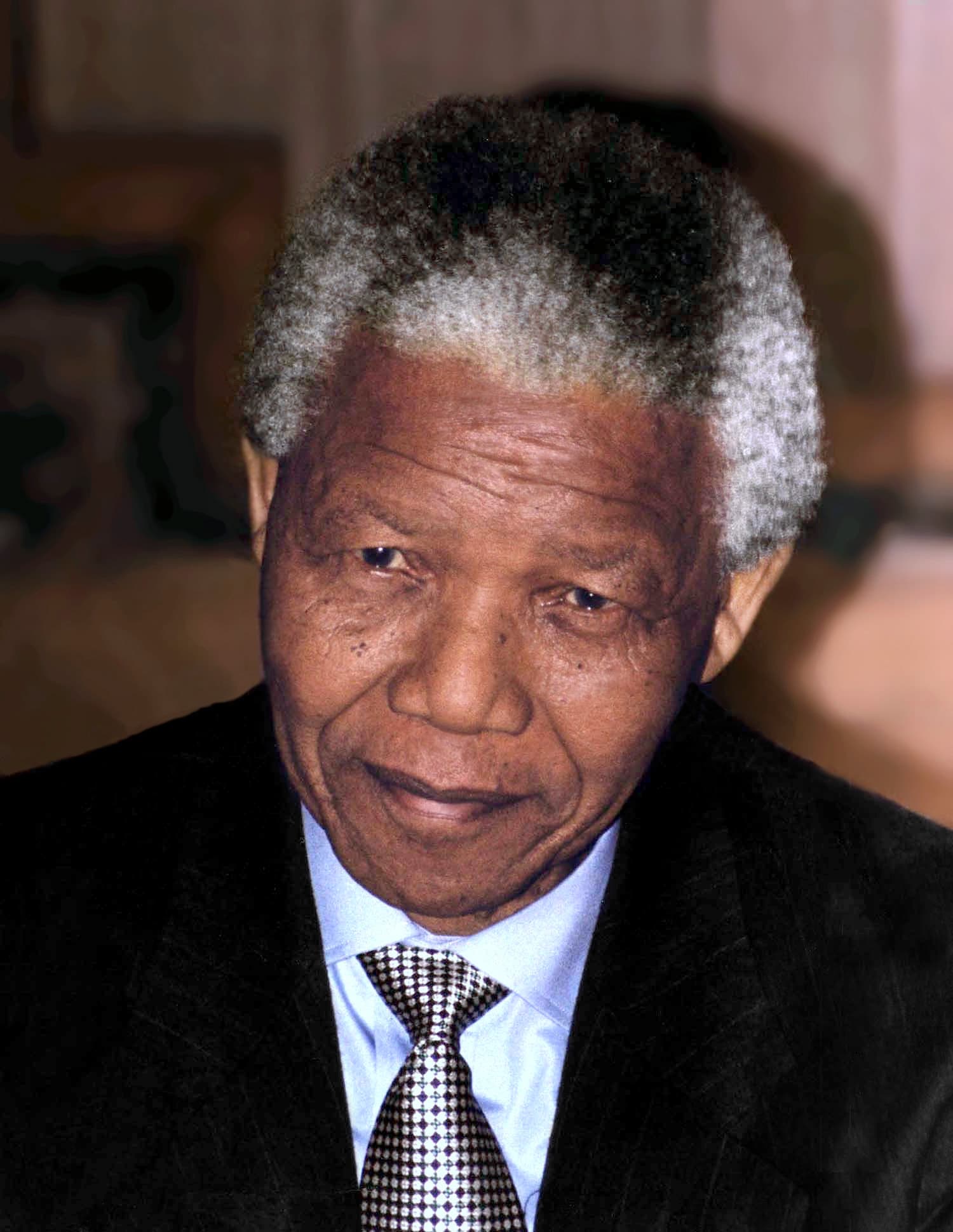
To understand the trajectory of Nelson Rolihlahla Mandela is to watch a prince of the Thembu royal family transform first into a Johannesburg lawyer, then into a clandestine revolutionary, and finally into the architect of a rebuilt nation.
In the late autumn of 1940, two young men fled the rolling green hills of Thembuland, stealing away under the cover of night to escape the marriages arranged for them by their guardian, the regent King Jongintaba. Among them was Rolihlahla Mandela, a young man of patrician Xhosa blood whose birth name colloquially translated as "troublemaker." He had spent his youth tending herds in the quiet village of Qunu and absorbing the history of his ancestors at the royal court of Mqhekezweni. His journey took him northwest, away from the expectations of the royal council and toward the smoky, sprawling gold-mining metropolis of Johannesburg. To arrive in Johannesburg in 1941 was to witness the raw, mechanical heart of South African capitalism. For Mandela, whose early life had been defined by rural custom, Wesleyan mission schooling, and the belief that the British Empire was a benevolent bringer of education, the city was a jarring revelation. He found his first employment as a night watchman at Crown Mines, only to be promptly dismissed when the headman learned he was a runaway. Yet this flight from the traditional world was the catalyst that placed Mandela in the path of Walter Sisulu, an active member of the African National Congress (ANC). Sisulu secured the young migrant a clerkship at a law firm run by a sympathetic liberal, Lazar Sidelsky, setting into motion a political evolution that would ultimately dismantle the state he was arriving to serve.
It was in the cramped offices of Witkin, Sidelsky and Eidelman that Mandela’s education in radical politics truly began. He worked by day and studied for his bachelor's degree by correspondence at night, living in the impoverished, vibrant Alexandra township, and later in a mining compound alongside workers from across southern Africa. In Johannesburg, he made his first white friends, including Jewish communists who invited him to multi-racial political gatherings. Here, Africans, Europeans, Indians, and Coloureds mixed as equals—a sight that deeply moved him. While his deeply ingrained Methodist faith and his belief that the South African struggle was fundamentally about race rather than class prevented him from joining the Communist Party, he was irrevocably changed by these encounters. After completing his degree in 1943, he enrolled at the University of the Witwatersrand to study law, standing out as the institution's only Black African law student. Enduring the daily indignities of academic racism, he forged enduring friendships with white and Indian radicals, including Joe Slovo and Ruth First. He joined the ANC in 1943, and alongside Sisulu and his old university friend Oliver Tambo, co-founded the ANC Youth League in 1944. They aimed to transform a polite, petitioning organization of the Black middle class into a mass, militant movement capable of challenging the white minority state.
12 links to entries not yet ingested in the Library.
When the white-only electorate voted the National Party into power in 1948, the government began codifying the ruthless system of racial segregation known as apartheid. In response, Mandela’s political life accelerated from debate to direct defiance. During the 1952 Defiance Campaign and the 1955 Congress of the People, he emerged as a leading organizer of civil disobedience, courting arrests and surviving the marathon, unsuccessful 1956 Treason Trial. But as the state responded to peaceful protests with escalating violence and bannings, Mandela’s tactical philosophy shifted. Secretly joining the banned South African Communist Party, he began studying Marxist theory. Though he had long championed non-violent protest, by 1961 he concluded that peaceful resistance had met a closed door. In collaboration with communist allies, he co-founded uMkhonto we Sizwe ("Spear of the Nation"), the armed wing of the ANC, and initiated a campaign of sabotage against government infrastructure. His underground life as a fugitive commander was short-lived, however. Following his arrest and the subsequent Rivonia Trial of 1963–1964, Mandela and his comrades faced the gallows. Instead, he was sentenced to life imprisonment, utilizing the dock not to beg for mercy, but to deliver a classic statement of defiance, declaring that a free, democratic society was an ideal for which he was prepared to die.
For twenty-seven years, Mandela was transformed from an active politician into a powerful, invisible symbol, locked away on Robben Island and later in Pollsmoor and Victor Verster prisons. While he labored in a limestone quarry, the world outside changed. The anti-apartheid movement grew into an international crusade, and South Africa drifted toward economic isolation and the brink of a bloody racial civil war. Recognizing the stalemate—that the state could not destroy the liberation movement, and the movement could not defeat the state by force—President F. W. de Klerk lifted the ban on the ANC and, in February 1990, released Mandela. The man who walked out of Victor Verster Prison was seventy-one years old, grey-haired, and possessed of a formidable, calculated dignity. Over the next four years, Mandela led the ANC through treacherous, fragile negotiations with de Klerk's government. He walked a razor-thin line, managing the revolutionary expectations of his followers while assuaging the existential fears of the white minority. Despite critics on the far left who accused him of compromising too much, and those on the right who still feared him as a communist revolutionary, Mandela steered the nation toward its first fully representative, multiracial democratic election in 1994.
Mandela’s presidency, which lasted from 1994 to 1999, was less about revolutionary economic restructuring and more about the delicate, urgent work of national survival. Though ideologically a socialist, his administration retained the liberal economic framework of his predecessors to maintain stability and prevent capital flight, while introducing targeted measures for land reform, poverty alleviation, and healthcare. His presidency was defined by the theater of reconciliation—most notably manifested in the Truth and Reconciliation Commission, which sought to exhume the horrors of the past through confession rather than retributive justice. Declining to seek a second term in 1999, he stepped down in favor of Thabo Mbeki, choosing to spend his remaining active years combatting the HIV/AIDS epidemic and global poverty through his foundation. When he died in 2013 at the age of ninety-five, he was mourned globally as "Madiba," the father of his nation. To South Africa and the wider world, he left behind a complex legacy: he had not solved the deep-seated economic inequalities that still plagued his country, but he had prevented a civil war, proving that a fractured society could, through sheer political will, rewrite its own destiny.