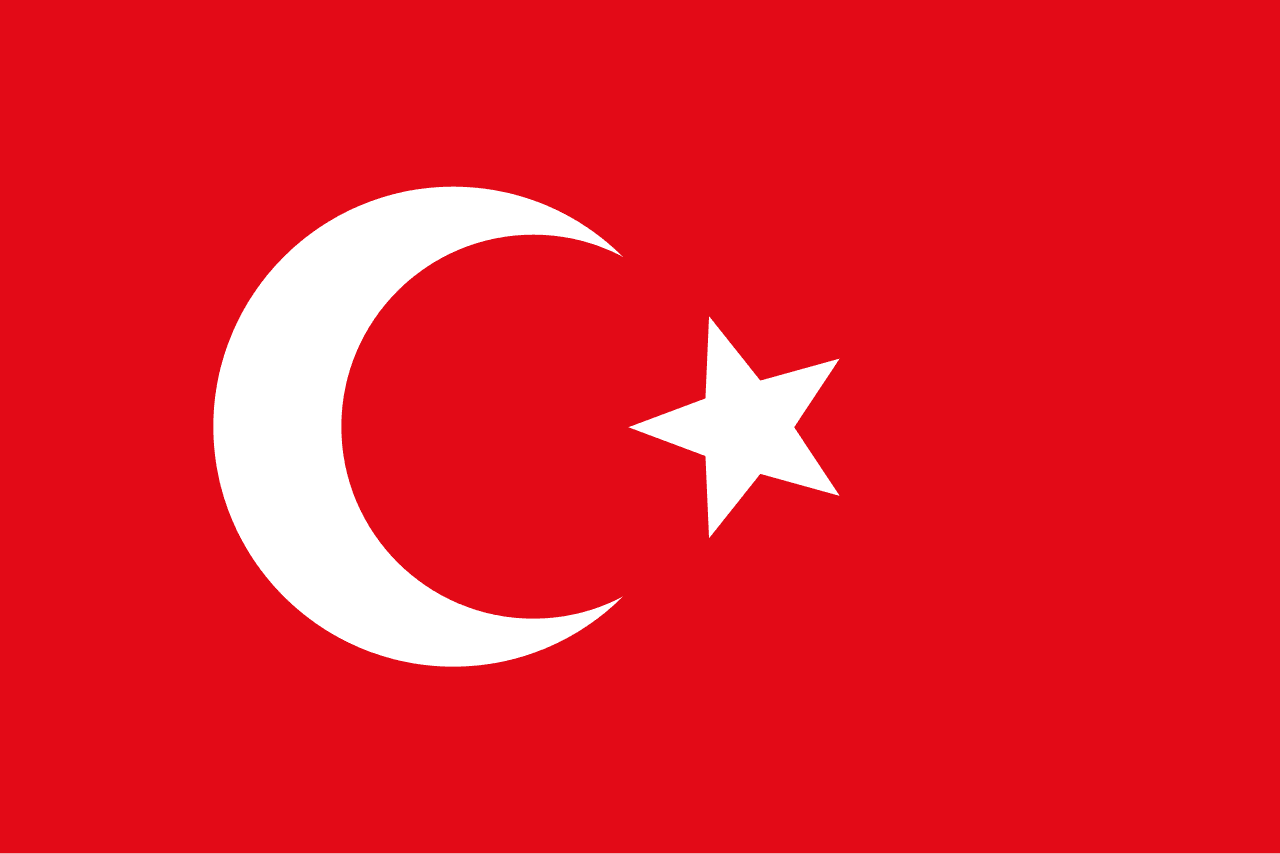
A minor principality founded by the Turkoman tribal leader Osman I in northwestern Anatolia around 1299 CE would grow to dismantle the remnants of antiquity and redraw the map of three continents.
The name that echoed through the chancelleries of Europe for six centuries began not as a grand imperial title, but as an historical anglicisation of a single man’s name: Osman, a Turkoman tribal leader of obscure origins. In the twilight of the thirteenth century, as the Seljuk Sultanate of Rum splintered into a patchwork of competitive Anatolian principalities, Osman’s followers carved out a modest territory in Bithynia, positioned precariously on the vulnerable frontier of the Byzantine Empire. To his tribal followers in the fourteenth century, the term Osmanlı designated their personal allegiance to his house. To the outside world, this frontier band of Turkish horsemen and Byzantine renegades—many, though not all, converts to Islam—was initiating one of history’s most formidable state-building enterprises. Yet the highly educated, urban-dwelling Turkish speakers who would later run this state did not refer to themselves as Turks, a term they disparaged as fitting only for rustic Anatolian peasants. Nor did they initially claim the title of Osmanlı, which was reserved for the military-administrative elite. Instead, they called themselves Rūmī—Romans—the rightful inheritors of the physical and cultural landscape of the fallen Byzantine world they had systematically absorbed.
The rise of the Ottomans from a petty border principality to a transcontinental titan was fueled by a combination of geopolitical opportunism, institutional flexibility, and demographic catastrophe. As the Black Death swept through the mid-fourteenth century, it left the Byzantine territories demographically and militarily exhausted, clearing a path for the rapid Ottoman advance. The conquest of the Balkans unfolded through what some modern historians identify as an extended akıncı phase, spanning eight to thirteen decades of continuous slave hunting and destruction, which served as the primary economic engine of early Ottoman expansion before the lands were integrated into the formal imperial administration. Moving swiftly, Osman’s son, Orhan, seized Bursa in 1326, establishing it as a capital. The strategic port of Thessaloniki was wrested from the Venetians in 1387, and the crushing victory at the Battle of Kosovo in 1389 effectively shattered Serbian power. When a massive coalition of Hungarian, Polish, and Wallachian forces attempted to halt the Turkish advance in 1396 at the Battle of Nicopolis—often remembered as the last large-scale crusade of the Middle Ages—the Ottomans decisively routed them. Even a catastrophic defeat in 1402 at the hands of the Turco-Mongol conqueror Timur, who captured Sultan Bayezid I at the Battle of Ankara and plunged the Ottoman state into a decade of fratricidal civil war, could not permanently halt their momentum. By the 1440s, Sultan Murad II had recovered the lost Balkan territories and shattered renewed European crusades at Varna and Kosovo.
The symbolic transition from a regional powerhouse to an undisputed global empire occurred on 29 May 1453, when Murad II’s son, Mehmed II, known thereafter as the Conqueror, breached the legendary Triple Walls of Constantinople. By extinguishing the final vestige of the Byzantine Empire, Mehmed repositioned the renamed city of Constantinople at the geographic and economic center of interactions between Europe and the Middle East. Mehmed’s governance set the template for the classic Ottoman imperial system: rather than enforcing religious homogeneity, he allowed the Eastern Orthodox Church to retain its autonomy and lands in exchange for acknowledging Ottoman suzerainty. This pragmatism proved highly effective; weary of the heavy-handed alternative of Venetian rule, much of the Orthodox population accepted their new Muslim overlords. To govern this sprawling multi-ethnic domain, the Ottomans developed the millet system, granting varying levels of autonomy to different confessional communities to manage their own internal affairs under their own laws. The empire’s expansion then accelerated dramatically under Selim I, who ruled from 1512 to 1520. Selim crushed the Safavid Persians at the Battle of Chaldiran and annihilated the Mamluk Sultanate of Egypt, securing control of the Red Sea, the holy cities of Mecca and Medina, and the major overland trade routes between Europe and Asia. In doing so, the Ottoman Sultans assumed the prestigious title of caliph.
Under Suleiman the Magnificent, who reigned from 1520 to 1566, the empire reached its geopolitical and cultural zenith. Suleiman pushed the imperial frontiers deep into the heart of Europe, capturing Belgrade in 1521 and establishing direct Ottoman rule over Hungary after his historic victory at the Battle of Mohács in 1526. Though his spectacular sieges of Vienna in 1529 and 1532 were repulsed, the Habsburgs were forced onto the defensive, and the principalities of Transylvania, Wallachia, and Moldavia became tribute-paying vassals of the Sublime Porte. In the east, Suleiman seized Baghdad from the Persians in 1535, opening naval access to the Persian Gulf, and partitioned the Caucasus with the Safavids. In the Mediterranean, Ottoman naval power contested Portuguese dominance in the Indian Ocean and Spanish hegemony in the Adriatic, forcing Venice to surrender most of its Aegean and Morean maritime possessions.
While modern historians reject the old narrative of sudden decline after Suleiman, pointing instead to a flexible and resilient economy and military that persisted well into the eighteenth century, the Second Siege of Vienna in 1683 nevertheless marked a permanent limit to Ottoman westward expansion. By the late eighteenth century, the empire began to fall behind Western Europe technologically, and central imperial authority fragmented. Rising nationalism in the wake of the French Revolution sparked successful independence movements in the Balkans, while successive, disastrous wars with Austria and Russia eroded the empire's frontiers. The nineteenth century became an era of frantic, existential restructuring. Under Mahmud II and the subsequent Tanzimat reforms, the state attempted to centralize and organize itself along European lines, cultivating a collective "Ottoman" identity to supersede ethnic divisions. In 1876, the empire briefly experimented with a constitutional monarchy, only for Sultan Abdul Hamid II to revert to an absolute autocracy following the Great Eastern Crisis.
This internal tension culminated in the early twentieth century. A group of Westernizing intellectuals known as the Young Turks, organized under the Committee of Union and Progress (CUP), led a successful revolution in 1908 to restore the constitution. However, the devastating Balkan Wars radicalized the CUP into an authoritarian, Turkish nationalist clique that seized absolute power in a 1913 coup d'état. Buffeted by the mass migration of millions of Muslim refugees fleeing persecution in the lost territories of the Balkans and the Russian Empire, the radicalized regime aligned with the Central Powers in World War I. The war spelled the end of the six-hundred-year-old dynasty. Struggling against internal rebellions like the Arab Revolt, the wartime regime perpetrated systematic genocides against its Armenian, Assyrian, and Greek populations. Following the Allied victory, the victorious powers partitioned the empire, occupying its Anatolian core and seizing its Arab provinces. It was only through the Turkish War of Independence, led by the military commander Mustafa Kemal Atatürk against the occupying Allies, that the imperial structure was finally swept away, culminating in the formal abolition of the Ottoman sultanate in 1922. What began as a nomadic band of horsemen on the Byzantine frontier ended as the modern Republic of Turkey, leaving behind a vast, complex legacy of cultural synthesis, administrative tolerance, and violent fracture that continues to define the modern geopolitical landscapes of Southeastern Europe, North Africa, and the Middle East.
+ 12 further connections to entries not yet ingested