Place · 1624 CE · Colonial Americas
New York City
- Also known as
- A gran mazá
- Apel Gedé
- Bajarê Nû York
- Bandar Raya New York
- Bandaraya New York
- Belt ta' New York
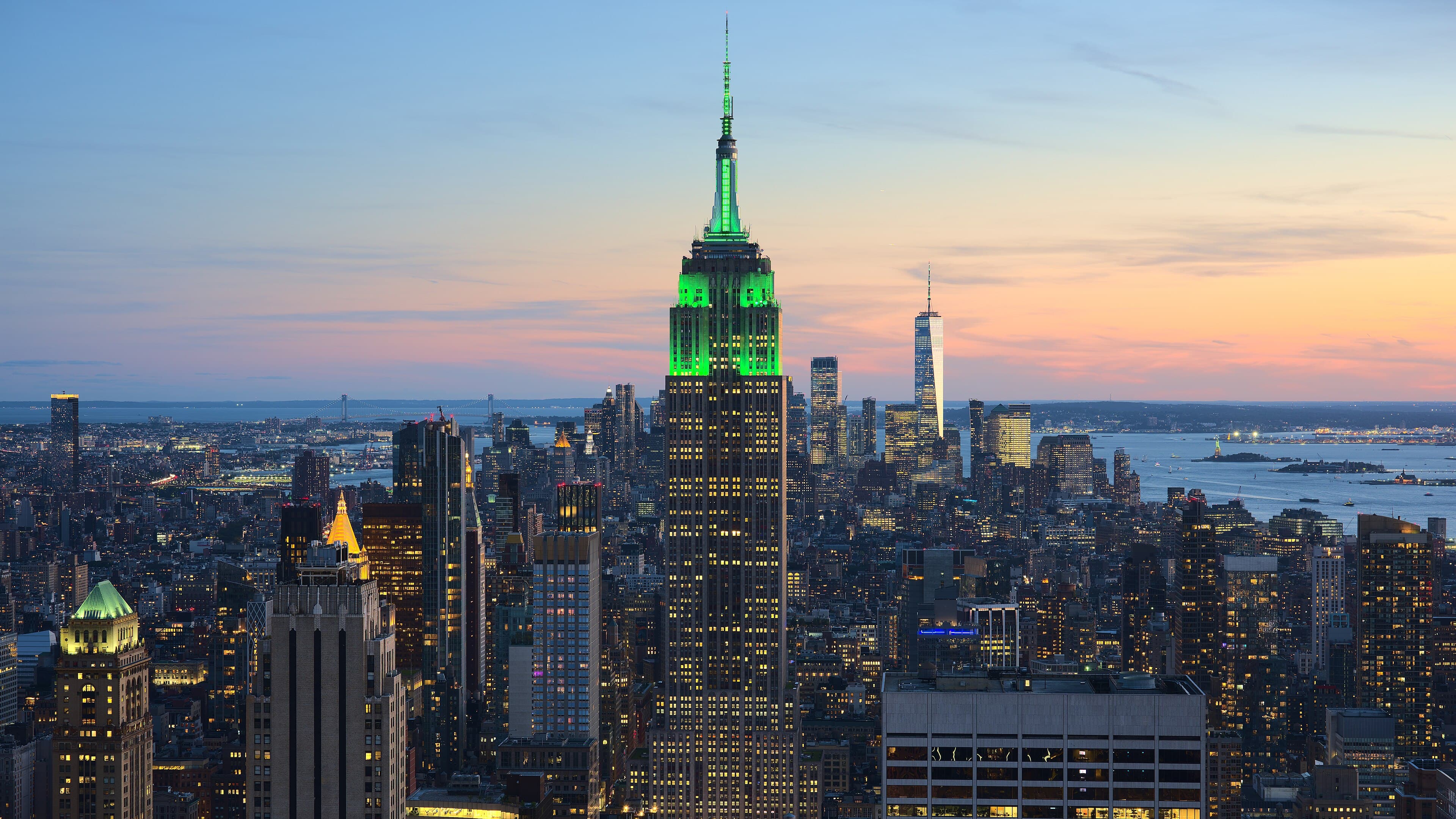
Around 1624, Munsee-speaking Lenape people inhabited the island of Manhattan, the same year Dutch colonists arrived to establish a trading post and Fort Amsterdam.
The deep, cold waters of the Atlantic do not yield easily to the continental shelf of North America, but where the coast of the mid-Atlantic bends inward, it forms a natural sanctuary. Here, the ocean narrows into an exceptionally deep harbor, carved by glaciers and fed by a massive river that runs deep into the interior of the continent. Long before European sails broke the horizon, this landscape of rocky ridges, salt marshes, and tidal straits was Lenapehoking—the homeland of the Munsee-speaking Lenape. To the Lenape, the long, narrow island of gneiss and schist at the center of this estuary was Manhattan, a rugged terrain of trout streams, dense hardwood forests, and rich hunting grounds. The arrival of European ships in the sixteenth and seventeenth centuries did not merely insert a new population into this ecosystem; it fundamentally reoriented the geography of the Atlantic world, transforming a quiet archipelago of estuaries into the central hinge of global commerce and imperial ambition.
The transformation began in earnest in the summer of 1609. Sailing under the flag of the Dutch East India Company, the English explorer Henry Hudson steered the Halve Maen into the wide, deep river that would eventually bear his name. Hudson was searching for the Northwest Passage, a shortcut to the riches of the Orient, but what he found instead was an abundance of beaver pelts and a harbor of unparalleled strategic value. Recognizing the geopolitical leverage of the waterway, the Dutch Republic claimed the region, naming it New Netherland. By 1624, the Dutch West India Company had established a permanent presence, first with a modest fur-trading outpost on Governors Island and, in the following year, with the construction of Fort Amsterdam on the southern tip of Manhattan Island. This fledgling settlement, christened New Amsterdam, was designed not as an imperial capital, but as a corporate enterprise. To secure their foothold, the company’s director, Peter Minuit, purchased Manhattan in 1626 from a local band of Lenape for trade goods valued at sixty guilders. Though popular legend would later cheapen this exchange into a handful of glass beads, it was a transaction that initiated a relentless process of indigenous displacement, setting the stage for a new kind of urban laboratory.
Life in New Amsterdam was defined by the transactional, pragmatic spirit of its corporate founders. Unlike the highly religious, homogeneous English colonies to the north, the Dutch settlement was a polyglot trading post from its inception. By the mid-seventeenth century, the town’s narrow streets, which ran from the fort up to a twelve-foot wooden stockade built to ward off raids, echoed with dozens of languages. When the Dutch West India Company relinquished its monopoly on the fur trade in 1639 to stimulate economic growth, the port experienced a surge in the trade of timber, food, tobacco, and enslaved labor. Peter Stuyvesant, arriving in 1647 as the last Dutch director-general, attempted to impose rigid order, regulating liquor sales and trying to suppress religious minorities. Yet the town’s mercantile reality resisted his autocratic impulses. When an English fleet appeared in the harbor in 1664, Stuyvesant, unable to rally the local population to fight, surrendered the colony without a drop of blood. The terms of capitulation preserved the Dutch residents’ property rights and religious freedoms—a concession that ensured the city's diverse, tolerant character would survive under its new proprietor, the Duke of York, who promptly renamed the settlement New York.
Connected to
- in countryUnited States1784 CE
+ 12 further connections to entries not yet ingested