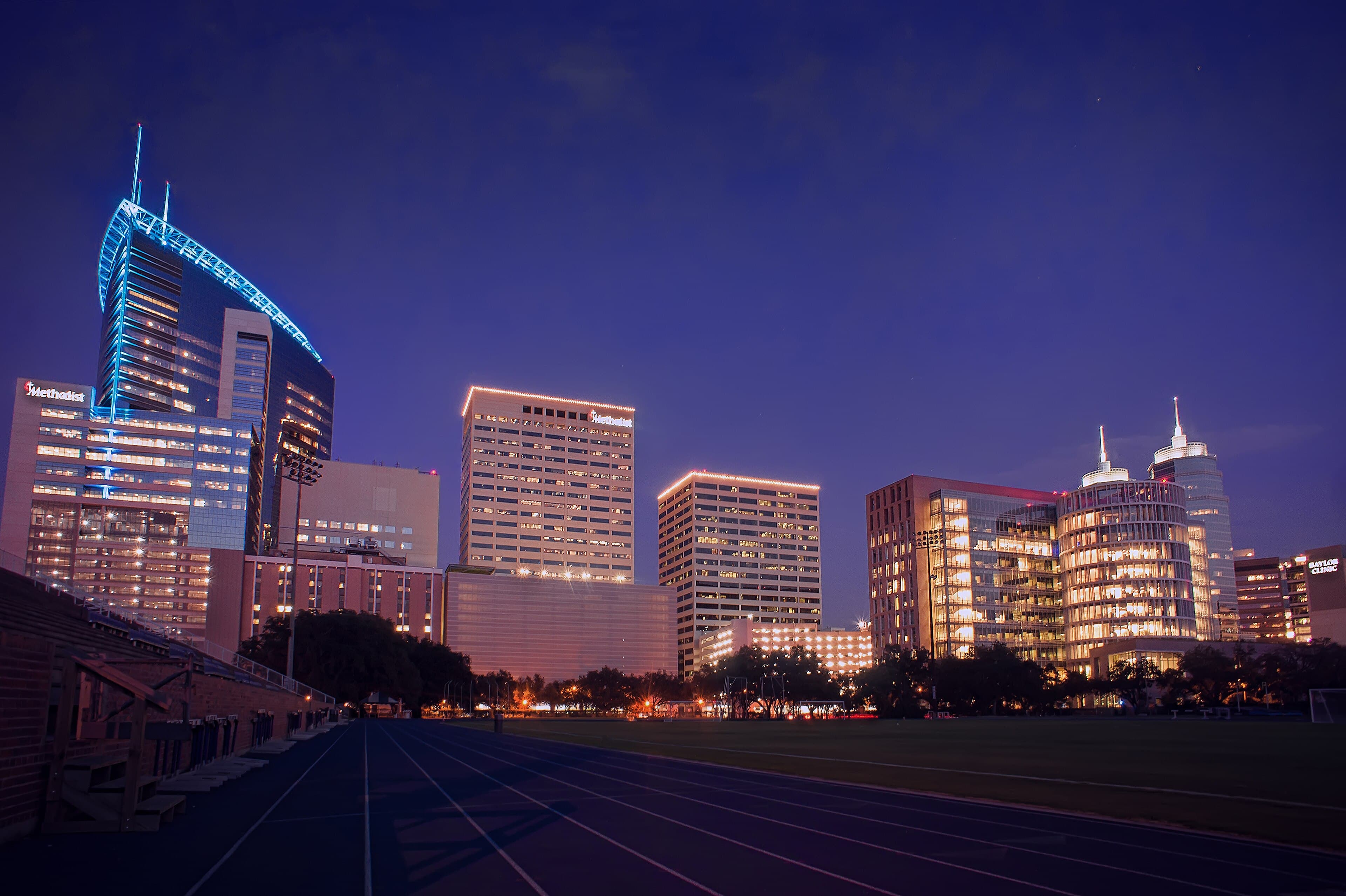
On August 30, 1836, two land investors stood at the muddy confluence of Buffalo Bayou and White Oak Bayou, envisioning a metropolis where others saw only wilderness.
Before it was a metropolis, before it was a shipping channel or an empire of oil, Houston was a real estate speculation scrawled on a map of mud and mosquito-infested bayous. On August 30, 1836, an advertisement appeared in the Telegraph and Texas Register promoting a townsite at the confluence of Buffalo Bayou and White Oak Bayou, a place the promoters confidently declared was the natural commercial gateway to the interior of a brand-new republic. The advertisers were two brothers from New York, Augustus Chapman and John Kirby Allen. Just four days prior, they had purchased a half-league of land—about 2,214 acres—from Elizabeth E. Parrott, the widow of John Austin, for $5,000, paying only a fifth of that in cash. The land was flat, swampy, and largely silent, having remained mostly uninhabited since the late eighteenth century when the Karankawa and Atakapa indigenous peoples, who had occupied the region for at least two millennia, were decimated by foreign diseases and violent competition with waves of European and American settlers. To this empty stretch of water and clay, the Allen brothers gave the grandest name they could find: Houston, in honor of General Sam Houston, the hero who had secured Texas’s independence from Mexico just months earlier at the Battle of San Jacinto, a mere twenty-five miles down the bayou.
It was a brilliant piece of political theater. At the beginning of 1837, the town consisted of about a dozen souls living in tents and crude shelters. Yet through relentless lobbying, the Allen brothers convinced the Congress of the Republic of Texas to designate their paper city as the temporary national capital, promising to construct a capitol building to house the government. By May of that year, when the Texas Congress convened for the first time in Houston, the population had exploded to fifteen hundred. On June 5, 1837, the settlement was formally incorporated, and James S. Holman was elected its first mayor. But the initial triumph was short-lived. In 1839, the government packed its papers and moved the capital west to Austin. That same year, a yellow fever epidemic swept through the humid streets of Houston, claiming the life of one out of every eight residents. Despite these disasters, the city survived because of its geography. Landlocked farmers from the Texas interior discovered that they could haul their cotton and sugar to the banks of Buffalo Bayou, where Houston merchants would buy the crops, load them onto flatboats, and float them down to the deep-water port at Galveston. In return, the merchants sold the farmers dry goods, tools, and groceries, establishing a symbiotic relationship that turned Houston into a regional trading hub.
This early agricultural economy was deeply tied to the institution of slavery. While the vast majority of enslaved people in Texas arrived with their owners from older southern states, Houston also became a hub for domestic slave dealers who funneled human labor from New Orleans into the surrounding countryside. Thousands of enslaved Black people lived in and around the city before the American Civil War, laboring on the sugarcane and cotton plantations of the region or working within the city limits as domestic servants and skilled artisans. By 1860, the city’s economic dominance was solidified by the arrival of the steam engine. Railroad spurs from across the vast Texas interior converged on Houston, which in turn connected to the coastal ports of Galveston and Beaumont. During the Civil War, this rail network made the city a vital strategic prize; Confederate Major General John B. Magruder established his headquarters here, using Houston as the staging ground to recapture Galveston. When the war ended, the city’s business leaders turned their attention back to the water, launching ambitious efforts to dredge and widen the bayous so that ocean-going vessels could bypass Galveston entirely and dock directly in town.
+ 8 further connections to entries not yet ingested
The turning point that transformed Houston from a provincial railroad hub into a global titan came at the dawn of the twentieth century, delivered by a double stroke of tragedy and natural fortune. In September 1900, a catastrophic hurricane tore through Galveston, destroying the island city and convincing both industrial leaders and the federal government that Texas needed a secure, inland deep-water port. Two years later, President Theodore Roosevelt signed a $1 million appropriation to transform the shallow Buffalo Bayou into the Houston Ship Channel. Almost simultaneously, the discovery of oil at the Spindletop oil field near Beaumont in 1901 ignited the Texas petroleum boom. Houston, with its converged rail lines and developing channel, became the natural headquarters for the new industry. By 1910, the city’s population had nearly doubled to 78,800—with African Americans making up nearly a third of those residents—and in 1914, President Woodrow Wilson officially opened the deep-water Port of Houston.
As the twentieth century progressed, the city proved remarkably adept at reinventing its economy while sprawling outward across the coastal plain. During the Second World War, when German U-boats threatened Atlantic shipping and domestic demand for fuel and synthetic rubber soared, massive petrochemical refineries and manufacturing plants sprouted along the ship channel. Ellington Field was reactivated to train military navigators, and the Brown Shipbuilding Company arose to churn out vessels for the U.S. Navy. The abundance of high-paying defense jobs drew thousands of Black and white workers to the city. Although President Franklin D. Roosevelt’s nondiscrimination policy for defense contractors opened new economic doors for African American workers, it also sparked intense racial friction and occasional violence from white residents. After the war, the momentum continued. In 1945, the M.D. Anderson Foundation established the Texas Medical Center, which would grow to become the largest concentration of healthcare and research institutions in the world. Three years later, the city annexed vast tracts of unincorporated land, doubling its physical footprint. But it was the widespread introduction of residential and commercial air conditioning in 1950 that truly unlocked the city’s potential, allowing northern businesses to escape the Rust Belt and relocate to a region with lower wages and endless room to grow.
The arrival of the Space Age added a new layer to the city's identity. In 1961, NASA established its Manned Spacecraft Center—later renamed the Lyndon B. Johnson Space Center—providing the spark for a sophisticated aerospace industry and earning the city its "Space City" moniker. Four years later, Houston opened the Astrodome, hailed as the "Eighth Wonder of the World" and the first indoor domed sports stadium, proving that human engineering could conquer even the oppressive Texas summer. When the Arab oil embargo of the late 1970s sent oil prices soaring, another massive wave of migrants arrived from the northern states, including college-educated African Americans participating in a historic reverse Great Migration to the South. By the close of the century, Houston's political and social landscape had shifted dramatically alongside its demographics. In 1997, the city elected Lee P. Brown as its first African American mayor.
Today, Houston stands as the fourth-most populous city in the United States and the anchor of a metropolitan region of nearly eight million people. Its economy remains bound to the fortunes of energy giants like ExxonMobil, ConocoPhillips, and Halliburton, though it has weathered spectacular corporate shocks, such as the sudden 2001 collapse of the Enron Corporation. Yet the true story of modern Houston is one of radical diversity. It has become one of the most ethnically and racially diverse urban areas in North America, a global crossroads where international tonnage at its port ranks first in the nation, and where its sprawling neighborhoods are home to vibrant immigrant communities from every corner of the earth. But this colossal growth has come with a recurring vulnerability. Built on a low-lying network of slow-moving bayous, the city remains perpetually at the mercy of the Gulf’s tropical weather, punctuated by events like Tropical Storm Allison in 2001, which dumped forty inches of rain and caused billions in damage. It is a city built on water and oil, a place that began as an audacious real estate gamble in a swamp and ended up claiming the stars.