Place · 7k BCE · Classical Greece
Athens
- Also known as
- Afiinat
- Afina
- Afina
- Afina
- Afina
- Afina
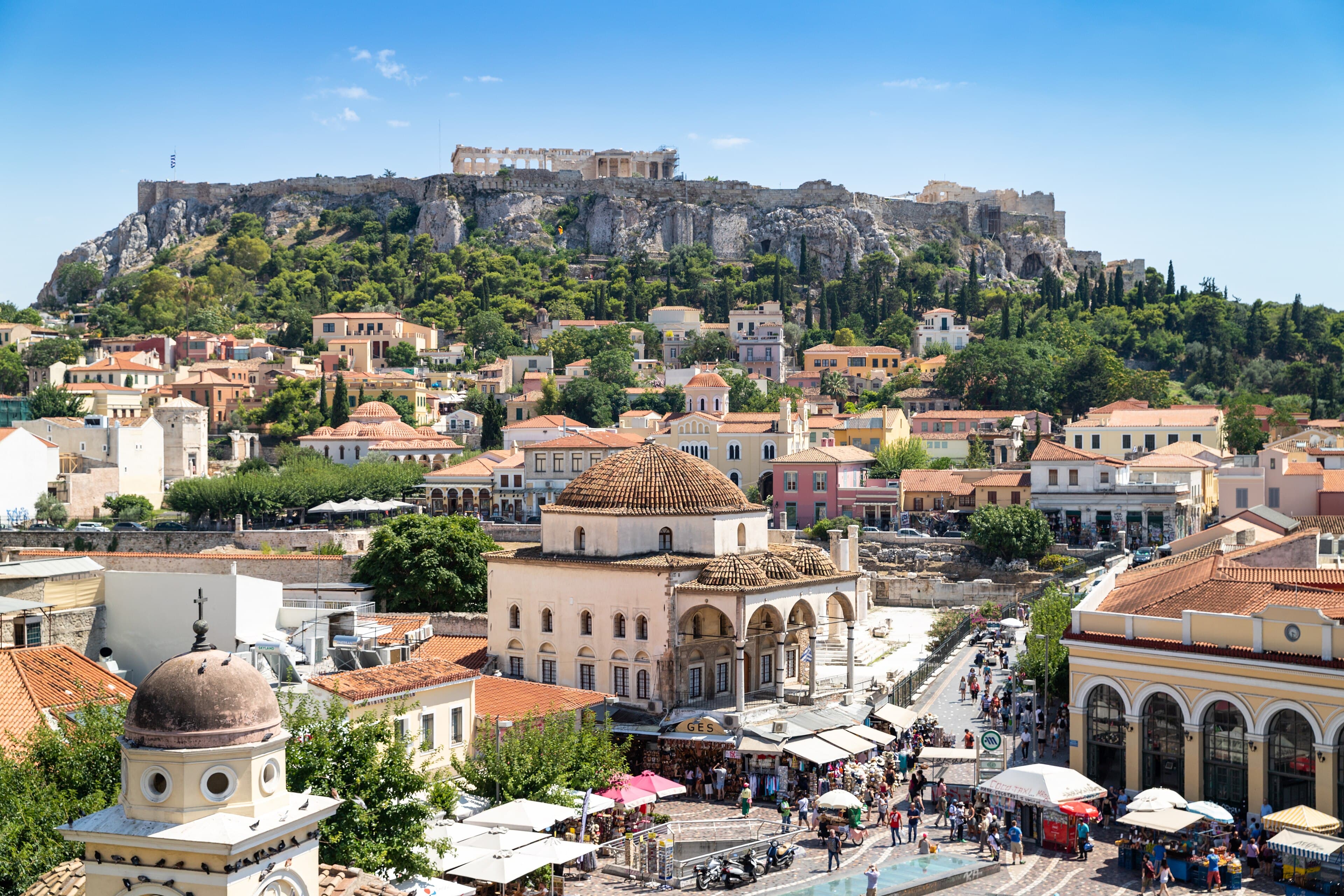
Long before it became the intellectual anchor of the Mediterranean, human footsteps fell upon the Athenian landscape as early as the eleventh millennium BCE.
To understand the deep antiquity of the place known as Athens, one must look not to the marble ruins of the Acropolis, but to the dark, damp interior of the Cave of Schist. Long before the first stone of a temple was squared, human beings left their traces here, between the eleventh and seventh millennia BCE, sheltering in a landscape of limestone crags and scrubby hills. By the time the Bronze Age transformed the Mediterranean, this settlement had grown into a formidable center of the Mycenaean civilization. Its citadel was fortified with massive, irregular blocks of stone—so immense that later generations believed only the one-eyed giants known as Cyclopes could have moved them. When the great Mycenaean palaces of the Peloponnese collapsed in fire and ruin around 1200 BCE, Athens somehow endured. Its people would later boast that they were autochthonous—sprung from the very soil of Attica, pure Ionians untouched by the Dorian invasions that swept across the rest of the Greek peninsula. They marked their survival not with grand fortresses, but with the quiet luxury of Iron Age graves in the Kerameikos, where rich offerings signaled a steady, gathering wealth.
The identity of this city was forged in a legendary contest of patronage. Mythology tells of Poseidon striking the bedrock of the Acropolis with his trident, bringing forth a spring of salt water—or, in another telling, the first horse—only for Athena to counter with the gift of the domesticated olive tree. Cecrops, the half-man, half-serpent king who judged the contest, chose the olive, recognizing that true power lay not in the wild, untamed sea, but in the patient, cultivated wealth of the earth. Modern scholars suspect the myth reverses the historical etymology; the goddess, with her name ending in the pre-Greek locative suffix -ene, almost certainly took her name from the place, rather than the place from her. Yet the symbol of the olive remained central to the Athenian self-image. It represented a civilization built on cultivation, intelligence, and survival. The Athenians even called themselves tettigophoroi, or "cicada-wearers," pinning their hair with golden ornaments shaped like the earth-born, musical insects—a proud statement of their ancient, unbroken connection to the land they inhabited.
The political institutions that would define the city's legacy emerged from a crucible of social crisis. In the sixth century BCE, severe economic inequality and social unrest threatened to tear the city apart, prompting the sweeping legal and economic reforms of Solon. These reforms laid the groundwork for Cleisthenes, who in 508 BCE introduced a radical new system of self-governance: democracy. This young, emboldened state soon found itself tested on the global stage. When the Persian Empire sought to punish Athens for supporting the rebellion of the Ionian Greek cities, the Athenians met them on the plains of Marathon in 490 BCE. Under the command of Miltiades, the citizen-soldiers achieved an astonishing victory. Ten years later, when the Persians returned with an overwhelming force, Athens was evacuated, sacked, and twice put to the torch. Yet under the strategic brilliance of Themistocles, the Athenian fleet lured the Persian navy into the narrow straits of Salamis, destroying their fleet and altering the course of European history.
Connected to
- in countryByzantine Empire395 CE
- in countryOttoman Empire1299 CE
- place of death of · birthplace ofPericles494 BCE
- place of death of · birthplace ofPlato430s BCE
- in countryRoman Empire