Event · 808 BCE – 167 BCE · Classical Greece
Macedonia
- Also known as
- an Mhacadóin
- Ancient Macedon
- Ancient Macedonia
- Antieke Macedonië
- Antieke Masedonië
- Antiga Macedônia
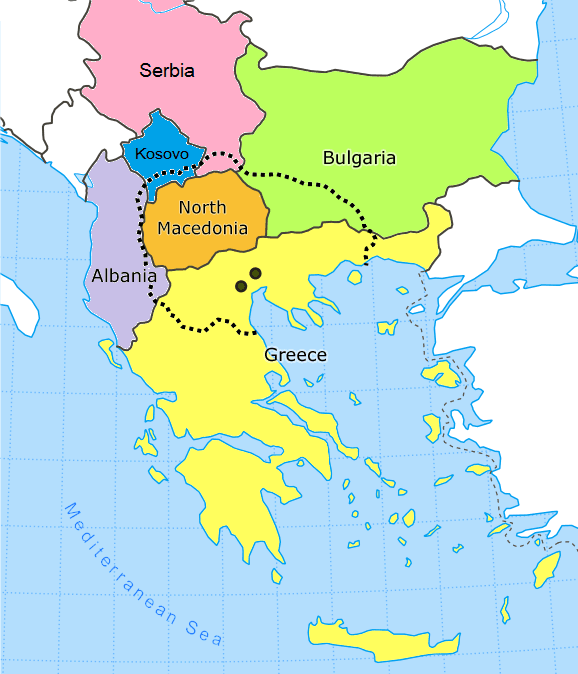
The story of ancient Macedonia is one of dramatic expansion and sudden contraction, a kingdom of Greek antiquity that briefly became the center of the known world before collapsing under the weight of foreign conquest.
For centuries, the Greek-speaking cities of the south viewed the mountainous expanse of Macedonia as a raw, semi-barbaric hinterland. Spreading west from the coastal plains of the Thermaic Gulf into the rugged highlands of the Scardus, Grammus, and Pindus ranges, this was a world defined by its formidable geography. It was a landscape of deep, isolated river valleys—the Axius, the Strymon, and the Haliacmon—which occasionally widened into fertile upland basins that had once been prehistoric lakes. Here, beneath the towering, snow-capped mass of Mount Olympus, which guarded the passage into Thessaly, lived a people who did not fit easily into the classical Greek imagination. To the sophisticated citizens of Athens or Sparta, the Macedonians were peripheral, their customs strange, and their political life—dominated by a volatile warlord monarchy rather than a democratic assembly—dangerously alien. Yet it was from this wild northern fringe, beginning with the rise of the Argead dynasty in 808 BCE, that a military machine would emerge to shatter the old Mediterranean order and redraw the map of the known world, before collapsing under the weight of Roman ambition in 167 BCE.
The geography of Macedonia dictated its dual character. The kingdom was divided into two distinct realms: Lower Macedonia, a flat, alluvial coastal plain stretching along the Gulf of Salonica, and Upper Macedonia, a rugged labyrinth of highland plateaus inhabited by independent-minded mountain tribes. For the first four centuries of its existence, the kingdom was a fragile entity, constantly threatened by Illyrian raiders from the west, Thracian tribes from the east, and internal dynastic bloodletting. The landscape itself was beautiful but harsh; while magnificent forests of oak, pine, and fir clothed the slopes of the Pirin and Pindus mountains, the climate was severe, bringing rainy springs and torrents of melted snow that regularly flooded the plains. It was a land of pastoralists and horsemen, where a man’s status was measured by his prowess in the hunt and on the battlefield. For centuries, the Argead kings struggled merely to hold this fractious realm together, briefly falling under the shadow of the Persian Empire as a vassal state during the Achaemenid expansion, and constantly fighting to keep the highland chieftains of Upper Macedonia from tearing the kingdom apart.
The transformation of this fragile buffer state into an imperial juggernaut was a triumph of radical military and political engineering. By mastering the exploitation of their land’s natural resources—including the rich silver and gold mines of Mount Pangaeus and the dense timber forests prized by southern shipbuilders—the Macedonian kings systematically centralized their power. They tamed the independent highland barons by bringing their sons to the royal court, ostensibly to be educated, but practically to serve as hostages and to form a loyal, elite cavalry known as the Companion Cavalry. Simultaneously, the peasantry of the lowlands and valleys was transformed into a professional standing army. Armed with the —a massive, eighteen-foot pike that dwarfed the spears of traditional Greek hoplites—and trained to move in dense, impenetrable phalanxes, this new infantry could sweep away any force that stood before it. The old world of independent city-states, exhausted by decades of internecine warfare, suddenly found itself confronting a unified, highly professional state capable of mobilizing vast human and material resources.
Connected to
- followsAchaemenid Empire550 BCE
- had as citizenAlexander the Great356 BCE
- containsBabylon3k BCE
- in country · containsMacedonia808 BCE
- had as participantSecond Punic War