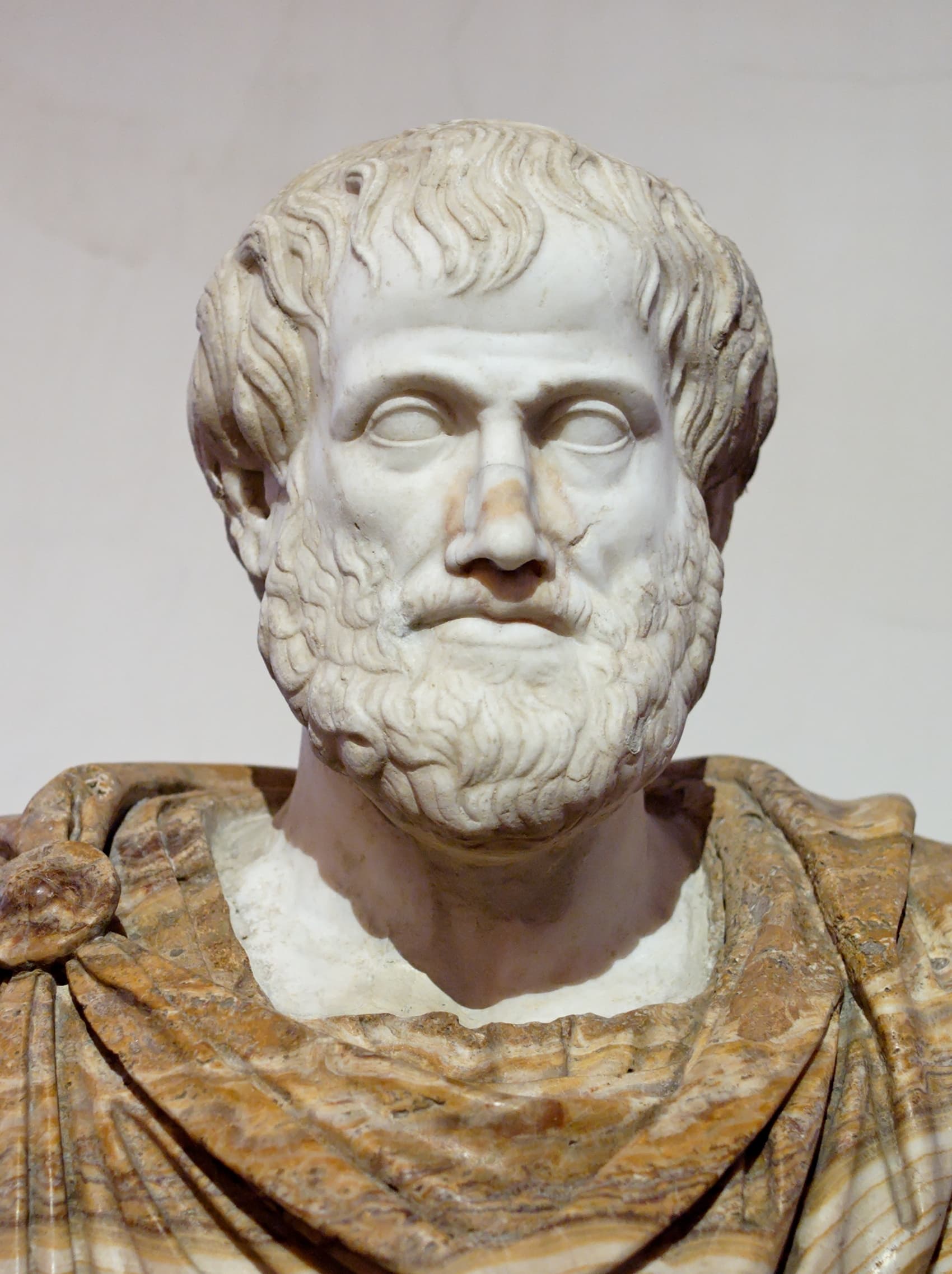
We possess only a fraction of the words written by the man medieval scholars called simply "The Philosopher," and none of what survived was ever meant for the public eye.
In the second century BCE, the chronologist Apollodorus mapped the life of Aristotle onto the sliding scale of the Athenian archons, dividing his sixty-three years into neat, almost symmetrical quadrants: his youth in the north; twenty years under Plato’s shadow in Athens; a middle age of travel, marriage, and royal tutoring; and a final, extraordinarily productive decade back in Athens as the master of his own school. Yet this tidy chronology conceals an intellectual career defined by a strange, unresolved tension. Aristotle was an outsider who reshaped the intellectual capital of the Greek world, a physician’s son who balanced the physical dissecting table with the heights of metaphysics, and a philosopher whose most influential writings were never meant to be read by the public. He was a man of the world who spent his final years surrounded by rolls of papyrus, maps, and botanical specimens, obsessively cataloging the universe while the political ground shifted beneath his feet. Today, the surviving third of his life’s work reads not as polished literature, but as the intense, working shorthand of a mind in perpetual motion—lecture notes, research files, and arguments in progress that laid the structural foundations of Western thought.
He was born in 384 BCE in the northern city of Stagira, on the Strymonic Gulf, a frontier where Greek culture met the rising, raw power of the Macedonian kingdom. His father, Nicomachus, was the personal physician to King Amyntas II of Macedon and a member of the Asclepiadae, a medical guild that claimed descent from the legendary healer Asclepius. Among the Asclepiads, instruction in dissection was passed from father to son, a practical, hands-on training that gave the young Aristotle a lifelong bias toward biology, physical observation, and the natural world. This maternal and paternal heritage was cut short by the early death of his parents, leaving his education in the hands of a guardian named Proxenus. At seventeen or eighteen, the orphaned northern youth traveled south to Athens, entering Plato’s Academy in 367 BCE. He arrived as a young provincial with a surgeon’s eye for detail and remained for two decades, a brilliant, independent, and occasionally abrasive presence. Plato reportedly dubbed him the "mind of the school" and noted his voracious reading habits, though he also complained that his star pupil spurned him "as colts do their mothers." Aristotle himself never ceased to revere Plato, even when dissecting his master’s theory of Forms, writing that a philosopher must love truth even more than his friends.
When Plato died in 347 BCE, the Academy passed not to Aristotle but to Plato’s nephew, Speusippus. Whether prompted by disappointment at this succession or by a rising tide of anti-Macedonian sentiment in Athens, Aristotle chose this moment to depart. He embarked on a decade of travel that served as a crucible for his independent philosophy. Accompanied by his fellow academic Xenocrates, he traveled to Assos in Asia Minor at the invitation of Hermias, the ruler of Atarneus and a former classmate. There, and later on the nearby island of Lesbos, Aristotle turned his analytical gaze to the shoreline, conducting groundbreaking research in botany and marine biology alongside his colleague Theophrastus. In Assos, he married Pythias, the niece and adoptive daughter of Hermias, with whom he had a daughter. After Hermias met a tragic death, Aristotle moved his family to Mitylene, before receiving an invitation in 343 BCE that would forever link his name with imperial history: King Philip II of Macedon summoned him to the royal estate at Mieza to tutor his thirteen-year-old son, Alexander.
12 links to entries not yet ingested in the Library.
For several years, in the shaded gardens of the Nymphs, Aristotle instructed the young prince and other noble youths, including the future kings Ptolemy and Cassander. He taught them ethics, politics, and the dramatic poetry of Euripides, and gifted Alexander an annotated copy of the Iliad that the conqueror would famously keep beneath his pillow. Aristotle’s counsel to the future emperor was deeply ethnocentric, urging Alexander to act as a leader to the Greeks but as a despot to the "barbarians" of Persia. Yet the relationship between tutor and pupil was not destined to remain harmonious. As Alexander swept eastward, transforming himself into an absolute monarch of a global empire, the two became deeply estranged, diverging over the treatment of conquered peoples and the nature of courage. Though later ancient gossips whispered that Aristotle had a hand in Alexander’s sudden death, the claim was almost certainly a political fabrication. By the time Alexander was reshaping the borders of the known world, Aristotle had already returned to Athens to build a quiet empire of his own.
Returning to Athens in 335 BCE, Aristotle found himself a metic—a resident alien forbidden from owning property. He rented a collection of buildings in a suburban grove sacred to Apollo Lykeios, a site known as the Lyceum. Here he established his school, complete with a gymnasium and a covered colonnade, or peripatos, from which his followers drew their name: the Peripatetics. In this makeshift campus, Aristotle organized a true research institution. He collected maps, natural specimens, and built a vast library—the first systematic collection of its kind in the Greek world, which later served as a blueprint for the great libraries of Alexandria and Rome. He organized his students into a self-governing college with common meals under a rotating president, delivering complex morning lectures to a small circle of advanced students while walking the colonnade, and broader afternoon addresses to the public.
It was during this twelve-year Athenian period, following the death of his wife Pythias and during his domestic partnership with Herpyllis of Stagira—with whom he had a son, Nicomachus—that Aristotle produced the core of his surviving treatises. Unlike his lost popular dialogues, works like the Physics, Metaphysics, Nicomachean Ethics, Politics, and Poetics were not written for general publication. They were highly technical, densely argued lecture aids, heavily edited and arranged by his successors. Around 40 BCE, the scholar Andronicus of Rhodes compiled Aristotle’s logical writings into a six-volume collection known as the Organon, or "instrument." This compilation, which moved from the basic categorization of terms to the mechanics of the syllogism, established the framework of formal logic that would dominate Western and Near Eastern thought for over two millennia. In his Posterior Analytics, Aristotle linked this logical machinery to a robust epistemology, arguing that scientific knowledge is the systematic understanding of necessary truths through their primary causes.
This hunger for primary causes drove his "first philosophy"—a study of "being qua being" that later compilers placed after his natural philosophy, coining the term Metaphysics. Where other disciplines studied specific, changing aspects of reality, Aristotle sought the eternal, unchanging, and immaterial foundations of existence. In the physical realm, his biology was unmatched in antiquity; his pioneering studies of animals, supported by research funds and specimens sent from the Macedonian campaigns, showed an astonishingly modern grasp of observation, even as his physics posited a teleological universe where every object moved toward its natural place. In the Nicomachean Ethics, he argued that human life is similarly directed toward an ultimate end: eudaimonia, or flourishing, achieved not through passive contemplation alone, but through the active cultivation of virtue as a deliberate habit.
The fragile peace of Aristotle’s Athenian school depended entirely on the shadow of Macedonian hegemony. When news of Alexander the Great’s death reached Athens in 323 BCE, the city erupted in anti-Macedonian fury. Aristotle, with his lifelong ties to the Macedonian court, was an obvious target. Charged with impiety by the civic authorities, he chose not to face the fate of Socrates. Declaring that he would "not allow the Athenians to sin twice against philosophy," he fled to his mother's family estate in Chalcis, on the island of Euboea. He died there of natural causes the following year, in 322 BCE, leaving his library and the leadership of the Lyceum to his devoted student Theophrastus. Through a long and convoluted journey, his papers were hidden in Asia Minor, bought by a collector, and eventually carried to Rome, where their rediscovery and editing sparked a renaissance of Aristotelian study. Revering him as "The First Teacher" and "The Philosopher," medieval Islamic, Jewish, and Christian scholars built their entire theological structures upon his logic and metaphysics. By organizing the world into genera and species, premises and conclusions, matter and form, the northern physician’s son did not merely describe the ancient Mediterranean; he constructed the very categories through which the modern mind still apprehends reality.