Event · 27 BCE – 395 CE · Roman Republic and Empire
Roman Empire
- Also known as
- Amirãria Romanã
- Ampir romen
- Ampério Romano
- Anpi Romen
- A̱byintyokshan Rom
- Cesarstwo Rzymskie
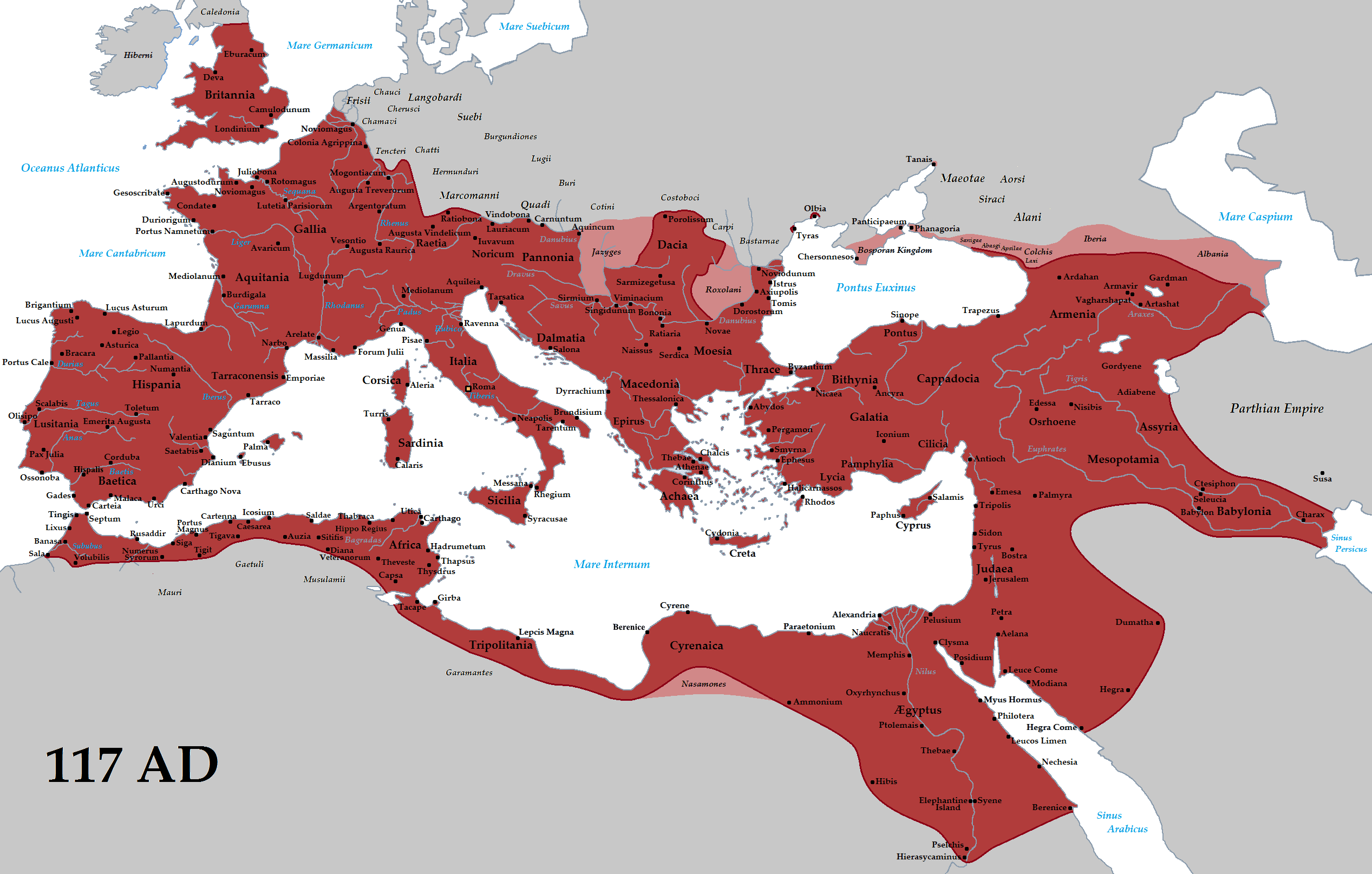
When Octavian defeated Mark Antony and Cleopatra at the Battle of Actium in 31 BCE, he did more than claim Egypt; he cleared the path to dismantle a fractured republic and replace it with a system of permanent single-person rule.
When Octavian accepted the title of Augustus from a weary Roman Senate in 27 BCE, he did not declare the birth of an empire. Instead, he claimed to have restored the ancient Republic, wrapping his absolute authority in the familiar, comforting garb of traditional magistracies. For a century, Rome had been torn apart by civil wars, its institutions fractured by the competing ambitions of powerful generals, culminating in Octavian’s own decisive victory over Mark Antony and Cleopatra at Actium in 31 BCE. By concentrating imperium—the supreme power of military command—in his own hands while maintaining the illusion of senatorial governance, Augustus initiated the Principate. This delicate constitutional fiction allowed a single ruler to govern a vast network of self-ruled towns and conquered provinces under the guise of being merely the "first citizen." It was a transformation that quieted the internal chaos and inaugurated two centuries of unprecedented stability and economic integration known as the Pax Romana.
At its height under Trajan in the early second century, this vast state stretched across Europe, North Africa, and the Middle East, altering the very physical geography of its territories through deforestation, road construction, and urban planning. The Romans conceived of their dominion as imperium sine fine—an empire without end—a claim of universal authority supposedly granted by the gods. Yet maintaining this immense realm required a constant assertion of imperial power. When Hadrian sought to consolidate the frontiers and visited Judaea in 129 and 130 CE, he decided to refound Jerusalem as a Roman colony called Aelia Capitolina, planning a Temple to Jupiter upon the ruins of the Jewish Temple. This provocation, alongside restrictions on Jewish practices, sparked the Bar Kokhba Revolt. The Roman response was swift and devastating; the rebellion was crushed, the majority of the Jewish population was banned from the city, and Jerusalem was rebuilt as an un-walled testament to imperial dominance. Despite such localized violence, the structural cohesion of the empire remained largely intact, held together by a shared legal framework and an administrative division between senatorial provinces governed by annual proconsuls and imperial provinces governed by the emperor's own legates.
The golden age began to fracture in the late second century. The accession of Commodus in 180 CE marked, in the eyes of the contemporary historian Cassius Dio, a descent into an age of "rust and iron." By the third century, the structural weaknesses of the imperial succession became glaringly apparent. An emperor’s survival was tied directly to his relationship with the military, and the Severan dynasty descended into a pattern of assassination and usurpation. Between 235 and 284 CE, the state plunged into the Crisis of the Third Century, a forty-nine-year period characterized by relentless civil war, devastating plagues, barbarian incursions, and economic collapse. For a time, breakaway regimes like the Gallic and Palmyrene empires threatened to dissolve the Roman world entirely. Though Aurelian successfully reunited the territories, it was Diocletian who ultimately stabilized the state in 285 CE by abandoning the fiction of the Principate. Recognizing that the empire had grown too vast for a single ruler, he divided it into four administrative regions under a Tetrarchy, establishing separate imperial courts in the Greek East and the Latin West.
Connected to
- containsAlexandria331 BCE
- founded byAugustus63 BCE
- has part · containsByzantine Empire395 CE
- containsCarthage9th c. BCE
- containsConstanța3rd c. BCE