Organization · Pre Columbian North American
Lakota people
- Also known as
- amérindiens lakotas
- Brulé
- Hunkpapa
- indiens lakotas
- Lakhota
- Lakot
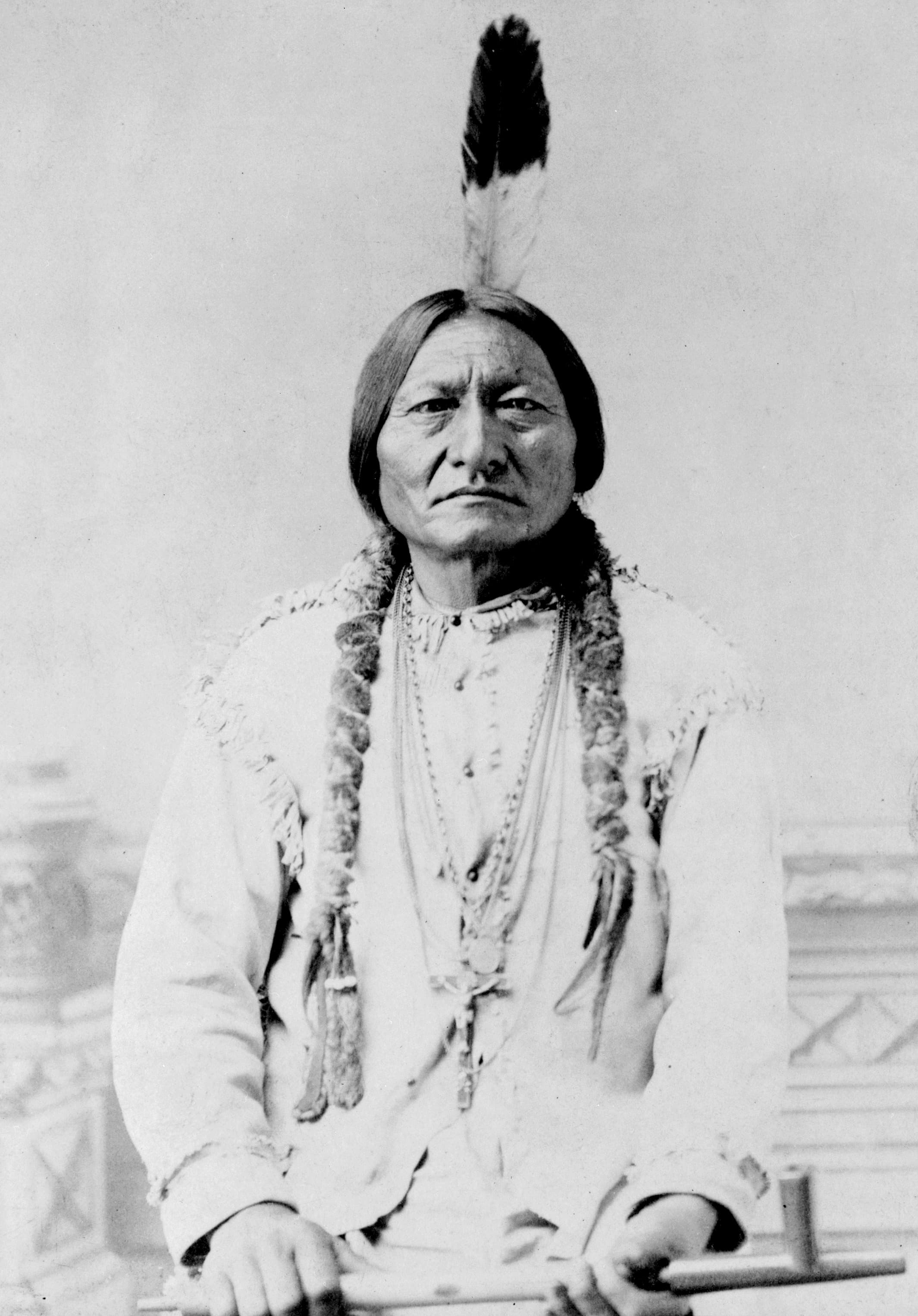
The passage of the Lakota people from the wooded fringes of the Great Lakes to the vast expanse of the northern plains is recorded not only in memory, but in the pictographs of their winter counts.
According to the pictorial calendars painted on hides known as winter counts—most notably the Battiste Good winter count, which traces their history back to 900 CE—the Lakota people received their most sacred instrument, the White Buffalo Calf Pipe, from the White Buffalo Calf Woman at the dawn of their recorded history. This gift established a spiritual anchor for a people who would undergo one of the most dramatic transformations of any society on the North American continent. Though remembered as the quintessential horse-riding warriors of the northern Great Plains, the Lakota’s origins lay far to the east. Linguistic and historical evidence suggests that speakers of Siouan languages may have originated in the lower Mississippi River region or the Ohio Valley, practicing agriculture and perhaps participating in the great Mound Builder civilizations between the ninth and twelfth centuries. By the seventeenth century, European explorers encountered the Dakota-Lakota speakers living in the dense, forested lake country of the upper Mississippi region, in what is now Minnesota and Wisconsin. Here, they lived by hunting, fishing, gathering wild rice, and growing small plots of corn at the northernmost limit of its cultivation.
This woodland way of life was shattered in the mid- to late-seventeenth century. Pushed westward by conflicts with the Anishnaabe and Cree, who were newly armed with European firearms, the Lakota retreated toward the open prairies. Around 1730, an encounter with the Cheyenne introduced them to an animal that would fundamentally redefine their civilization: the horse. The Lakota called this new creature šuŋkawakaŋ—the "dog of power, mystery, or wonder." The acquisition of the horse transformed the Lakota from pedestrian forest-dwellers into highly mobile, formidable nomadic pastoralists. Their entire society reoriented around the seasonal migrations of the buffalo herds. As they pushed further west, the Lakota branch of the Seven Council Fires split into distinct divisions. The Saône group moved toward the Missouri River, but their passage was blocked for decades by the large, fortified, and powerful agricultural villages of the Arikara, Mandan, and Hidatsa.
Then came a biological catastrophe that altered the geopolitics of the Northern Plains. Between 1772 and 1780, a devastating smallpox epidemic swept through the region, wiping out three-quarters of the settled riverine tribes. The Lakota, dispersed in smaller, mobile hunting bands, were largely spared. Taking advantage of the power vacuum, the Saône crossed the Missouri River into the drier, short-grass prairies of the High Plains. Led by Chief Standing Bear, a Saône exploring party discovered the Black Hills—the Paha Sapa—in 1765. Within a decade, other major Lakota bands, including the Oglála and the Sičháŋǧu (Brulé), crossed the river as well. Under this relentless pressure, the Cheyenne were pushed westward to the Powder River country, and the Lakota claimed the Black Hills as their sacred heartland. By the early nineteenth century, they had organized into seven distinct bands: the Sičháŋǧu ("Burned Thighs"), Oglála ("They Scatter Their Own"), Itázipčho ("Without Bows"), Húŋkpapȟa ("Camps at the End"), Mnikȟówožu ("Planters by the Water"), Sihásapa ("Blackfeet"), and Oóhenuŋpa ("Two Kettles").
The first encounter between the United States and the Lakota occurred during the Lewis and Clark Expedition of 1804–1806, resulting in a tense, armed standoff when Lakota bands refused to allow the American explorers to pass upstream. Though battle was avoided, the incident foreshadowed nearly a century of diplomatic tension and armed conflict. Initial relations were complex and not always adversarial; in 1823, some Lakota bands became the first Indigenous allies of the U.S. Army west of the Missouri during the Arikara War. However, as the mid-nineteenth century approached, the tide of white emigration along the Oregon Trail began to strain the resources of the Plains. To protect these travelers, the United States negotiated the Fort Laramie Treaty of 1851, which acknowledged Lakota sovereignty over the Great Plains in exchange for safe passage for settlers "as long as the river flows and the eagle flies."
The peace was short-lived. The U.S. government failed to prevent unauthorized settlements on treaty lands, and frustrated Lakota bands began raiding emigrant trains. In 1855, U.S. Brevet Major General William S. Harney retaliated for the Grattan massacre by attacking a Lakota village in Nebraska, killing approximately 100 men, women, and children. The post-Civil War era saw a dramatic escalation of these hostilities. When the U.S. Army constructed forts along the Bozeman Trail to protect miners invading Lakota territory, Oglala Chief Red Cloud led a highly successful military campaign known as Red Cloud's War. His victories forced the United States to sign the Fort Laramie Treaty of 1868, which closed the Bozeman Trail, dismantled the forts, and exempted the sacred Black Hills from white settlement forever.
This hard-won sovereignty lasted a mere four years. In 1872, gold was discovered in the Black Hills, prompting an unstoppable invasion of white prospectors. When the Lakota defended their lands, the U.S. military intervened. Commanders like Lieutenant Colonel George Armstrong Custer were dispatched to secure the territory, while General Philip Sheridan encouraged his troops to systematically slaughter the buffalo herds to destroy the Lakota’s "commissary." This existential threat united the Lakota, Northern Cheyenne, and Arapaho. In June 1876, they fought a successful delaying action against General George Crook at the Battle of the Rosebud, and just one week later, they achieved their most famous victory at the Battle of the Little Bighorn. Custer, miscalculating the size of a massive inter-tribal encampment, attacked with the U.S. 7th Cavalry. Led by the Oglála warrior Crazy Horse, the allied forces wiped out Custer’s immediate battalion and inflicted over fifty percent casualties on the regiment.
The triumph at the Little Bighorn was the twilight of Lakota military dominance. In response to the defeat, a vengeful U.S. Congress funded a massive army expansion. Through a relentless winter campaign, the U.S. military systematically broke the resistance of the hungry, buffalo-deprived bands, ending the Great Sioux War in 1877. Crazy Horse surrendered and was later killed, while Sitting Bull of the Húŋkpapȟa led his followers into temporary exile in Canada before returning to surrender. By 1877, under immense pressure, some Lakota leaders signed a highly controversial treaty ceding the Black Hills, a transaction whose legitimacy remains contested to this day. Confined to reservations and dependent on government rations, the Lakota faced the systematic dismantling of their way of life. The final tragedy of this era occurred in December 1890. Sitting Bull was shot and killed during an arrest attempt at Standing Rock, and two weeks later, on December 29, the U.S. Army intercepted Spotted Elk's Miniconjou band at Pine Ridge. In the ensuing chaos, soldiers opened fire with Hotchkiss guns, killing at least 153 Lakota men, women, and children in what became known as the Wounded Knee Massacre.
Despite the violence, dispossession, and epidemics of the nineteenth century, the Lakota proved remarkably resilient. Unlike many Native American nations whose numbers plummeted during this era, the Lakota population actually grew, rising from an estimated 8,500 in 1805 to over 16,000 by 1881. Today, the Lakota population exceeds 170,000. The majority live on five reservations in western South Dakota—Pine Ridge, Rosebud, Lower Brule, Cheyenne River, and Standing Rock—while others reside on reservations in North Dakota, Montana, Canada, or in urban centers like Rapid City and Denver. Legally classified as "domestic dependent nations," the federally recognized Lakota tribes maintain a complex, semi-autonomous relationship with the United States government. They govern themselves through elected tribal councils, operate independent legal and gaming systems, and actively contest their treaty rights in federal courts.
The legacy of the Lakota is not merely one of survival, but of persistent cultural and political assertion. In the late twentieth century, activists like Russell Means revitalized the struggle for sovereignty, and Lakota elders joined the Unrepresented Nations and Peoples Organization to seek global recognition for their land rights. Though only about 2,000 fluent speakers of the Lakota language (Lakȟótiyapi) remain, intensive cultural preservation efforts continue to endure. The Black Hills remain at the center of their spiritual universe and their political struggles—a landscape of pine-covered peaks that stands as a silent monument to a woodland people who became the masters of the plains, and who refuse to yield their identity to the passage of time.
Connected to
12 links to entries not yet ingested in the Library.