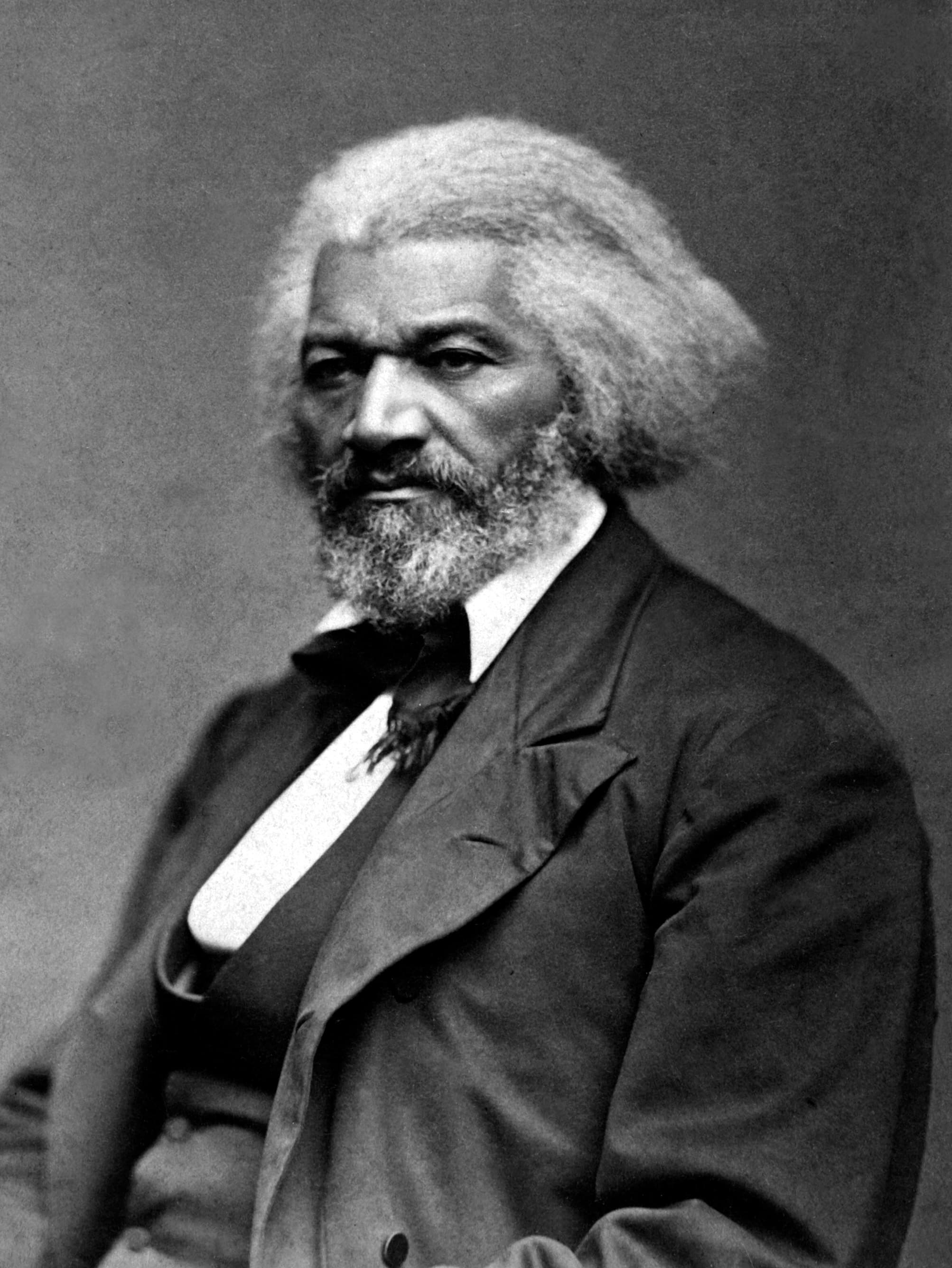
To white Northerners in the mid-nineteenth century, the sheer eloquence of the man speaking from the podium seemed like an impossibility.
To the supporters of American chattel slavery in the early nineteenth century, the ultimate defense of the institution rested on a theory of human capacity. The enslaved, it was argued, lacked the intellectual and moral architecture required to survive as independent citizens of a modern republic; bondage was therefore presented not merely as an economic necessity, but as a paternalistic obligation. It was against this formidable ideological fortress that a young man, born Frederick Augustus Washington Bailey in the tidal marshes of Maryland’s Eastern Shore, directed the full force of his intellect. When he spoke, his voice possessed a rich, resonant authority that filled the great halls of Boston, London, and New York; when he wrote, his prose cut through the sentimentalities of his age with a cold, surgical precision. Northern audiences, listening to this towering, eloquent figure in the 1840s, found themselves caught in a strange paradox of disbelief. They could not reconcile the brilliant orator before them with the legal reality of a fugitive who, only a few years prior, had been classified in the ledgers of a Maryland plantation as property. To prove he was not an impostor fabricated by Northern abolitionists, he was forced to do something extraordinary: he wrote his own life into existence, naming his owners, his birthplace, and his crimes of literacy, thereby risking his newly won liberty to establish his humanity.
He began life in February 1818 in Talbot County, Maryland, born into a world designed to erase his identity from the start. He was separated from his mother, Harriet Bailey, when he was still an infant—a practice he later identified as a deliberate strategy to blunt the natural affections of family life—and he saw her only a few times, always at night, before she died when he was seven years old. He never knew with certainty the identity of his white father, though rumors pointed to his master. Raised by his grandmother Betsy Bailey in a cabin near Tuckahoe Creek, he was moved at the age of six to the vast Wye House plantation, and eventually sent to Baltimore to serve Hugh Auld and his wife, Sophia. It was in this urban environment that the course of his life was irrevocably altered. Sophia Auld, unfamiliar with the severe discipline of the rural plantations, initially treated the boy with a natural kindness, even beginning to teach him the alphabet when he was twelve. But when her husband discovered the lessons, he intervened with a warning that would serve as the young boy's intellectual awakening. Literacy, Hugh Auld declared, would ruin the child, making him forever unfit to be a slave. The lesson Douglass took from this warning was the exact opposite of what his master intended: he understood immediately that the alphabet was the key to his captivity, and that knowledge was the direct, forbidden pathway to freedom.
12 links to entries not yet ingested in the Library.
When Sophia Auld, conforming to her husband’s wishes, snatched books away and hid her Bible, the young boy turned the streets of Baltimore into his schoolroom. He carried bread to bribe the poor white children of the neighborhood into teaching him spelling; he copied the letters chalked onto timber in the shipyards where he worked; and, with money earned secretly from blacking boots, he purchased his first book, The Columbian Orator. This schoolroom anthology of dialogues, speeches, and essays became his bible of liberty, providing him with the vocabulary to analyze and articulate the moral outrage of his condition. But his growing intellect made his bondage increasingly intolerable. Sent back to the country in 1833 to serve Hugh’s brother, Thomas Auld, he was deemed unmanageable and hired out for a year to Edward Covey, a poor farmer notorious as a "slave-breaker." Covey systematically sought to crush the boy's spirit, whipping him so frequently that his wounds never fully healed, reducing him, by his own account, to a brute. The turning point of his life came when the sixteen-year-old rebelled. In a desperate, physical confrontation that lasted for hours, he fought Covey and won. The slave-breaker never laid a hand on him again. The encounter was not merely a victory over physical violence; it was a resurrection of the spirit. "You have seen how a man was made a slave," he later wrote of the fight, "you shall see how a slave was made a man."
His physical escape followed in September 1838. Aided by the savings and encouragement of Anna Murray, a free Black woman in Baltimore who would become his wife, he boarded a northbound train dressed as a sailor. Carrying identification papers borrowed from a free Black seaman, he traversed the delicate, dangerous network of rail lines and steam-ferries through Maryland, Delaware, and Pennsylvania. In less than twenty-four hours, he reached the safe house of David Ruggles in New York City, experiencing a "joyous excitement" that made him feel as though he had stepped into an entirely new world. For safety, the couple soon relocated to the whaling port of New Bedford, Massachusetts, where he discarded his middle names and adopted the surname Douglass, inspired by the romantic heroes of Walter Scott’s poetry. For three years, he worked as a common day laborer along the docks, but his quiet life ended in August 1841 when he attended an anti-slavery convention on the island of Nantucket. Invited to speak, his raw, extemporaneous recollection of his life under the lash transfixed the audience. The Massachusetts Anti-Slavery Society immediately hired him as an agent. Over the next four years, he toured the northern states, delivering relentless, powerful speeches against the slave power.
As his fame grew, so did the skepticism of his critics and the danger of his recapture under federal law. To establish the undeniable truth of his story, he published his Narrative of the Life of Frederick Douglass, an American Slave in 1845. The book was a literary triumph and an immediate bestseller, but it also made him a highly visible target for slave catchers. To evade capture, he embarked on a two-year lecturing tour of Great Britain and Ireland. There, away from the immediate shadow of American prejudice, he rallied British public opinion to the abolitionist cause. His British admirers were so moved by his genius that they raised £150 to purchase his legal manumission from Thomas Auld, allowing him to return to the United States in 1847 as a legally free man. Settling in Rochester, New York, he established The North Star, an influential anti-slavery weekly. This move marked a profound intellectual transition. Initially a loyal disciple of William Lloyd Garrison, who viewed the U.S. Constitution as an inherently pro-slavery document and advocated for the peaceful dissolution of the Union, Douglass broke with his mentor in 1851. He came to view the Constitution as a fundamentally anti-slavery document that, if properly interpreted, could be used to destroy the institution from within. When radical purists criticized his willingness to collaborate with those who did not share his exact views, he offered a pragmatic philosophy that defined his entire public life: "I would unite with anybody to do right and with nobody to do wrong."
This pragmatism guided him through the cataclysm of the American Civil War and its complex aftermath. He disapproved of John Brown’s violent 1859 raid on Harper’s Ferry, refusing to participate in what he saw as a suicidal mission, yet he recognized the coming war as an apocalyptic opportunity to purge the nation of its original sin. From the opening shots, he urged President Abraham Lincoln to allow Black men to fight, understanding that the right to bear arms in defense of the republic would make the claim to full citizenship undeniable; two of his own sons would go on to serve in the Union army. In the decades of Reconstruction and the Gilded Age that followed, Douglass emerged as a global elder statesman of reform. He was a passionate advocate for women's suffrage, standing alongside early feminists at Seneca Falls. He was appointed to various government posts, serving as the marshal of the District of Columbia, recorder of deeds, and eventually as the United States minister resident and consul-general to the Republic of Haiti from 1889 to 1891. In 1872, the Equal Rights Party nominated him for Vice President of the United States on a ticket with Victoria Woodhull, without his knowledge or consent—a symbolic gesture that nonetheless illustrated how far he had traveled from the slave cabins of Talbot County.
When Frederick Douglass died of a sudden heart attack at his home in Anacostia Heights in February 1895, he left behind a nation that was still deeply divided over the legacy of slavery and the promise of racial equality. He had updated his autobiography three times over the course of his fifty years in the public eye, constantly revising his own history to reflect the changing struggles of his country. To the world, he left more than the memory of his incomparable voice and his elegant pen; he left a living refutation of the concept of human inequality. By mastering the language of his captors, he had dismantled their arguments, proving that the human mind, once awakened to the concept of its own freedom, could never again be truly enslaved.