Organization · 1949 CE · World Wars Era
People's Republic of China
- Also known as
- Alþýðulýðveldið Kína
- Caina
- Caina
- Cayina
- Ccinwa
- Ccinwa
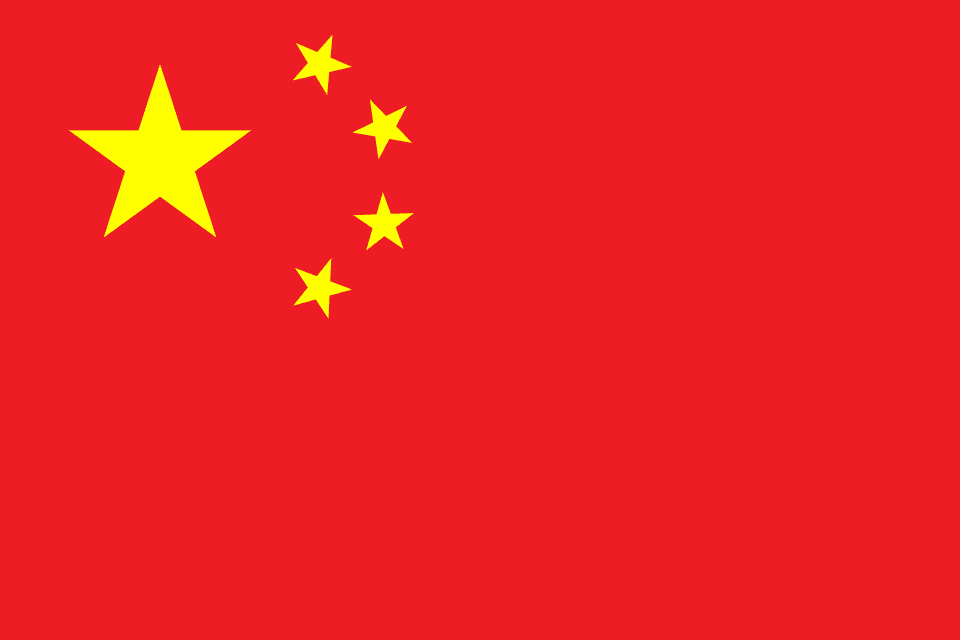
The declaration of the People’s Republic of China in 1949 did not just mark the birth of a new state; it ended decades of civil war and fractured rule, forcing the rival Kuomintang government to retreat to the island of Taiwan and splitting the nation's identity between two…
On October 1, 1949, Mao Zedong stood atop the Tiananmen Gate in Beijing and proclaimed the birth of the People's Republic of China. Behind this singular, theatrical moment of state-making lay a landscape fractured by more than a century of disintegration, foreign invasion, and fratricidal violence. The ceremony did not merely mark the ascent of the Chinese Communist Party; it drew a line under the "century of humiliation" that had begun with the nineteenth-century concessions to European empires through unequal treaties. The Nationalist Kuomintang government, led by Chiang Kai-shek, was forced to flee the mainland, retreating to the island of Taiwan. The country was split in two, with both governments claiming to be the sole legitimate authority of a civilization that had spent the previous two millennia defining itself as the center of the known world.
To govern this newly proclaimed republic was to inherit one of the deepest, most complex institutional legacies in human history. The concept of Zhongguo—the "Middle Kingdom" or central state—had evolved from the royal demesne of the Western Zhou dynasty into a vast civilizational matrix. By the late third century BCE, the short-lived Qin dynasty had swept away the warring fiefdoms of the Spring and Autumn and Warring States periods, establishing a highly centralized autocratic system. Under the subsequent Han dynasty, this administrative machinery was married to Confucian philosophy, creating a resilient imperial framework. For centuries, through the rise and fall of dynasties, China functioned as the world’s preeminent economic and technological powerhouse. It was a civilization that pioneered the magnetic compass for maritime navigation, gunpowder, paper, and the movable type printing invented by Bi Sheng around 1040—more than four centuries before Gutenberg. During the Tang and Song dynasties, its cities grew into cosmopolitan metropolises of over a million people, connected to the wider world via the overland and maritime Silk Roads that reached as far as Mesopotamia and the Horn of Africa.
Yet the modern state born in 1949 was built on the ruins of this heritage rather than its continuity. The collapse of the Qing dynasty in the Revolution of 1911 had ushered in a chaotic Warlord Era, which was only partially subdued by the Kuomintang’s Northern Expedition. The fragile peace was shattered in 1927 when the Kuomintang purged its communist allies, igniting a civil war. This internal conflict was temporarily suspended but fundamentally reshaped by the horrific trauma of the Second Sino-Japanese War, which began with a full-scale Japanese invasion in 1937. Though the temporary alliance of the Second United Front managed to survive until the defeat of Japan, the underlying ideological chasm between the Nationalists and the Communists proved irreconcilable. When the global conflagration of World War II ended, the civil war resumed with full fury, culminating in the communist victory of 1949 and the establishment of a unitary communist state with the Communist Party as its sole ruling authority.
Connected to
- had as citizenMao Zedong1893 CE
- in country · containsPeople's Republic of China1949 CE
- followsRepublic of China1912 CE
- containsWorld War I1914 CE
+ 12 further connections to entries not yet ingested