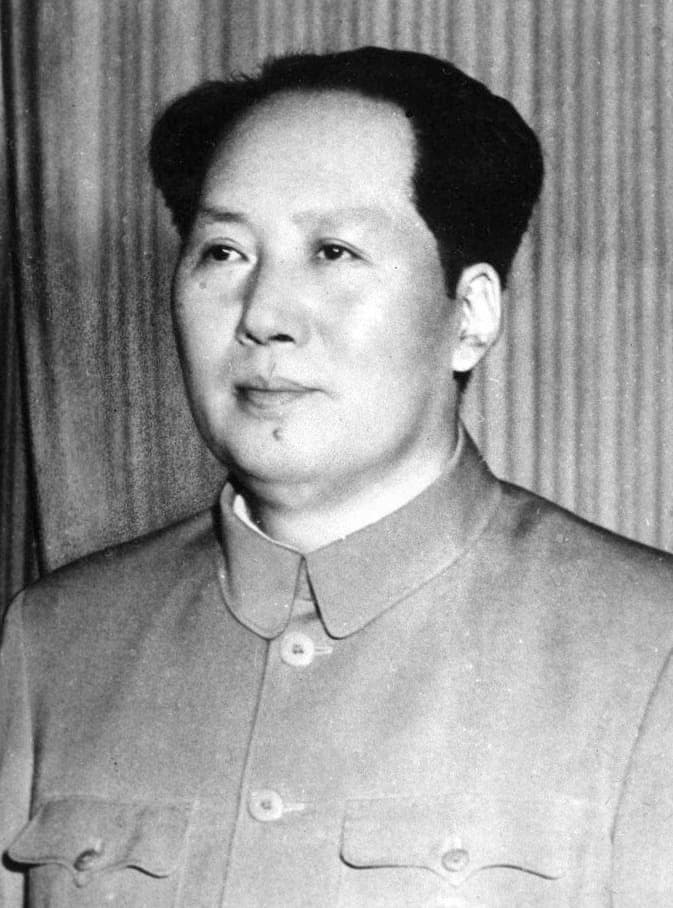
The path to reshaping a global superpower began in the quiet stacks of the Peking University library, where a young man born to a wealthy peasant family in Hunan was first introduced to the tenets of Marxism.
In the spring of 1919, a young library assistant from the southern province of Hunan walked the grounds of Peking University, largely ignored by the elite scholars who swept past him. Paid a meager wage that forced him to share a cramped room with seven other students, he was snubbed for his thick rural accent and his lowly position. Yet around him, the intellectual foundations of old China were fracturing. The university’s chancellor, Cai Yuanpei, was championing anarchism and a total transformation of social and family structures, while the head librarian, Li Dazhao, was publishing a series of radical articles on the Bolsheviks who had just seized power in Russia. For the young assistant, Mao Zedong, the humiliation of being ignored by the capital’s intelligentsia was compensated for by the sheer intellectual electricity of the moment. He joined Li’s study groups, devoured the works of Peter Kropotkin, and began a rapid, permanent drift toward the socio-political theories of Karl Marx and Vladimir Lenin. Within three decades, this overlooked provincial would use those same theories to thoroughly dismantle the ancient civilization that had sidelined him.
Mao’s journey to the capital had been shaped by a lifelong rebellion against authority, beginning in the clay-soiled hills of Shaoshan, Hunan. Born on December 26, 1893, to a wealthy peasant farmer who had escaped poverty through relentless toil, Mao grew up under the heavy hand of a strict, disciplinarian father who frequently beat his children. While his mother, a devout Buddhist, attempted to soften the household’s harsh atmosphere, Mao found his escape in books. He rejected the traditional Confucian classics taught at his primary school, preferring the rebellious, heroic exploits found in vernacular novels like Water Margin and Romance of the Three Kingdoms. When his father attempted to secure the family’s landholdings through an arranged marriage to a seventeen-year-old girl named Luo Yixiu, the thirteen-year-old Mao simply refused to recognize her as his wife, running away and leaving her to suffer local disgrace until her early death in 1910.
As the Qing dynasty decayed, Mao’s personal rebellions merged with a broader national awakening. He watched with sympathy as local famines provoked desperate peasants to seize grain—including his father’s—and saw the brutal executions that followed when the authorities crushed the protests. Leaving home to pursue his education, he arrived in the provincial capital of Changsha just as the Xinhai Revolution of 1911 erupted. To show his alignment with the republican forces of Sun Yat-sen, Mao cut off his queue pigtail—the mandatory symbol of subservience to the Manchu Qing emperors—and served a brief, bloodless six-month stint as a private in the rebel army. Although the revolution succeeded in overthrowing the monarchy and establishing the Republic of China under Yuan Shikai, the promises of representative democracy soon faltered, leaving the country fragmented and vulnerable.
12 links to entries not yet ingested in the Library.
Mao spent the next several years in a state of intellectual restlessness, drifting through schools for law, economics, and soap production, while spending his days reading Western philosophy in the Changsha library. He absorbed the evolutionary theories of Charles Darwin and Thomas Huxley, the liberal economics of Adam Smith, and the social contracts of Jean-Jacques Rousseau. He was particularly drawn to the neo-Kantian philosopher Friedrich Paulsen, whose writings convinced him that powerful individuals were not bound by conventional moral codes but were instead justified in striving ruthlessly toward a great goal. This belief in the power of the willful individual to reshape reality became the bedrock of his character. When he finally enrolled in the Fourth Normal School of Changsha to train as a teacher, he became a charismatic student leader, organizing self-government associations, leading protests against school administrations, and writing articles advocating for physical fitness as a prerequisite for national revolution.
The turning point came with the May Fourth Movement in 1919. Outraged by the Treaty of Versailles, which granted former German territories in Shandong to Japan rather than returning them to China, students and citizens filled the streets in massive patriotic protests. The weakness of the Beiyang government convinced Mao and many of his contemporaries that classical liberalism and gradual reform were wholly inadequate for China’s survival. Having returned to Hunan to teach, Mao began organizing political protests against local warlords, but his intellectual anchor remained fixed to the Marxist doctrines he had first encountered under Li Dazhao in Beijing. In 1921, Mao traveled to Shanghai, where he participated in the founding of the Chinese Communist Party (CCP).
Over the next two decades, Mao adapted European Marxism to the stark realities of the Chinese countryside. While traditional Marxist doctrine designated the urban industrial proletariat as the vanguard of the revolution, Mao looked to the vast, suffering peasantry that he knew so intimately from his youth. Following the outbreak of the Chinese Civil War against the nationalist Kuomintang (KMT), Mao helped build the Chinese Red Army, refining a highly mobile strategy of guerrilla warfare that allowed his outnumbered forces to survive. When KMT encirclement campaigns threatened the communists with total annihilation in the mid-1930s, Mao helped lead the Red Army on the legendary, grueling retreat known as the Long March to the remote caves of the Yan’an Soviet in Shaanxi. During this military ordeal, Mao’s strategic vision and political maneuvering secured his position as the undisputed leader of the CCP.
Though the communists formed a tense alliance with the KMT in 1937 to fight the invading Japanese Empire, the civil war resumed with full fury after Japan’s surrender in 1945. Bolstered by peasant support mobilized through promises of land reform, Mao’s forces ultimately routed the nationalist government of Chiang Kai-shek, forcing them to flee to the island of Taiwan. On October 1, 1949, from the top of Tiananmen Gate in Beijing—the very place where the students of 1919 had protested Chinese weakness—Mao proclaimed the establishment of the People's Republic of China.
As Chairman of the newly consolidated state, Mao set about rebuilding a nation fractured by decades of foreign occupation and civil war. He initiated sweeping land redistribution campaigns, promoted women’s rights, expanded basic healthcare and literacy, and sent Chinese troops to intervene in the Korean War to assert China's presence on the world stage. Yet his vision for permanent, rapid revolutionary progress soon led to catastrophic domestic policies. In 1958, impatient with the pace of Soviet-style industrial development, Mao launched the Great Leap Forward, an ambitious campaign to rapidly collectivize agriculture and industrialize the nation through local initiatives like backyard steel furnaces. The program resulted in administrative chaos, economic collapse, and the Great Chinese Famine, which caused tens of millions of deaths.
In 1966, sensing that his authority was waning and that the bureaucratic elite were betraying his revolutionary ideals, Mao bypassed the party apparatus to launch the Great Proletarian Cultural Revolution. He mobilized millions of young Red Guards to attack old customs, destroy historic artifacts, and purge suspected counter-revolutionaries within the government, society, and the party itself. This decade of violent class struggle and ideological fanaticism was fueled by an intense cult of personality centered on Mao, leaving the nation's social fabric and institutions deeply scarred.
When Mao died on September 9, 1976, he left behind a complex and deeply contested legacy. Under his leadership, China was transformed from a fractured, semi-colonized territory into a unified, formidable world power with significantly increased life expectancy and literacy rates. Yet this state was forged through a highly centralized, totalitarian system that relied on prison labor, political executions, and ideological campaigns that claimed tens of millions of lives. Following his death, his immediate successor Hua Guofeng was soon eclipsed by Deng Xiaoping, who began dismantling Mao's socialist economic policies in favor of market reforms, even as the political structure Mao built remained intact. The library assistant who had once felt invisible in the capital had permanently altered the trajectory of modern global history, leaving a state that would spend the rest of the century grappling with the immense, contradictory weight of his achievements and his devastations.