Person · 1889 CE – 1964 CE · World Wars Era
Jawaharlal Nehru
- Also known as
- Cavaharlal Neru
- Cavaharlal Neru
- Cevahirlal Nehru
- Cevahirlel Nehru
- Cewahirlal Nehru
- Chacha Nehru
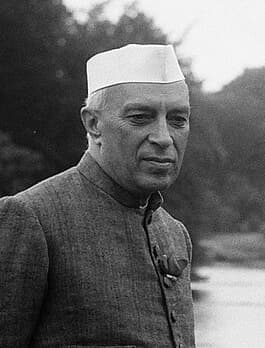
The political heir of Mahatma Gandhi was not formed in the villages of India, but in the elite institutions of England.
In the final days of August 1912, a young barrister stepped off a ship onto the docks of India, carrying the polished manners of Harrow, an honors degree in natural science from Trinity College, Cambridge, and the legal credentials of the Inner Temple. Jawaharlal Nehru was, by his own father’s design, a creature of the British Empire’s highest academic sanctuaries. Yet he returned to Allahabad to find himself profoundly bored. He enrolled at the Allahabad High Court, but the dry, repetitive mechanics of the provincial legal system and the safe, comfortable chatter of the wealthy bar offered no fuel for his restless ambition. His father, Motilal Nehru—one of the richest and most formidable advocates in the subcontinent, earning a princely sum of over ten thousand rupees a month—envisioned his son inheriting a lucrative empire of briefs and clients. But the younger Nehru found the practice of law hollow. He was instead drawn to the volatile margins of the courtroom, where a nation was beginning to argue for its life. The elegant young man who had once been nicknamed "Joe" by his English classmates was about to trade the secure luxury of Anand Bhavan, his family’s palatial estate, for the dust of the nationalist campaign trail and, ultimately, more than nine years of his life spent inside British prison cells.
Nehru’s transformation from an anglicized aristocrat into a radical nationalist was a slow burning of bridges. In his youth, he had watched the triumphs of the Japanese over the Russian Empire in 1905 and felt a sudden, electric thrill that Asiatic freedom from European thraldom was possible. At Harrow, he had devoured G. M. Trevelyan’s books on Garibaldi, dreaming of a similar armed, romantic struggle where India and Italy merged in his imagination. When he attended his first Indian National Congress session in Patna in 1912, he was deeply disheartened by what he saw: a polite, English-speaking, upper-class talking shop dominated by moderates who believed British rule was a modernizing force to be petitioned rather than overthrown. Nehru’s instinct was far more radical. He allied himself with the Home Rule Leagues of Annie Besant—his childhood tutor’s associate who had introduced him to theosophy and Hindu scriptures—and Bal Gangadhar Tilak. When the British authorities arrested Besant in 1917, Nehru was thrust into the organizational machinery of protest. But the true pivot of his life, and of the Indian century, occurred when he encountered a diminutive, brilliant strategist who had recently returned from South Africa: Mahatma Gandhi.
The relationship between Gandhi and Nehru was an alliance of opposites that reshaped the subcontinent. Motilal Nehru, a constitutional moderate, initially tried to prevent his son from being swept into Gandhi’s satyagraha politics. But the brutality of British repression in 1919, punctuated by the horrific killings at Jallianwala Bagh, shattered the elder Nehru's faith in British reform. Both father and son surrendered to Gandhi’s moral authority. During the non-cooperation movement of 1920, the younger Nehru abandoned his legal practice entirely, traveling through the United Provinces to organize peasant resistance. His first arrest came in December 1921. It was the first of eight separate detentions that would punctuate his life over the next twenty-four years. When the non-cooperation movement was abruptly halted by Gandhi in 1922 following the Chauri Chaura violence, Nehru tasted the bitter frustration of political paralysis. He sought temporary refuge in municipal administration, serving as the mayor of Allahabad, but soon resigned in disillusionment.
A journey to Europe in 1926, ostensibly to seek treatment for his wife Kamala’s tuberculosis, opened Nehru’s eyes to a global canvas of struggle. In Brussels, he attended the Congress of Oppressed Nationalities, where he was elected to the Executive Council of the newly formed League Against Imperialism. A subsequent visit to the Soviet Union ignited a lifelong fascination with Marxism and state-planned industrialization, though he remained permanently repelled by the ruthless authoritarian tactics of Soviet communism. He returned to India transformed, no longer merely an anti-colonial agitator but a committed social democrat who saw India's liberation as part of a global socialist awakening. In 1929, backed by Gandhi who had designated the young firebrand as his political heir, the forty-year-old Nehru was elected president of the Indian National Congress. At the Lahore session that December, he issued a historic, uncompromising demand for Purna Swaraj—complete independence from the British Raj.
As the 1930s unfolded, Nehru’s political vision diverged sharply from the communal anxieties beginning to fracture the Indian landscape. He championed a secular, pluralistic nation-state where religious identity was relegated to the private sphere, a stance that propelled the Congress to a sweeping victory in the 1937 provincial elections. Yet this secular idealism blind-sided him to the growing anxieties of India’s Muslim minority. The political landscape shifted dramatically during the Second World War. When the Viceroy, Lord Linlithgow, declared India’s entry into the war in September 1939 without consulting Indian leaders, Nehru and the Congress provincial ministries resigned in protest. Nehru, who despised fascism and privately wished to support the Allied war effort, felt trapped by British intransigence. When Gandhi launched the "Quit India" movement in August 1942, Nehru reluctantly heeded the call. He was promptly arrested and imprisoned for the longest stretch of his life.
When Nehru emerged from prison in 1945, he stepped into a cold, unfamiliar political reality. In the years he had spent behind bars, the Muslim League under Muhammad Ali Jinnah had consolidated its grip on Muslim politics. The 1946 provincial elections confirmed this polarization: while Congress dominated the general seats, the League swept the constituencies reserved for Muslims. This was interpreted by the British as a mandate for the creation of Pakistan. Though Nehru became the interim prime minister of India in September 1946, and the League hesitantly joined his cabinet, the machinery of partition was already in motion. The dream of a united, secular subcontinent was dying in the streets amid rising communal violence.
At the stroke of midnight on August 15, 1947, Nehru stood before the Constituent Assembly in New Delhi to deliver his "Tryst with Destiny" speech, a masterpiece of modern political rhetoric that marked the birth of independent India. He raised the new tricolor flag over the Red Fort, but the triumph was shadowed by the horrific violence of Partition. As Prime Minister of the newly formed Dominion, and from 1950, the first Prime Minister of the Republic of India, Nehru set about constructing a modern state from the wreckage of empire. He was a champion of parliamentary democracy, scientific temper, and massive state-guided economic planning. Under his leadership, the Congress party dominated national politics, winning successive landslide elections in 1951, 1957, and 1962.
On the global stage, Nehru sought to carve out a dignified path for newly independent nations. Refusing to align India with either the United States or the Soviet Union in the gathering chill of the Cold War, he became a founding father of the Non-Aligned Movement, asserting that post-colonial nations should not be pawns in the geopolitical rivalries of the great powers. By the time of his death from a heart attack in 1964, Nehru had governed India for sixteen consecutive years. He left behind a resilient parliamentary democracy and a deeply ingrained commitment to secularism. His legacy is etched into the very institutions of modern India—from its scientific laboratories and democratic habits to the complex, ongoing struggle to define the secular soul of a deeply religious subcontinent.
Connected to
- religionHinduism
+ 12 further connections to entries not yet ingested