Person · 1891 CE – 1956 CE · World Wars Era
B. R. Ambedkar
- Also known as
- Ambedkar
- Ambedkar
- Ambedkar
- Ambedkar
- Ambedkar
- Ambedkar
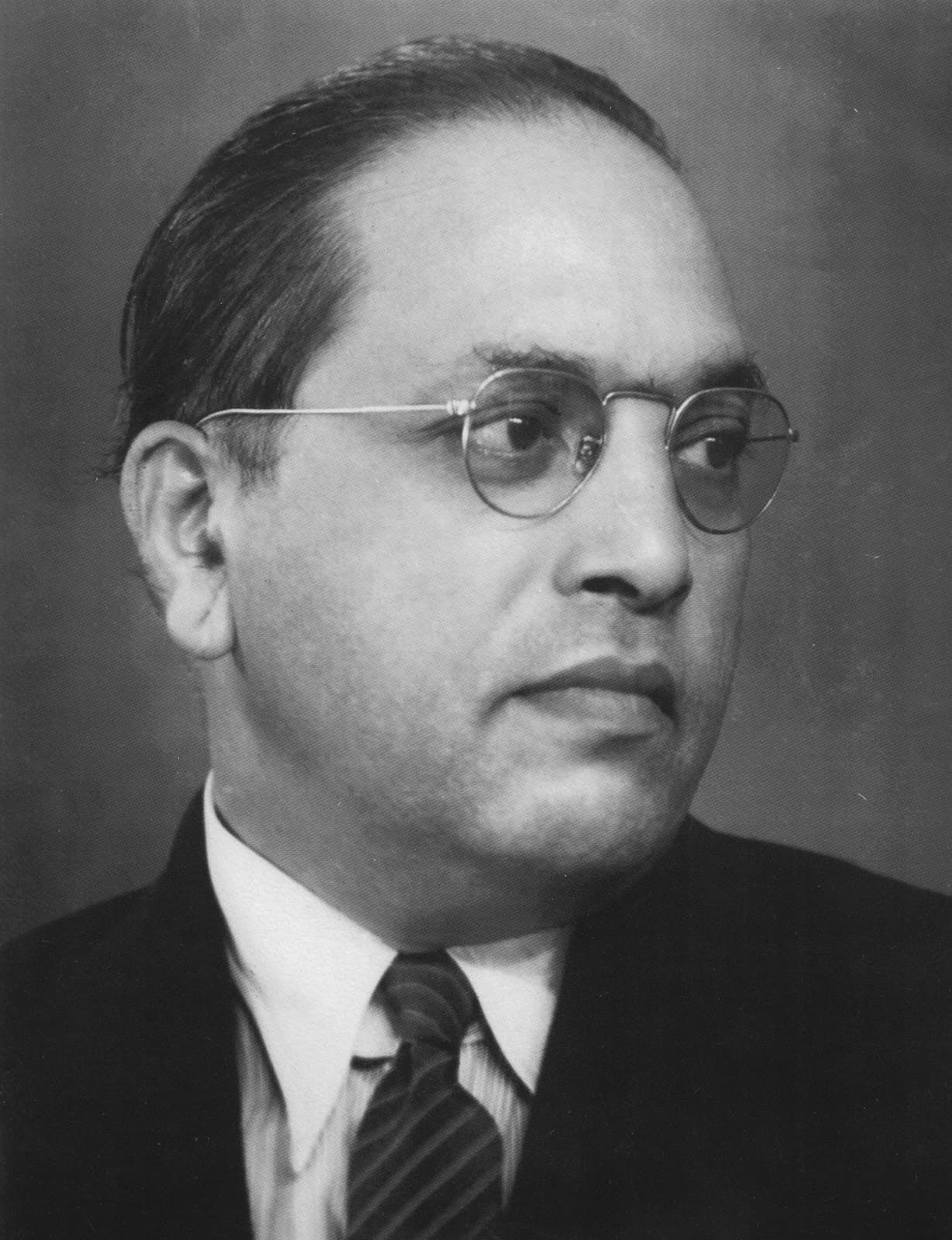
To understand the foundation of modern India, one must first understand the humiliation of a schoolboy denied a drink of water.
In the early years of the twentieth century, a young boy sat on a coarse gunny sack in the corner of a schoolroom in western India, physically segregated from his classmates. He was not permitted to sit on the wooden benches, nor was he allowed to touch the school’s communal water jug. When thirst overcame him, the school peon would pour water from a great height into his cupped hands. If the peon was absent, the boy went without. He would later encapsulate this daily degradation in a sparse, devastating phrase: "No peon, No Water." The boy was Bhimrao Ramji Ambedkar, born in 1891 into the Mahar caste—a community classified by traditional Hindu society as "untouchable." His journey from that isolated gunny sack to the chief architectship of the Constitution of India is one of the most remarkable intellectual and political odysseys of modern times, driven by an unyielding crusade against an ancient social hierarchy that defined millions of human beings as inherently polluting.
The paradox of Ambedkar’s early life lay in the precarious opportunities afforded by his family’s military ties. His father, Ramji Maloji Sakpal, was a subedar in the British Indian Army stationed at the military cantonment of Mhow. This military background shielded the family from some of the absolute economic destitution common to their caste and secured the children an education. Even so, the path was fraught. After his mother’s death and his father’s retirement, the family moved to Satara and eventually to Mumbai, where Ambedkar became the only untouchable student enrolled at the prestigious Elphinstone High School. When he passed his English fourth standard examinations, a milestone his community considered so monumental that they held a public celebration, a family friend presented him with a biography of the Buddha—a gift that would quietly seed the final, radical act of his life.
Ambedkar’s intellectual appetite was vast and globally oriented, defying the rigid boundaries his birth was meant to impose. Under the patronage of Sayajirao Gaekwad III, the forward-thinking ruler of the princely state of Baroda, he received a scholarship that took him to Columbia University in New York in 1913. In America, living in a dormitory with his lifelong Parsi friend Naval Bhathena, Ambedkar experienced a world where his caste did not dictate his human worth. He immersed himself in sociology, history, philosophy, anthropology, and economics, coming deeply under the influence of the pragmatist philosopher John Dewey, whose ideas on democracy and social reform left an indelible mark on him. He earned his master’s degree and began analyzing the structural machinery of his homeland, presenting a seminal paper on the genesis and mechanism of caste in India.
His academic appetite was insatiable. He moved to London to study at the London School of Economics and train in the law at Gray's Inn. Though his studies were temporarily interrupted in 1917 when his Baroda scholarship expired—and a German submarine torpedoed the ship carrying his cherished book collection—he eventually returned to complete his doctoral theses. By 1923, he was a barrister-at-law with doctorates from both Columbia University and the University of London, a level of scholarly achievement matched by very few of his contemporaries from any background. Yet, when he returned to India to fulfill his service bond to the State of Baroda as a military secretary, the weight of caste descended once more. Unable to find lodgings due to his untouchable status and subjected to open hostility by his subordinates, he was forced to resign. He attempted to establish an investment consulting business, but it collapsed the moment his clients discovered his caste. Even when he secured a professorship of political economy at Sydenham College in Mumbai, his fellow faculty members objected to his sharing the drinking-water jug.
Faced with the realization that no amount of personal brilliance could wash away the stigma of untouchability, Ambedkar pivoted to systematic, organized resistance. He realized that the silent must be given a voice, launching the weekly journal Mooknayak (Leader of the Silent) in 1920 with the financial backing of Shahu IV of Kolhapur. He established the Bahishkrit Hitakarini Sabha to promote education and socio-economic elevation for the "outcastes." In the courtroom, his legal prowess grew legendary; in 1926, he successfully defended three non-Brahmin leaders sued for libel after they accused the Brahmin community of ruining India, a resounding victory that established his reputation as a formidable legal mind.
By the late 1920s, Ambedkar’s advocacy transitioned into direct, confrontational mass action. He recognized that the denial of basic resources was the physical manifestation of spiritual degradation. In 1927, he led a historic satyagraha in Mahad, marching thousands of followers to the town’s main water tank to claim their right to draw water. Later that year, in a strike at the very heart of the ideological superstructure that justified this subjugation, Ambedkar and his followers ceremonially burned copies of the Manusmriti, the ancient Hindu legal text that codified caste hierarchy and the subjugation of women. Three years later, he launched the Kalaram Temple entry movement in Nashik. Fifteen thousand volunteers marched in disciplined, silent ranks to the temple gates, only to have the Brahmin authorities shut the doors in their faces—a vivid, public demonstration of the spiritual exclusion of Dalits.
This escalating struggle set the stage for a dramatic political confrontation with Mahatma Gandhi over the future of India’s electoral system. In 1932, the British colonial government proposed the Communal Award, which granted separate electorates to the "Depressed Classes," allowing them to vote for their own representatives. Ambedkar championed this as the only guarantee of genuine political power for a minority otherwise overwhelmed by a caste-Hindu majority. Gandhi, however, viewed separate electorates as a catastrophic vivisection of the Hindu community that would permanently freeze the stigma of untouchability. From his prison cell in Yerwada, Gandhi embarked on a "fast unto death" to oppose the measure.
With Gandhi's life hanging in the balance and the country gripped by intense anxiety, Ambedkar was thrust into a grueling moral and political corner. He faced immense pressure to yield. The result of their tense negotiations was the Poona Pact of September 1932. Under this agreement, signed by Ambedkar and the Hindu nationalist leader Madan Mohan Malaviya, Ambedkar surrendered the demand for separate electorates. In exchange, the depressed classes were granted a significantly larger number of reserved seats—148 instead of the 71 proposed by the British—within a unified electorate, utilizing a system of primary and secondary elections to ensure Dalits could still choose their preferred candidates. The pact averted Gandhi's death, but it cemented a profound, lasting ideological rift between Ambedkar’s structural, political approach to caste annihilation and Gandhi’s moral, reformist view of caste integration.
This crucible of constitutional design and political maneuvering prepared Ambedkar for his ultimate historical role. When India achieved independence, Prime Minister Jawaharlal Nehru invited him to serve as the nation’s first Law and Justice Minister. More critically, he was appointed chairman of the committee tasked with drafting the constitution for the newly sovereign republic. Drawing on the preliminary work of Sir Benegal Narsing Rau and the vigorous debates of the Constituent Assembly, Ambedkar meticulously forged a legal framework designed to transform an ancient, fractured society into a modern, democratic state. He built robust safeguards for civil liberties, outlawed untouchability, and introduced a system of reservations in education and government jobs for the Scheduled Castes and Scheduled Tribes.
Yet, for all his monumental contributions to the state, Ambedkar remained profoundly skeptical of political democracy unaccompanied by social and economic democracy. Near the end of his life, disillusioned by the persistent social inertia of orthodox Hinduism, he returned to the book he had received as a schoolboy. In October 1956, just weeks before his death, Ambedkar formally renounced Hinduism and converted to Buddhism in a mass ceremony in Nagpur, initiating a wave of conversions among hundreds of thousands of Dalits who sought dignity outside the caste system. He died on December 6, 1956, leaving behind a legacy as "Babasaheb"—the respected father of modern India's marginalized millions. To this day, the greeting "Jai Bhim" resounds across the subcontinent, not merely as a salute to a historical figure, but as an ongoing rallying cry for human dignity, equality, and the rule of law.
Connected to
12 links to entries not yet ingested in the Library.