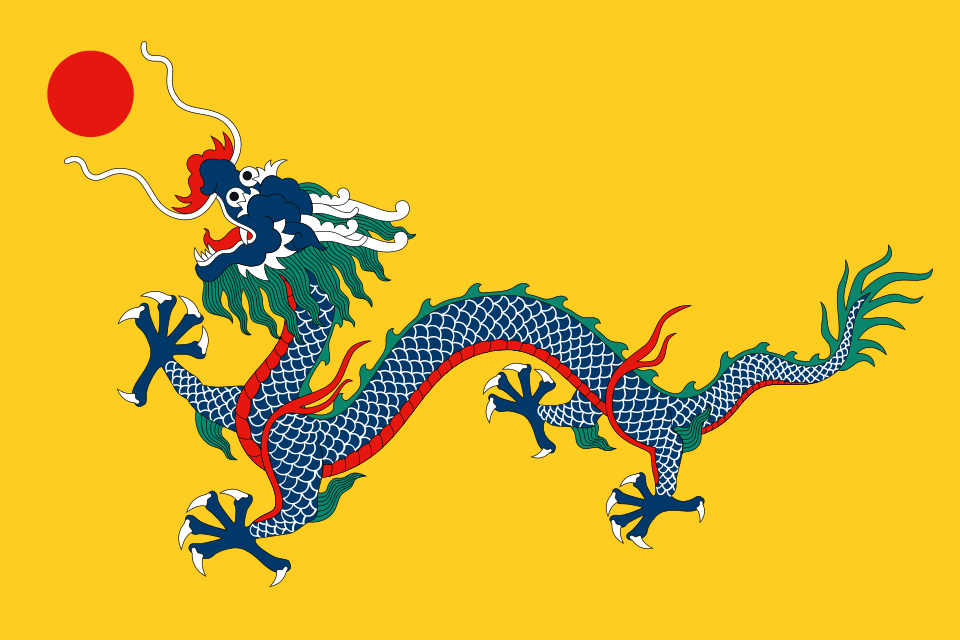
In 1616, a vassal of the Ming dynasty named Nurhaci unified the Jurchen clans, founded the Later Jin dynasty, and forged the Eight Banners military system that would soon redraw the map of East Asia.
In November 1635, a people living along the forested, river-strewn northern fringes of the Ming Empire ceased to exist, only to be reborn under a new name by imperial decree. Hong Taiji, the ruler of the Jurchen clans, declared that his people would henceforth be known as the Manchu. The renaming was not merely cosmetic; it was a deliberate act of ethnogenesis designed to dissolve old tribal blood feuds and forge a unified identity capable of sustaining a grand political project. A few months later, in April 1636, surrounded by Manchu chieftains, Mongol nobles, and defected Han Chinese scholars, Hong Taiji ascended a throne in the city of Shenyang. He claimed possession of the imperial seal of the Mongol Yuan dynasty and announced the birth of the Great Qing. He chose the Chinese character Qīng, meaning "clear" or "pure." In the cosmological language of the era, the ruling Ming dynasty was associated with fire; the character Qīng was rich with the element of water, symbolizing a power destined to extinguish the burning, decaying southern empire. What began as a confederation of northern farmers and forest dwellers was now an empire in its own right, poised to build the largest, most populous territorial state in Chinese history.
The foundations of this state had been laid by Hong Taiji’s father, Nurhaci, a chieftain of the minor Aisin-Gioro clan in Jianzhou. In his youth, Nurhaci had lived in a Han Chinese household, learning the language and studying classic novels like Romance of the Three Kingdoms. Though he began his career as a loyal border vassal of the Ming, his ambition soon outgrew his subservience. In 1582, he embarked on a series of local campaigns to unify the fractured Jurchen tribes, organizing his growing forces into the Eight Banners—a highly structured military and social system that eventually integrated Manchu, Mongol, and Han regiments. In 1616, Nurhaci renounced Ming overlordship, proclaimed himself Khan of the Later Jin dynasty, and two years later issued his "Seven Grievances," an open declaration of war against his former masters. He seized the Ming cities of Liaoyang and Mukden, shifting his capital ever closer to the Great Wall. To secure his flanks, Nurhaci bound his fortunes to the powerful Mongol Khorchin cavalry through strategic marriages and relentless campaigns, establishing a military partnership that would sustain the Manchu state for nearly three centuries.
When Nurhaci died in 1626, Hong Taiji inherited a state that was militarily formidable but structurally incomplete. A painful defeat in 1627 by Ming forces armed with Portuguese cannons demonstrated that raw horse power was no longer enough. Hong Taiji responded with typical adaptability, establishing his own artillery corps in 1634 by utilizing captured and defecting Han Chinese metallurgists to cast state-of-the-art European-style cannons. Recognizing that a tiny Manchu minority could never rule millions of Han Chinese by sword alone, he began building a civil bureaucracy modeled directly on the Ming administration, staffing six executive ministries with both Manchu elites and surrendered Han officials. While his father had reacted to Han rebellions with brutal reprisals and ethnic discrimination, Hong Taiji realized that leniency and inclusion were the keys to empire. He welcomed defecting Ming generals and integrated Han soldiers directly into his military apparatus. By 1648, so many Han and Mongol subjects had been integrated into the system that less than one-sixth of the empire's elite banner troops were of pure Manchu ancestry.
The moment of ultimate transition arrived in 1644. As the Ming dynasty collapsed under the weight of fiscal decay and massive peasant rebellions, a rebel army captured Beijing, driving the last Ming emperor to hang himself on a hill overlooking the Forbidden City. Facing the ruin of his world, the Ming general Wu Sangui, stationed at the strategic Shanhai Pass where the Great Wall meets the sea, made a fateful choice. He opened the gates to the waiting Qing armies. Led by the prince regent Dorgon on behalf of the young Shunzhi Emperor, the Manchu forces poured through the pass, swept the rebels from the capital, and claimed the Dragon Throne. Though it would take until 1683 to crush the last remnants of Ming resistance and defeat the rebellious southern warlords in the Revolt of the Three Feudatories, the capture of Beijing marked the true birth of the Qing Empire as the master of China. Under the long, brilliant reign of the Kangxi Emperor, who ruled from 1661 to 1722, this new regime consolidated its grip on the state. Kangxi masterfully balanced his identities: he was at once a Manchu warrior-chief, a devout patron of Tibetan Buddhism, and a classic Confucian scholar-emperor who won over the skeptical southern Han literati by sponsoring massive cultural projects and maintaining low, stable tax rates.
By the eighteenth century, during the reign of the Qianlong Emperor, the Qing reached the absolute zenith of its geopolitical power. Through a series of massive military endeavors known as the Ten Great Campaigns, Qianlong pushed the empire’s borders deep into Inner Asia, conquering the Dzungar Khanate, securing Tibet, and annexing the vast western territories of Xinjiang. This expansion created a gargantuan, multi-ethnic state that stretched from the Pamir Mountains to the Sea of Japan. To govern this mosaic of peoples, the Qing did not demand total assimilation. Instead, they articulated an ideology of universal empire, declaring that the "inner" Han Chinese and the "outer" Mongols, Tibetans, and western Muslims were now "one family" (neiwài yījiā) under the benevolent rule of the Great Qing. In their official correspondence, treaties, and maps, the emperors used the names "Qing" and "China" (Zhōngguó) interchangeably, intentionally redefining "China" not as an exclusive Han domain, but as a vast, multi-ethnic empire. The state managed its foreign relations through a sophisticated adaptation of the ancient tributary system, maintaining its hegemony over neighbors like Joseon Korea and Vietnam while keeping Western merchants confined to highly regulated trade ports.
Yet, the very successes that built the High Qing era sowed the seeds of its eventual dissolution. Decades of internal peace and agricultural prosperity triggered an unprecedented population boom, with the number of subjects swelling to over 400 million by the nineteenth century. However, the empire's administrative machinery and tax revenues remained fixed at eighteenth-century levels, starving the local governments of funds and breeding rampant official corruption. When the British Empire pushed its way into the Chinese market with Indian opium, the Qing found themselves technologically outclassed. Defeat in the Opium Wars forced the dynasty to sign a sequence of "unequal treaties," ceding Hong Kong, opening treaty ports, and granting extraterritoriality to Western powers. This external humiliation triggered catastrophic internal explosions. The Taiping Rebellion, a mid-nineteenth-century civil war led by a Christian convert who sought to overthrow the Manchu "demons," devastated the wealthy southern provinces, while the Muslim Dungan Revolt tore through the west. By the time these rebellions were suppressed, over 20 million people had perished from war, disease, and starvation.
In its final decades, the Qing dynasty existed in a state of permanent crisis, caught between the need for radical modernization and the desire to preserve its imperial traditions. The Self-Strengthening Movement of the late nineteenth century introduced western military technology, factories, and steamships, but these piecemeal reforms could not save the empire from a shattering defeat in the First Sino-Japanese War of 1894–1895, which cost China its suzerainty over Korea and the island of Taiwan. Subsequent attempts at systemic political change, such as the Hundred Days' Reform in 1898, were abruptly crushed by the conservative court faction led by the formidable Empress Dowager Cixi. The turn of the century brought further devastation when the anti-foreign Boxer Rebellion resulted in a brutal invasion by an Eight-Nation Alliance, leaving Beijing occupied and the treasury burdened with a crushing indemnity. Though the court belatedly launched sweeping modernizing reforms in its final years—abolishing the ancient imperial examination system and drafting a new legal code—it was too little, too late.
The end came not with a grand battlefield surrender, but with a sudden unraveling. On October 10, 1911, a mutiny among modernized army units in Wuchang triggered the Xinhai Revolution, as province after province declared independence from the throne. On February 12, 1912, the six-year-old Puyi, reigning as the Xuantong Emperor, formally abdicated, bringing to a close not only the Qing dynasty but two millennia of imperial Chinese history. The Qing had begun as a foreign, northern conquest elite, viewed with suspicion and hostility by the Han majority they ruled. Yet, over the course of nearly three centuries, they did not merely adopt Chinese civilization; they radically expanded its boundaries. By welding the agricultural heartland of the Han to the vast steppes, deserts, and plateaus of Inner Asia, the Manchu emperors assembled the immense, diverse territorial and demographic base that defines modern China today.
+ 12 further connections to entries not yet ingested