Place · 1947 CE · World Wars Era
India
- Also known as
- Al Hind
- An Ind
- An India
- baraq
- Barat
- Barata
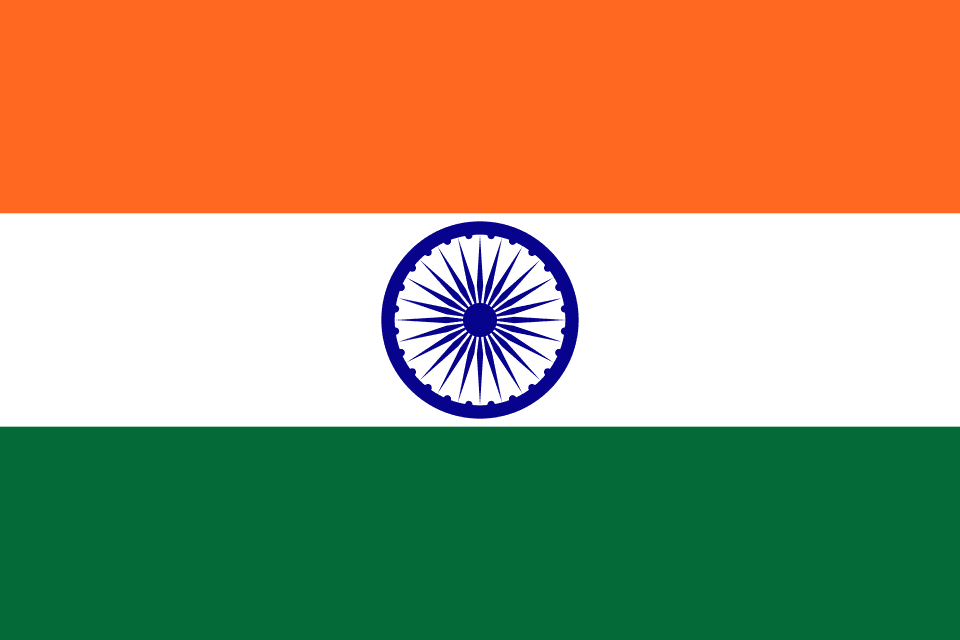
Fifty-five thousand years after modern humans first arrived on the Indian subcontinent from Africa, the lands bounded by the Indian Ocean, the Arabian Sea, and the Bay of Bengal have become home to the world's most populous democracy.
The maps drawn in the summer of 1947 did not merely divide a territory; they cleaved a geography whose human diversity was fifty-five thousand years in the making. When the British Raj dissolved into the sovereign dominions of India and Pakistan, it marked the end of a colonial economy that had slowly consolidated a sprawling subcontinent under a single administrative crown. Yet the sudden, violent cartography of partition triggered an unprecedented migration and a catastrophic loss of life, exposing the delicate seams of a land defined by its immense pluralism. For millennia, the geographic triangle tapering from the snow-capped Himalayan wall down to the equatorial waters of Cape Comorin had functioned less like a single nation and more like an entire continent—a vast, self-contained world where civilizations accumulated in dense, rich strata.
This deep history began on the western margins of the Indus river basin, where settled agricultural life emerged some nine thousand years ago. In time, these early agrarian communities blossomed into the Indus Valley Civilization, a highly organized urban society centered around planned cities like Mohenjo-daro, Harappa, and Dholavira. Flanking the Indus River—from which the Greeks derived the name Indoi for the local people, and from which the Latin India and the Persian Hindustan eventually evolved—this culture pioneered standardized weights, brick-paved streets, and complex trade networks. Long after these cities faded, the subcontinent became a crucible of language and thought. Between 1500 and 1200 BCE, Indo-Aryan-speaking groups carrying an archaic form of Sanskrit migrated from the northwest into the Punjab, their oral hymns laying the foundations of Hinduism. As these groups cleared the dense forests of the Ganges plain with iron tools, their culture pushed eastward, supplanting the indigenous Dravidian languages in the north and establishing a lasting linguistic divide between the Indo-Aryan north and the Dravidian south.
By the middle of the first millennium BCE, this second wave of urbanization along the Ganges fostered profound intellectual revolts against the emerging rigidities of the caste system. Siddhartha Gautama, the Buddha, and Mahavira, the founder of Jainism, arose to preach ethical paths to liberation that bypassed hereditary social hierarchies. These movements set the stage for the Maurya Empire, particularly under Ashoka in the third century BCE. Overwhelmed by the carnage of his own conquest of Kalinga, Ashoka embraced Buddhism and inscribed edicts of non-violence, ethical conduct, and environmental protection on stone pillars across his vast domain. Though subsequent eras, such as the Gupta Empire in the fourth and fifth centuries, witnessed a resurgence of devotional Hinduism alongside brilliant advancements in science and classical Sanskrit literature, the socio-religious landscape remained permanently decentralized. In the deep south, powerful maritime kingdoms like the Cholas, Cheras, and Pandyas charted their own courses, exporting Dravidian scripts, trade goods, and temple cultures across the Indian Ocean to Southeast Asia.
Connected to
- had as citizenB. R. Ambedkar1891 CE
- religionBuddhism
- containsChola dynasty300 BCE
- religionChristianity33 CE
- containsDholavira
- contains