Event · 1947 CE – 1950 CE · World Wars Era
Dominion of India
- Also known as
- Domini de l'Índia
- Dominio da India
- dominio de Barato
- Dominion de l'Inde
- Dominion de l'India
- Dominion dell'India
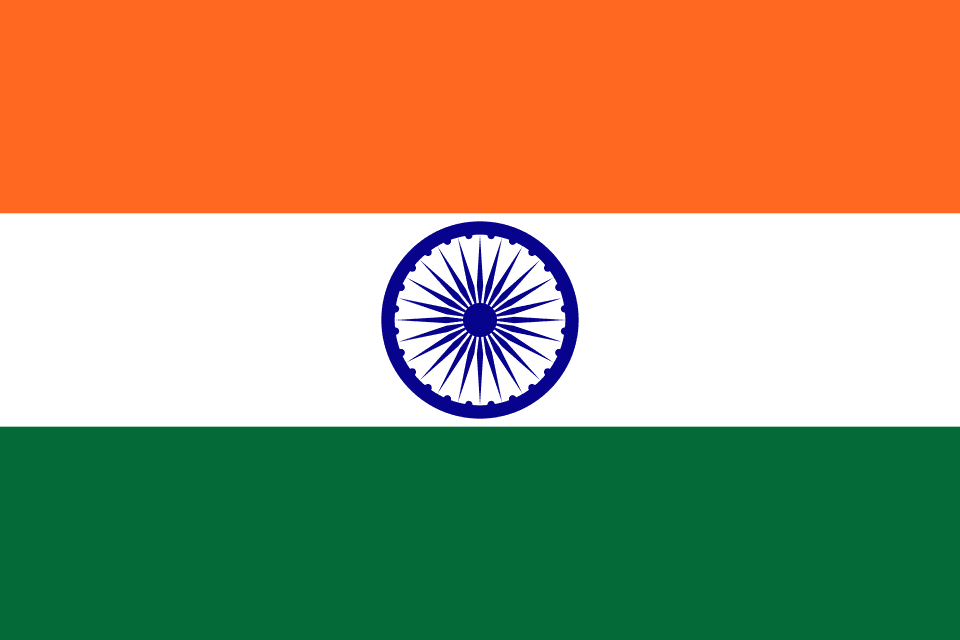
When the British Crown relinquished its jewel on 15 August 1947, it did not leave behind a finished republic, but a transitional creation known as the Dominion of India.
At midnight on 15 August 1947, the British Empire in India collapsed into two sovereign, self-governing dominions. In New Delhi, the new Prime Minister Jawaharlal Nehru famously declared that at the stroke of the midnight hour, while the world slept, India would awake to life and freedom. Yet the geography of this new "Union of India"—popularly and legally termed the Dominion of India—was a jagged, bleeding fragment of the old British Raj. To its west and east lay the two wings of the newly carved Dominion of Pakistan, created to satisfy the Muslim nationalism of Muhammad Ali Jinnah and the Muslim League. For 894 days, until it inaugurated its constitution and became a republic on 26 January 1950, this transitional dominion existed in a state of existential emergency. It was a nation born in a deluge of blood, burdened by the largest forced migration in human history, tasked with convincing over five hundred semi-autonomous princely states to surrender their sovereignty, and left to govern a vast, desperately poor population that was overwhelmingly illiterate.
The hurried nature of the transition shaped everything that followed. Exhausted by the Second World War, Britain’s Labour government under Clement Attlee had decided in late 1946 to terminate British rule, originally setting a deadline of June 1948. But when the final Viceroy, Lord Louis Mountbatten, arrived in March 1947, he found a subcontinent already spiraling into sectarian chaos, triggered in part by the "Direct Action Day" riots in Calcutta the previous August. Believing the British military could no longer control the escalating violence between Hindus, Muslims, and Sikhs, Mountbatten rushed the withdrawal forward by nearly a year. The boundary lines, hastily drawn by the Radcliffe Commission to partition the provinces of Punjab and Bengal, were kept secret until 17 August—two days after independence had actually been declared. The result was immediate, catastrophic panic. A 50,000-strong Indian Boundary Force, recruited locally and torn by its own sectarian loyalties, proved entirely useless. Across the partitioned Punjab, neighbors turned on neighbors. Trains carrying refugees were halted and their passengers systematically slaughtered; columns of foot migrants and oxcarts stretching for miles were ambushed. Between 14 and 18 million people crossed the new borders in a desperate, involuntary exchange of populations, and upwards of one million people were killed.
In New Delhi, the infant government of Prime Minister Nehru and his Deputy Prime Minister, Vallabhbhai Patel, was nearly overwhelmed by the human tide. In Delhi alone, incoming Hindu and Sikh refugees from West Punjab far outnumbered the departing Muslims. Refugees spilled from designated camps into the streets, occupied mosques, and packed into the ancient, crumbling ruins of the Purana Qila, where they lived alongside terrified local Muslims waiting for transport to Pakistan. The capital threatened to descend into a total pogrom. Into this maelstrom stepped Mahatma Gandhi, who arrived in Delhi in October 1947 fresh from pacifying Bengal. Gandhi chose to live first in an "untouchable" Balmiki temple and later in Birla House, using his immense moral authority to protect Delhi’s remaining Muslim population. His insistence on religious pluralism, combined with his demand that India release Pakistan’s negotiated share of the former empire's cash assets—which the Indian government had withheld to pressure Pakistan over a burgeoning conflict in Kashmir—infuriated Hindu fundamentalists. On 30 January 1948, Gandhi was assassinated, an event that shocked the nation into a sober, if fragile, internal peace, temporarily chilling the fires of communal violence.
Connected to
- had as citizenB. R. Ambedkar1891 CE
- had as citizenJawaharlal Nehru1889 CE
- had as citizenMahatma Gandhi1869 CE
+ 4 further connections to entries not yet ingested