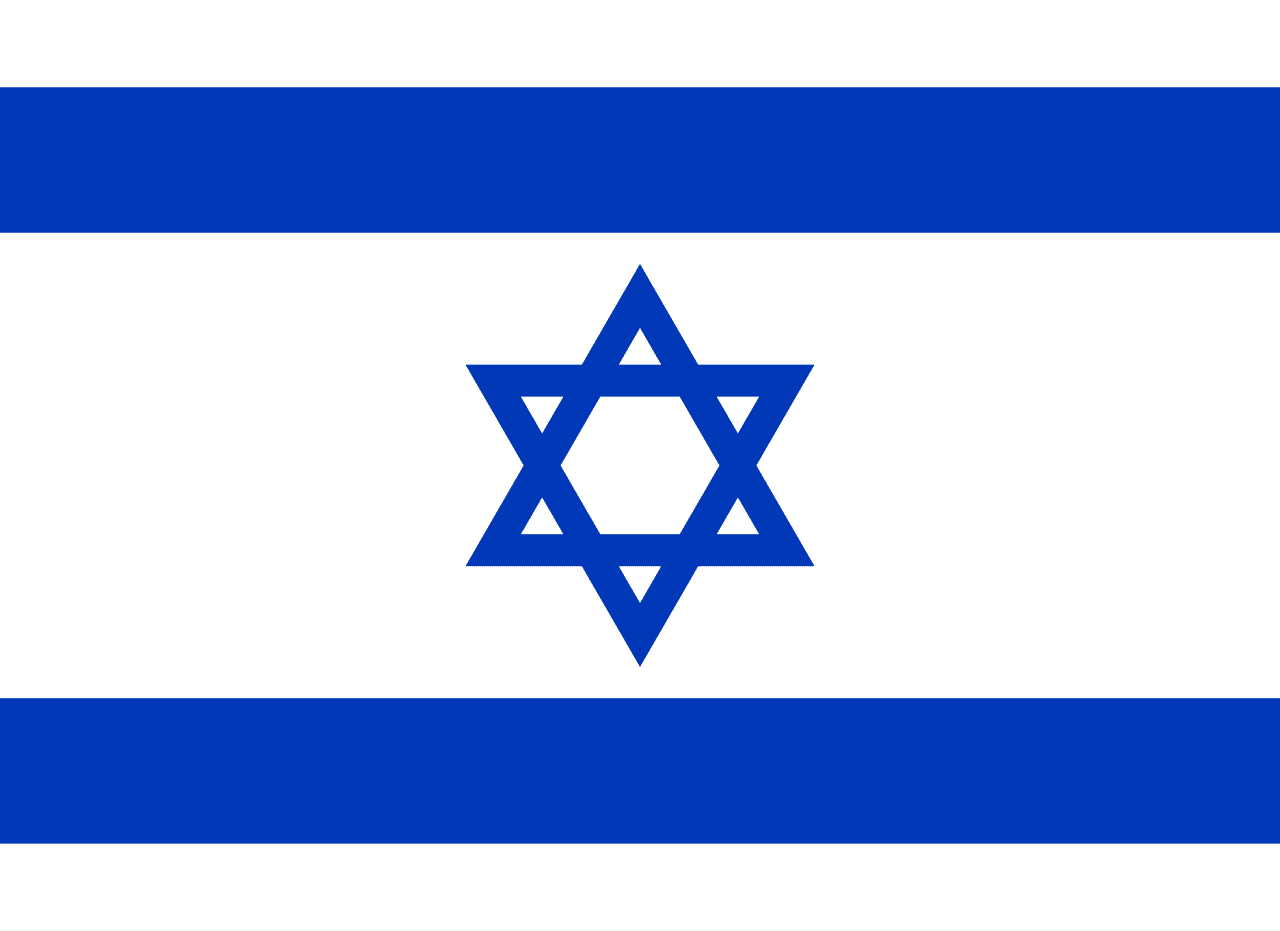
At the continental crossroads of West Asia, where the Mediterranean coast slips toward the lowest point on Earth near the Dead Sea, lies a landscape defined by shifting empires and deep-seated longing.
At four o'clock on the afternoon of 14 May 1948, in the main gallery of the Tel Aviv Museum of Art, a bronze plaque of Theodor Herzl looked down upon a hurried gathering of Jewish leaders. Outside, the Mediterranean spring was warm, but the windows were blacked out with heavy blankets, a precaution against the Egyptian air raids expected within hours. David Ben-Gurion, a short man with a halo of white hair, stood before a microphone and read from a parchment scroll. With a vote of six to three, the provisional government had rejected names like Judea, Zion, and Ever, choosing instead to revive a name that had not designated a sovereign state on this soil since the conquests of the ancient Near Eastern empires. The declaration of the State of Israel was both a beginning and a return, a moment that instantly collapsed millennia of wandering, empire, and catastrophe into the space of a single afternoon. When the ceremony concluded with the singing of Hatikvah, the British Mandate had only eight hours left to run, and the armies of five Arab nations were already moving toward the borders.
To understand the weight of that afternoon in Tel Aviv is to look back to the late thirteenth century BCE, where the word "Israel" first surfaced on the stone of the Merneptah Stele in Egypt, denoting a people, a collective, rather than a place. In the shattered aftermath of the Late Bronze Age collapse, as the Egyptian New Kingdom’s control over the vassal states of Canaan crumbled, a distinct monolatristic—and later monotheistic—religion centered on the deity Yahweh began to emerge among Semitic-speaking populations in the hill country. They spoke Biblical Hebrew, branching out from the Canaanites to form their own identity, while the Philistines settled the southern coastal plains. By 900 BCE, the northern Kingdom of Israel had risen, a prosperous regional power with its capital at Samaria, while its southern neighbor, the Kingdom of Judah, ruled from Jerusalem under the Davidic dynasty. Together, their fortunes rose and fell in the path of marching empires. The Neo-Assyrians swept away the northern kingdom in 720 BCE; the Neo-Babylonians under Nebuchadnezzar II destroyed Jerusalem and Solomon’s Temple in 587/6 BCE, driving the Judean elite into the rivers of Babylon.
What followed was a cyclic pattern of exile, return, and destruction that defined the landscape for two thousand years. Cyrus the Great of Persia permitted the return that saw the completion of the Second Temple around 520 BCE. Alexander the Great’s conquest introduced Hellenism, sparking the Maccabean Revolt of 167 BCE when Antiochus IV outlawed Jewish practices. For a brief, seventy-year window, the Hasmonean dynasty secured an autonomous Jewish kingdom, only for it to fall to the Roman siege of Jerusalem in 63 BCE. Roman rule was marked by catastrophic friction. The First Jewish-Roman War ended with the burning of the Second Temple in 70 CE; the subsequent Bar Kokhba revolt of 132–136 CE was crushed so brutally that the Romans depopulated the countryside, rebuilt Jerusalem as the pagan colony Aelia Capitolina, and pointedly renamed the province Syria Palaestina. The Jews were expelled from the districts surrounding Jerusalem, initiating a global diaspora, though a persistent, small Jewish presence remained, shifting its religious center northward to the Galilee.
+ 10 further connections to entries not yet ingested
Through the succeeding centuries, the land became a palimpsest of empires. The Byzantines made Christianity the state religion, discriminating against the remaining Jews until the Rashidun Caliphate conquered the Levant in the seventh century CE. Caliph Umar ibn al-Khattab lifted the Christian ban on Jewish entry into Jerusalem, ushering in six centuries of shifting Muslim rule under Umayyads, Abbasids, Fatimids, Seljuks, and Ayyubids. The Crusades briefly turned the region into a bloody theater of European feudalism, but Muslim rule was restored by the Mamluks of Egypt in 1291. When the Ottoman Empire seized the territory in 1516, the land was cosmopolitan yet depopulated, its inhabitants having shrunk from a Roman-era peak of one million to approximately 300,000. Under the Ottoman millet system, Jews and Christians were categorized as dhimmi—protected non-Muslim subjects—organized into autonomous religious communities. They enjoyed religious freedoms but faced geographic and lifestyle restrictions, along with the obligation to pay the jizya tax. Though Sephardic Jews fleeing the Spanish Inquisition were invited to rebuild Tiberias in 1561, the idea of a physical return to Zion remained, for centuries, a purely spiritual longing, an event to be brought about by Divine Providence rather than human hands.
That quietism shattered in the nineteenth century. As virulent antisemitism swept through Europe, the Zionist movement transformed the ancient religious yearning for Zion into a modern nationalist campaign for a Jewish homeland. The geopolitical alignment changed forever during World War I when Great Britain issued the Balfour Declaration in 1917, expressing support for a Jewish national home in Palestine. Following the collapse of the Ottoman Empire, Britain occupied the region and established Mandatory Palestine. What followed was a volatile three-way pressure cooker. Under British rule, waves of Jewish immigration—driven to a fever pitch by the rise of European fascism and the horrors of the Holocaust—met with fierce resistance from the native Arab population, who saw their own national aspirations ignored.
By 1947, exhausted by civil war and unable to reconcile the competing claims of Arab and Jewish nationalisms, the British turned the problem over to the newly formed United Nations. The UN Partition Plan proposed dividing the land into separate Jewish and Arab states, a proposal accepted by Jewish leaders but rejected by Arab leaders. The region descended immediately into a brutal civil war. When the British flag was lowered for the last time on 14 May 1948, the declaration of Israeli independence served as the catalyst for an immediate invasion by neighboring Arab states.
The war of 1948 reshaped the map of the Middle East and left deep, unresolved wounds. By the time the armistice agreements were signed in 1949, Israel had expanded its territory significantly beyond the borders proposed by the UN partition plan. No independent Palestinian Arab state was created; the Gaza Strip fell under Egyptian administration, and the West Bank was ruled by Jordan. For the Palestinian Arabs, the war was the Nakba—the catastrophe—during which the vast majority of their population fled or was expelled from their homes. Conversely, the establishment of Israel triggered a wave of antisemitism across the Arab world, prompting a mass exodus of Jewish communities from Middle Eastern and North African countries, most of whom sought refuge in the newly established state.
Israel’s borders would change again in 1967, when the Six-Day War resulted in the Israeli occupation of the West Bank, the Gaza Strip, and the Egyptian Sinai, alongside the annexation of East Jerusalem and the Syrian Golan Heights. Though peace treaties were eventually signed with Egypt in 1979 and Jordan in 1994, and the 1993 Oslo Accords introduced limited Palestinian self-rule in parts of the West Bank and Gaza, the core of the conflict remained unresolved. In the decades that followed, the Israeli occupation of the Palestinian territories drew intense international criticism, with human rights experts characterizing Israel's actions as war crimes and crimes against humanity. The conflict reached a devastating new threshold following the Hamas-led attacks on 7 October 2023, which prompted an Israeli military campaign in Gaza that critics and international bodies denounced as genocide—an accusation rejected by Israel and its key allies, including the United States.
Today, the state that emerged from the blacked-out museum in Tel Aviv exists as one of the great paradoxes of the modern world. Governed by a Knesset—a proportionally elected parliament—and led by a prime minister, it has revived Hebrew as an official spoken language, marrying ancient Jewish traditions with deep Arab cultural influences. It boasts one of the largest economies in the Middle East, characterized by one of Asia's highest standards of living and a technology sector so advanced that it allocates a larger share of its GDP to research and development than any other nation on Earth. Yet this hyper-modern, technologically sophisticated state, widely understood to possess nuclear weapons, remains fundamentally entangled with the unresolved questions of its founding. It is a place where the deepest layers of human history are constantly unearthed, serving as a reminder that in this narrow corridor of the Levant, the past is never merely historical; it is actively contesting the present.