Place · 1500 BCE · Ancient Egypt
Acre
- Also known as
- 'Akka
- 'Akká
- Accho
- Accho
- Accho
- Acco
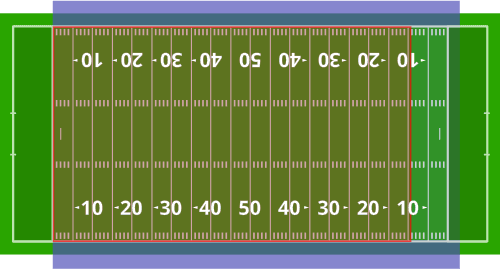
The measure of an acre was once defined not by abstract geometry, but by the physical limits of muscle, bone, and daylight.
To stand on an acre of land is to stand within the physical limit of what a human being, bound to a pair of beasts, could transform in a single cycle of the sun. Long before it was pinned down by statutes, international agreements, or the cold precision of satellite surveying, the acre was not a shape or a fixed set of coordinates. It was a measure of sweat, muscle, and daylight. In the early medieval morning, a farmer would yoke a team of eight oxen to a heavy wooden plough. The distance they could pull that blade before the beasts needed to pause and turn was "a furrow long"—the furlong. The width of land they could turn over side-by-side before the sun dipped below the western horizon was four perches, or one chain. Together, this strip of turned earth, ten times longer than it was wide, constituted the akr, a Norse and Germanic word for a cultivated field that traces its lineage back to the Latin ager and the Greek agros. It was the fundamental unit of human survival, representing exactly what one man and his beasts could wrest from the wild earth between dawn and dusk.
This primordial connection between human energy and the soil meant that across Europe, units of land measurement were almost always defined by labor rather than geometry. In the German states, the Netherlands, and Eastern Europe, farmers spoke of the morgen—literally, "morning"—which was the strip of land a man and his ox or horse could plough before midday. In France, the traditional unit was the arpent, though in Normandy, where Scandinavian influences ran deep, farmers clung to their own acre. Even within Normandy, the measure refused to be standardized, varying from 3,632 to 9,725 square metres depending on the region, with twentieth-century farmers in the pays de Caux still distinguishing between the grande acre and the petite acre. The land itself, with its clay, stones, and rolling hills, resisted the neatness of mathematics. A day’s ploughing on a steep, rocky hillside in Yorkshire yielded a far smaller patch of arable land than a day’s work in the flat, rich silt of the Fens, yet both were, in the eyes of those who worked them, an acre.
The transition of this living, breathing unit of labor into a rigid standard of law was a centuries-long project of statecraft. In England, the process of pinning down the acre began in earnest around 1300 with the Act on the Composition of Yards and Perches, attributed to the reign of Edward I, which decreed that an acre must legally measure forty perches in length and four in breadth. Subsequent monarchs—Edward III, Henry VIII, George IV, and finally Queen Victoria—each sought to tame the local variations of the customary acre, which had persisted for generations in the form of regional virgates, bovates, and carucates. The British Weights and Measures Act of 1878 finally codified the imperial acre as exactly 4,840 square yards, or 43,560 square feet. By this point, the physical shape of the acre had been liberated from its traditional elongated rectangular strip. It no longer had to be a furlong by a chain; it could be a square, a circle, or an irregular polygon tracing the bend of a river. Anything containing that precise number of square feet was now an acre.
As British imperial power expanded, this Anglo-Saxon unit of agricultural output was stamped onto the geography of the New World. In the United States and western Canada, the acre became the building block of continental empire. The vast wilderness was surveyed on giant square-mile grids. A square mile contained exactly 640 acres. Divided into quarters, it yielded four 160-acre homesteads—the classic size of the American family farm. Divided again, it produced the 40-acre parcels that defined rural life, immortalized in the American lexicon as "the back forty." So deeply ingrained was this unit of scale that even when developers sought to simplify the mathematics for modern suburban real estate, they conjured the "builder's acre"—a commercial shorthand of 40,000 square feet, which, while nearly ten percent smaller than a true survey acre, preserved the ancient name for marketing purposes.
Yet, as the world modernized and embraced the decimal elegance of the metric system, the acre began to retreat. In the United Kingdom, its use as a primary unit for trade was outlawed in 1995, replaced by the hectare, a metric square of one hundred meters on each side. The final bureaucratic stronghold of the British acre fell in 2010, when HM Land Registry ended its exemption for land registration. Today, in much of the former British Empire—from Australia and New Zealand to South Africa—the acre survives only as a ghost in the language, a legacy unit used informally by farmers and property agents to communicate with a public that still conceptualizes land through the lens of history rather than the decimal point.
Even where the acre remains a statutory measure, as in the United States, it has split into microscopic dualities that reveal the dizzying precision of modern metrology. Following the International Yard and Pound Agreement of 1959, which defined the international yard as exactly 0.9144 meters, the United States maintained two definitions of the acre: the "international acre" and the "US survey acre." The difference between the two is a mere four parts per million—about sixteen square centimeters, or a quarter of the size of a sheet of office paper—yet this infinitesimal variance became a battleground for surveyors and geodetic agencies. In 2019, the US National Geodetic Survey and the National Institute of Standards and Technology announced their joint intention to finally retire the US survey acre, ending a "temporary" sixty-year dualism.
In its modern form, the international acre of 4,046.85 square meters is often explained to the uninitiated through athletic metaphors. To an American, it is roughly ninety percent of a gridiron football field, excluding the end zones. To a European or South American, it is slightly more than half of a standard association football pitch. But these modern comparisons miss the historical poetry of the measurement. To measure land in acres is to use a scale designed not for machines or satellites, but for the companionable pace of a human being and an ox working the earth. It is a monument to a time when a unit of space was inseparable from the passage of time, and when the map of the world was drawn by the distance a man could walk behind a plough before the light failed him.
Connected to
- in countryOttoman Empire1299 CE
+ 10 further connections to entries not yet ingested