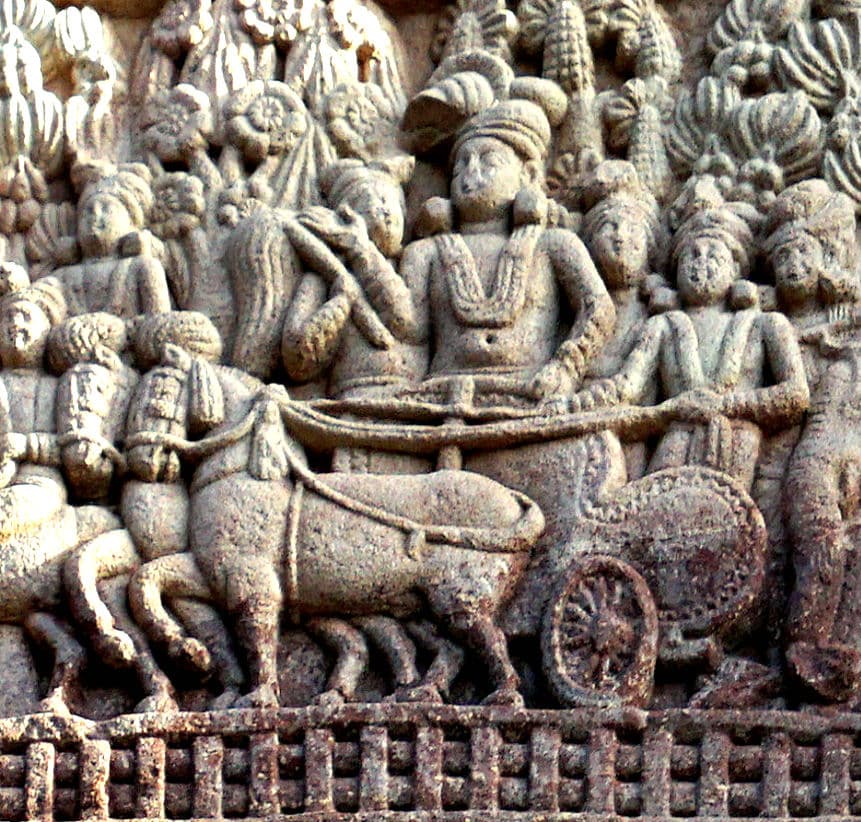
The blood spilled during the conquest of Kalinga in approximately 260 BCE did not merely expand the borders of the Mauryan Empire; it fundamentally altered the course of its ruler's mind.
In the dry, windswept plains of central India, near the modern village of Maski, and across dozens of other cliff faces and sandstone pillars scattered from modern Afghanistan to Bangladesh, there exists a series of imperial proclamations carved in ancient Brahmi and Aramaic scripts. For more than fifteen hundred years, these silent stone sentinels remained unreadable, their author forgotten by a subcontinent that had rewritten its history through myths of gods and epic kings. When nineteenth-century scholars finally deciphered the scripts, they discovered not a boast of conquests or a genealogy of divine descent, but the intimate, agonizing self-portrait of an emperor. Writing under the title Devanampiya—the Beloved of the Gods—and eventually identified as Ashoka, the third ruler of the Mauryan dynasty, this third-century BCE monarch laid bare a political philosophy and a personal conversion born of blood, guilt, and a radical reimagining of imperial power.
Before his voice was recovered from the stone, Ashoka existed almost exclusively in the amber of religious legend. The Buddhist texts that preserved his memory—split broadly between the North Indian Sanskrit texts like the Ashokavadana and the Pali chronicles of Sri Lanka such as the Mahavamsa—portrayed him with the dramatic contrast of a saint’s biography. Born around 304 BCE to the Mauryan emperor Bindusara, Ashoka was, by these accounts, a prince rejected. Legend holds that his father detested him for his rough, unappealing skin. In the competitive, lethal court of Pataliputra, where Bindusara’s many sons vied for the throne, Ashoka was sent away to distant administrative fringes: first to suppress a rebellion in the northwestern city of Takshashila, and later to govern the wealthy western province of Ujjain. The texts describe a youth of fierce capability and simmering resentment. When Bindusara neared death, Ashoka returned to the capital, seized the throne in a succession struggle, and, according to the more colorful monastic legends, constructed a palace of torture known as "Ashoka’s Hell" to punish his detractors.
The historical reality of his early reign, which began around 268 BCE, was defined by the inheritance of a massive, aggressive empire founded by his grandfather, Chandragupta. The Mauryan state was built on bureaucratic efficiency and military dominance, holding sway over the vast expanse of northern and central India. In his eighth regnal year, around 260 BCE, Ashoka turned this formidable military apparatus toward Kalinga, a wealthy, independent maritime region on the eastern coast.
What transpired in Kalinga became the pivotal fracture of Ashoka's life and the foundational event of his historical legacy. It is an event we know not from the celebratory accounts of court poets, but from Ashoka’s own hand, carved into the living rock of Rock Edict XIII. The text does not shy away from the scale of the horror: one hundred and fifty thousand people were deported, one hundred thousand were slain in battle, and many times that number perished from famine and pestilence in the war's wake.
+ 12 further connections to entries not yet ingested
The edict records an extraordinary psychological shift. Immediately after the conquest of Kalinga, the emperor felt a profound, devastating remorse. He realized that the slaughter of war fell not just upon rival soldiers, but upon priests, householders, and virtuous citizens who loved their friends and families. The suffering of these innocent people filled the emperor with intense grief. This raw public confession, unique in the annals of ancient empire, marked Ashoka’s turn toward dhamma—a concept of righteous conduct, moral duty, and social responsibility. He began to look toward the teachings of Gautama Buddha, gradually aligning his administration with the ethics of non-violence, compassion, and tolerance.
Ashoka’s subsequent rule became a vast experiment in ethical governance. Rather than relying on the traditional instruments of statecraft—espionage, punishment, and military expansion—he sought to govern through dhamma-vijaya, the conquest by righteousness. He appointed a new class of officials, the dhamma-mahamatras, tasked with traveling the empire to ensure the welfare of his subjects, prevent unjust imprisonment, and care for the elderly and vulnerable. He banned animal sacrifices, restricted the slaughter of animals for the royal kitchens, and established medical facilities for both humans and animals across his realms. Along the trade routes of his empire, he ordered banyan trees to be planted for shade, mango groves to be cultivated, and wells and rest houses to be built every few miles for weary travelers.
To communicate this new world order directly to his subjects, Ashoka initiated the first great epigraphic project in South Asian history. His edicts, carved on rocks and polished monolithic sandstone pillars topped with elaborate capitals of lions and bulls, were placed at bustling trade hubs, border regions, and sacred pilgrimage sites. Written primarily in local Prakrit dialects using the Brahmi script, but also in Greek and Aramaic in the frontier territories of the west, these inscriptions were meant to be read aloud to the illiterate masses. They did not promote a dogmatic state religion; indeed, the dhamma of the edicts is remarkably ecumenical, emphasizing respect for parents, generosity to Brahmins and ascetics, honesty, and, above all, mutual respect among different religious sects. Ashoka warned his people that criticizing another's faith out of devotion to one’s own only damaged one's own cause.
Yet, historians caution against viewing these edicts solely as the pure expressions of a saintly convert. In the modern study of ancient states, Ashoka’s inscriptions are also understood as highly sophisticated political communication. They served as imperial propaganda, projecting a paternalistic image of the emperor as a father figure—"all men are my children," he declared—to unify a sprawling, ethnically diverse empire under a singular moral code. Despite his avowed commitment to non-violence, Ashoka did not disband his armies, nor did he abolish the death penalty. In his warnings to the forest tribes on the borders of his empire, he gently but firmly reminded them of his power, noting that while he was remorseful, he still possessed the strength to punish those who did not conform to the peaceful order.
To the wider world, Ashoka’s patronage transformed Buddhism from a localized, sectarian movement in the Ganges valley into a major trans-continental faith. The Sri Lankan chronicles credit him with convening the Third Buddhist Council at Pataliputra to resolve sectarian disputes within the monastic community (sangha) and dispatching missions to the far corners of the known world. His own son, Mahinda, and daughter, Sanghamitta, are said to have carried a branch of the sacred Bodhi Tree to Sri Lanka, permanently establishing Buddhism on the island. While northern and southern traditions differ on the details—the northern Sanskrit texts omit the Sri Lankan missions entirely and focus on local tales of his donations—both traditions agree that Ashoka’s wealth and political support built thousands of stupas and monasteries across Asia.
Ashoka’s death in 232 BCE marked the beginning of the rapid decline of the Mauryan Empire, which fractured within a few decades. His unique vision of a state ruled by moral persuasion rather than physical force died with him, and his descendants returned to the pragmatic, realpolitik traditions of ancient Indian statecraft. His name faded from the living memory of India, preserved only in the libraries of Buddhist monasteries in Tibet, China, and Sri Lanka.
Yet, when the modern nation-state of India achieved independence in 1947, it looked past its medieval dynasties and colonial occupiers to find its national symbols in the ruins of Ashoka’s empire. The four lions of the Ashoka pillar capital at Sarnath became the state emblem, and the twenty-four-spoked wheel of dhamma—the Ashoka Chakra—was placed at the center of the national flag. In the end, Ashoka’s legacy was not the enduring borders of his territory, but his radical assertion that the true measure of a ruler's greatness lies not in the lands he conquers, but in the suffering he seeks to alleviate.