Event · 262 BCE – 261 BCE · Vedic and Mauryan
Kalinga War
- Also known as
- guera de Kalinga
- Guerra de Kalinga
- Guerra de Kalinga
- Guerra de Kalinga
- guerra di Kalinga
- guerre du Kalinga
The banks of the Daya River, where the Dhauli hills overlook the eastern coast of India, became the setting for one of the deadliest conflicts in antiquity.
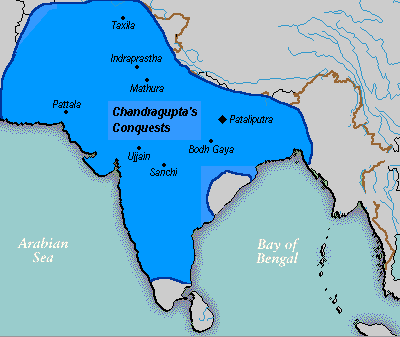
In the eighth year of his reign, around the year 261 BCE, the Mauryan Emperor Ashoka directed the immense military machinery of his state toward the eastern coast of the Indian subcontinent. His target was Kalinga, a wealthy and fiercely independent maritime kingdom situated along the Bay of Bengal, spanning what is now the modern state of Odisha and the northern stretches of Andhra Pradesh. For generations, Kalinga had remained an elusive prize. It was a prosperous land where peaceful, artistically skilled communities thrived under a cultural tapestry that wove together tribal traditions, Brahmanism, and the ascetic paths of Buddhism, Jainism, and Ajivika. Under the rule of the earlier Nanda Empire, which fell in 321 BCE, Kalinga had been part of the Magadhan sphere, but it had since reasserted its autonomy. Ashoka’s grandfather, Chandragupta Maurya, the architect of the Mauryan Empire, had reportedly attempted to subdue this coastal power and failed. To the Mauryan court in the capital of Pataliputra, Kalinga was more than an unconquered neighbor; it was a geographic and economic bottleneck. It commanded the vital trade routes running from the capital to the Mauryan possessions in the central peninsula, and its control over the coastal waters meant that its merchant ships and pioneering navy—among the first in the region to sail offshore—dominated the trade routes of Southeast Asia.
To break this strategic hold, Ashoka mobilized a massive force to march south, likely following a route through Sarguja that would later become a traditional corridor of conquest through the subcontinent. He faced a formidable adversary. The Greek historian Megasthenes, who had observed the Mauryan court in an earlier era, noted that the rulers of Kalinga maintained a vast military establishment, consisting of a massive infantry, cavalry, and a legendary contingent of war elephants. The collision of these two powers occurred near the Dhauli hills, on the flat plains bordering the banks of the Daya River. What followed was one of the largest and most devastating military engagements in the history of ancient India. The clash was not a swift capitulation but a grinding, catastrophic slaughter. On the banks of the Daya, the Mauryan army systematically dismantled the defenses of Kalinga. The scale of the violence was unprecedented; the war ended up costing nearly a quarter of a million lives, transforming the tranquil river valley into a vast, open-air morgue.
It is the aftermath of this violence, rather than the tactical maneuverings of the armies, that altered the course of human history. When the dust settled, Ashoka stood as the undisputed master of Kalinga, having successfully annexed the coastal kingdom and completed the long, bloody project of Mauryan empire-building begun by his grandfather. Yet, the victory proved to be a psychological ruin. Surveying the battlefield, the emperor was confronted by the staggering human cost of his ambition. His own rock edicts, carved into the stone cliffs and pillars of his empire, record this moment of crisis with a raw, confessional intimacy unique among ancient rulers. In these inscriptions, Ashoka refers to himself as Beloved-of-the-Gods, King Priyadarsi. He writes that during the conquest of Kalinga, one hundred and fifty thousand people were forcibly deported from their homes, one hundred thousand were slain in battle, and many times that number perished from the subsequent pestilence, famine, and deprivation that swept the broken countryside. The realization that he was the direct author of this misery triggered a profound existential collapse.
Connected to
- participated inAshoka304 BCE
- participated inMaurya empire322 BCE
+ 3 further connections to entries not yet ingested