Event · 300 BCE – 1279 CE · Southern Indian Empires
Chola dynasty
- Also known as
- Carstvo Čola
- Chola
- Chola
- Chola
- Chola
- Chola
Long before they built one of the world's most formidable maritime empires, the Cholas were recognized by the Mauryan emperor Ashoka in the third century BCE as independent, friendly neighbors to his south.
In the fertile, silt-rich valley of the Kaveri River, where the waters split into a labyrinth of green deltas before meeting the Bay of Bengal, the Tamil language gave a name to a rising power: Valavan, the ruler of the fertile land. To the ancient world, they were the Cholas. Long before they commanded fleets that crossed the open ocean, they were stitched into the very fabric of South Asian history, recognized as one of the Three Crowned Kings of Tamilakam alongside the Chera and the Pandya. Their presence was recorded in the third century BCE on the polished rock edicts of the Mauryan emperor Ashoka, who noted them as independent, friendly neighbors beyond his southern frontier. Roman navigators in the first century CE, steering their vessels through the monsoonal winds of the Indian Ocean, noted the bustling ports of the Chola coast in the Periplus of the Erythraean Sea, while the geographer Ptolemy mapped their inland cities. Yet for all this early prominence, the first millennium of Chola history was a precarious dance of survival, a long prelude to an era of astonishing imperial expansion.
For centuries, the Cholas were defined by the rhythm of the Kaveri. Their earliest legendary kings, celebrated in the Sangam literature of the late centuries BCE, were figures of mythic proportion; Karikala and Kocengannan were said to have commanded the waters and raised great earthworks, while the devotion of the king Kantaman was believed to have summoned the Kaveri River into existence through the intervention of the sage Agastya. Their oldest capital, Urayur, lay inland, while the coastal emporium of Kaveripattinam watched the sea. But by the fourth century CE, this early flowering was abruptly extinguished. An obscure, enigmatic dynasty known as the Kalabhras swept across the Tamil country, displacing the traditional kingdoms and plunging the region into a three-century historical twilight. When the Kalabhras were finally broken in the sixth century, it was not the Cholas who reaped the reward, but the rising powers of the Pallavas to the north and the Pandyas to the south. The Cholas were eclipsed, their royal house fractured. Some migrated north to the Telugu country, serving as provincial chieftains under Pallava suzerainty, while those who remained in the Kaveri heartland survived on the prestige of their ancient name alone. Despite their reduced circumstances, the triumphant Pallava and Pandya monarchs still sought Chola princesses in marriage—a testament to an enduring, almost sacred lineage that even military defeat could not erase.
The resurrection of the dynasty began in 848 CE, when a chieftain named Vijayalaya, claiming descent from the ancient Chola kings, seized the moment of Pallava and Pandya rivalry to re-establish an independent Chola state. What followed over the next three centuries was one of the most remarkable military consolidations in South Asian history. Vijayalaya’s successors systematically dismantled their former overlords. Aditya I absorbed the Pallava territories of Tondaimandalam, while Parantaka I pushed south, defeating the Pandyas and clashing with the formidable Rashtrakutas of the Deccan. By the late tenth century, the Cholas had unified the entire peninsular region south of the Tungabhadra River, holding it as a single, centralized state. Under the transformative reigns of Rajaraja I and his son Rajendra I, the kingdom transcended its regional boundaries to become an aggressive, wealthy, and highly sophisticated maritime empire.
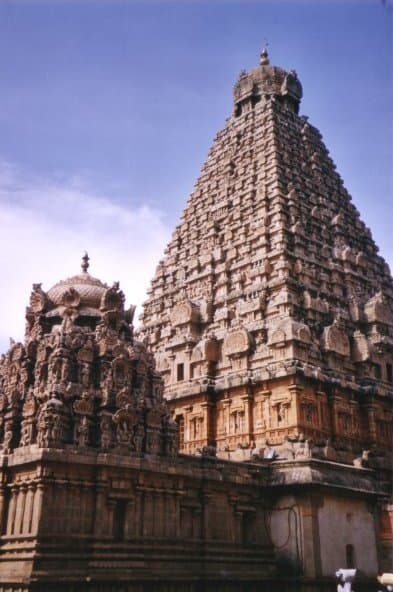
This medieval Chola state was propelled by a dual engine of agricultural surplus and maritime commerce. The Kaveri delta, meticulously irrigated, provided the tax base and grain that fed a massive standing army, while the dynasty’s strategic position on the Bay of Bengal allowed them to dominate the trade routes linking the Middle East, India, and Song Dynasty China. To secure these trade networks and project their authority, the Cholas constructed formidable naval fleets. Rajaraja I launched campaigns that brought the Maldives and the Malabar Coast under his control, and invaded the wealthy Rajarata kingdom of northern Sri Lanka. His son, Rajendra I, pushed the boundaries of the empire even further. In a spectacular northern campaign, Rajendra’s armies marched to the banks of the Ganges River, defeating the Pala dynasty of Bengal. To commemorate this unprecedented feat, he founded a colossal new capital in the Kaveri plains, naming it Gangaikonda Cholapuram—"The City of the Chola who Took the Ganges"—and constructed a vast temple mirroring the grand Brihadeeswarar Temple built by his father in Thanjavur.
But the Chola vision was not confined to the subcontinent. In 1025 CE, Rajendra I launched a dramatic naval invasion across the Bay of Bengal against the Srivijaya Empire, a powerful maritime kingdom that controlled the vital straits of Malacca and Sunda in modern-day Indonesia, Malaysia, and southern Thailand. The Chola armada struck Srivijaya's ports, crippling its naval power, securing free passage for Tamil merchant guilds, and initiating a period of deep Chola influence in Southeast Asian commerce. To solidify these international connections, Rajendra and his successors dispatched grand diplomatic and commercial missions to the Chinese imperial court, sending embassies in 1016, 1033, and 1077 CE. Under these monarchs, the Bay of Bengal was effectively transformed into a Chola lake, traversed by merchant fleets, diplomats, and priests who carried Tamil culture, architecture, and statecraft far beyond the shores of India.
Maintaining an empire of this scale required constant, exhausting warfare on multiple frontiers. To the west and north, the Western Chalukya Empire of the Deccan remained a persistent rival, contesting Chola influence over the strategic Vengi kingdom. For generations, the Cholas and Chalukyas locked horns in brutal campaigns across the Deccan plateau, with the Cholas generally maintaining dominance, extracting heavy tributes, and frustrating Chalukyan ambitions. In the south, Sri Lanka remained a volatile frontier. The Sinhalese kings of the southern Rohana kingdom waged a relentless guerrilla war to liberate the occupied northern province of Rajarata. Even during the later Chola period, emperors like Rajadhiraja II and the last great monarch, Kulottunga III, had to continuously deploy armies to suppress Sinhalese rebellions and confront their traditional rivals, the Pandyas, who allied with the Sri Lankan kings to undermine Chola hegemony.
The turn of the thirteenth century marked the beginning of the end for the imperial Cholas. The very systems that had sustained their rise began to fracture under the weight of ceaseless border wars and the rise of new regional powers. To the west, the Hoysalas of Dwarasamudra emerged as a potent force, initially clashing with the Cholas before the two dynasties settled into a complex relationship of marital alliances and mutual defense. Meanwhile, the Western Chalukyas dissolved, leaving a power vacuum in the Deccan. The fatal blow, however, came from the south. The Pandya dynasty, long subjugated and restive, underwent a dramatic resurgence. Between 1150 and 1280 CE, the Pandyas waged a war of independence that gradually eroded Chola territory. Despite the valiant efforts of Kulottunga III, who temporarily secured the frontiers and defeated Hoysala generals at Karuvur, the momentum had shifted. After 1215 CE, the Chola state was rapidly destabilized, squeezed between the aggressive Pandya empire and shifting northern alliances. By 1279 CE, the last Chola remnants were absorbed into the resurgent Pandyan Empire, and the dynasty that had ruled for over fifteen centuries quietly ceased to exist.
The legacy of the Chola dynasty survived long after their political authority dissolved. Their true monument was not the shifting borders of their empire, but the enduring cultural landscape they left behind. The massive granite temples of Thanjavur and Gangaikonda Cholapuram, with their soaring vimanas and exquisite stone sculptures, redefined the architecture of Southern India and served as centers of education, administration, and artistic patronage. The exquisite bronze icons cast during their reign—particularly the depictions of Shiva as Nataraja, the cosmic dancer—became world-renowned pinnacles of human artistic achievement. By transforming the Bay of Bengal into a highway of cultural and economic exchange, the Cholas permanently shaped the religious, linguistic, and artistic traditions of Southeast Asia, leaving an indelible imprint on the civilizations of the Indian Ocean world.
Connected to
- religionHinduism
- had as citizen · has partRajaraja I947 CE
+ 8 further connections to entries not yet ingested