Concept · 631 CE · Islamic Caliphates
Islam
- Also known as
- Agama Islam
- agama Islam
- Agama Islam
- Al-Islam
- al-Islām
- al-’islām
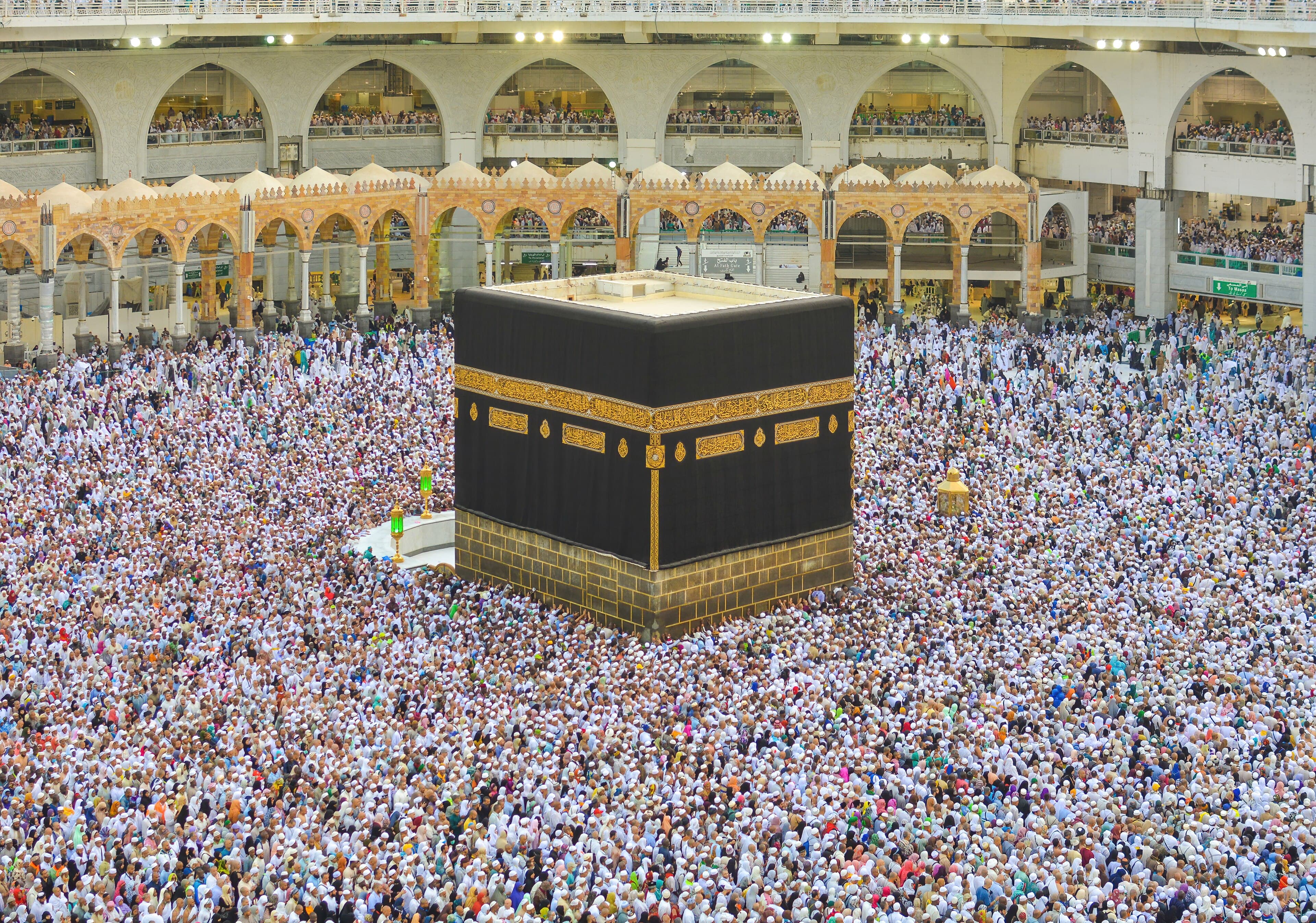
The cosmic order of Islam rests upon a single, uncompromising truth: the absolute oneness of God, a principle known as tawhid.
In the dry, windswept highlands of western Arabia in the year 631 CE, a long-unifying peninsula was undergoing a quiet but radical transformation. For centuries, the region had been defined by fragmented tribal allegiances, a pantheon of local deities, and a fatalistic belief that death was the absolute end of consciousness. Yet, by this year—which would come to be remembered in the Islamic tradition as the Year of Delegations—representatives from across the desert were streaming into the oasis city of Medina. They came to pledge allegiance to a merchant-turned-prophet named Muhammad and to embrace a concept that shattered their ancestral worldviews: islām, a word signifying the total surrender of one’s will to a single, incomparable God. By the time of Muhammad’s death a year later in 632 CE, nearly the entire Arabian Peninsula had converted, inaugurating a global faith that would eventually encompass two billion adherents, becoming the world’s second-largest religion and its fastest-growing spiritual population.
To the sixth-century Arabian mind, the theological demands of this new faith were startling. Islam did not present itself as a novel invention, but as the restoration of a primordial monotheism (tawhid) that had been revealed and subsequently distorted throughout human history. The message held that God—referred to in Arabic as Allāh, a term devoid of gender or plural form—had sent a succession of prophets and messengers to humanity, including Adam, Noah, Abraham, Moses, and Jesus. Alongside the Quran, the new faith recognized the divine origins of previous revelations, such as the Tawrat (Torah), the Zabur (Psalms), and the Injil (Gospel). However, these earlier scriptures were understood to have suffered textual or interpretive corruption over time. In contrast, the revelations received by Muhammad between 610 CE and his death in 632 CE were captured as the final, verbatim, and unaltered word of God. This text, the Quran (literally "The Recitation"), was divided into 114 chapters (surah) containing 6,236 verses (ayat), moving from the poetic, deeply spiritual themes of the early Meccan years to the practical, sociopolitical legislation of the later Medinan period.
At the center of this cosmic architecture was an uncompromising insistence on the oneness of God, a precise monotheism that rejected any multiplicity of divine persons, such as the Christian Trinity, or any physical representation of the divine. To attribute partners to God or to assign His unique characteristics to created things was classified as shirk (idolatry), the ultimate transgression. In this system, God required no intermediaries; there was no formal clergy to mediate between the creator and the individual. Instead, the universe was populated by unseen agents: angels (malak), created from light or fire, who possessed no physical desires, recorded human deeds, carried revelations, and assisted in the transition of souls at death. The physical world itself had been spoken into existence by the simple divine command "Be, and it is," and its ultimate destiny was anchored to a profound moral reckoning. Islam broke sharply from the pre-Islamic Arabian understanding of mortality by asserting a literal, bodily resurrection on Yawm al-Qiyāmah (the Day of Resurrection), also known as the Day of Religion or the Last Hour. On this day, every human being would be judged, and even an atom’s weight of good or evil would be laid bare. The righteous would find themselves in Jannah (paradise), depicted in the Quran as a place of joy, blessings, and ecstatic awareness of God, while the unrighteous would face the punishments of Jahannam (hell).
The internal logic of this theology translated into a highly structured rhythm of daily life, codified in five obligatory acts of worship known as the Five Pillars of Islam. The first was the shahada, the oath and creed by which a believer bore witness to the oneness of God and the status of Muhammad as His messenger. The remaining four pillars anchored the believer’s body and wealth to the community: the five daily prayers (salah), the payment of alms (zakat) to aid the vulnerable, fasting (sawm) during the holy month of Ramadan, and the hajj, a pilgrimage to the ancient sanctuary of Mecca that every able-bodied Muslim was expected to perform at least once. Beyond these pillars, the prophetic model of Muhammad’s own life—his words, silent approvals, and conduct—was preserved in oral and later written accounts known as hadith. Collectively, these traditions formed the sunnah (the "trodden path"), which served as the essential companion to the Quran, guiding jurists in the development of sharia, an all-encompassing system of Islamic law that governed everything from personal piety and gender roles to banking, welfare, and environmental stewardship.
As the faith expanded beyond the borders of Arabia under the Rashidun Caliphate, the unity of the early community faced its most severe test not from external empires, but from the internal question of political and spiritual succession after Muhammad’s death. This struggle gave rise to the two major branches of Islam: Sunni Islam, which today comprises approximately 87 to 90 percent of Muslims, and Shia Islam, which accounts for 10 to 13 percent. Though the schism began as a political dispute over who should lead the community, it gradually developed distinct theological and jurisprudential characteristics. Sunnis established a canonical hadith system centered on six books, among which the Sahih al-Bukhari is held in esteemed authority, while Shias developed their own canonical tradition based on four primary books of reports.
Despite these deep historical divisions, the core tenets of the faith remained remarkably resilient as Islam traveled along trade routes, through military expansions, and via scholarly networks across the globe. It transformed from an Arabian phenomenon into a universal civilization. Today, Muslims constitute the majority in 53 countries, with its demographic weight centered far from its Middle Eastern origins; approximately 12 percent of the global Muslim population resides in Indonesia, the world's most populous Muslim-majority nation, while 31 percent live in South Asia, 20 percent in the Middle East and North Africa, and 15 percent in sub-Saharan Africa. The three holiest sites of this vast network—the Masjid al-Haram in Mecca, the Prophet’s Mosque in Medina, and the al-Aqsa Mosque in Jerusalem—remain geographic anchors for a global population that continues to grow rapidly, driven by a young demographic structure and high fertility rates. What began in the isolated desert valleys of western Arabia as a call to radical submission ultimately reshaped the laws, the languages, the cities, and the spiritual map of the medieval and modern world.
Connected to
- followerAkbar1542 CE
- followerSaladin1138 CE
- followerAbbasid Caliphate750 CE
- followerAbu Bakr al-Razi866 CE
- followerAurangzeb1618 CE