Before it became a global symbol of sky-piercing architecture and financial gravity, the eastern edge of the Arabian Peninsula was defined by the cyclical rhythms of the Persian Gulf: maritime trade, seafaring, and a lucrative pearling industry.
For centuries, the southern shore of the Persian Gulf was a landscape defined by seasonal movement and extreme precarity. To the British Empire, which viewed the world through the prism of its trade routes to India, this was the "Pirate Coast"—a moniker earned by the maritime prowess of the Al Qawasim confederation, whose vessels routinely clashed with British-flagged shipping. To the people who lived there, however, survival was an art of versatility. Nomadic tribes like the Bani Yas, the Dhawahir, and the Manasir navigated a harsh desert environment by shifting between animal husbandry, oasis agriculture, and the seasonal harvest of the sea. By the nineteenth century, the pivot of this fragile economy was pearling. During the hot summer months, fleets of wooden dhows took to the shallow waters of the Gulf, harvesting the natural pearls that adorned the high societies of Europe and Asia.
It was a world governed by local sheikhs and stabilized, after a series of British military campaigns in 1809 and 1819, by a succession of maritime treaties. The Perpetual Maritime Truce of 1853, followed by the Exclusive Agreements of 1892, transformed these tribal territories into the Trucial States. Under this British protectorate, the sheikhs surrendered their foreign policy and the right to alienate their territory to any foreign power in exchange for British protection from maritime aggression. For decades, this arrangement preserved a quiet status quo. But the twentieth century brought a sequence of catastrophic shocks. First, the global economic depression of the late 1920s devastated international luxury markets; then, the Japanese development of the cultured pearl permanently undermined the value of natural harvesting. When the newly independent government of India imposed heavy import taxes on pearls shortly after the Second World War, the ancient trade was extinguished, leaving the Trucial States in a state of severe economic deprivation.
The salvation of the region lay deep beneath its shifting sands and shallow waters, though its extraction was a slow and agonizingly expensive process. As early as 1922, the British government had secured undertakings from the trucial rulers prohibiting them from granting oil concessions to foreign entities without British consent. Keenly aware of massive oil discoveries in Persia and Mesopotamia, the British-led Iraq Petroleum Company (IPC) began negotiating onshore concessions in the 1930s. These early options provided modest, desperate revenues to sheikhs struggling to feed their people. Yet actual discovery remained elusive. In 1950, IPC’s operating subsidiary drilled its first exploratory borehole at Ras Sadr in Abu Dhabi. It took a year to reach a depth of 13,000 feet, costing a staggering one million pounds, only to turn up completely dry.
+ 7 further connections to entries not yet ingested
It would take several more years of persistence before the subterranean wealth of the region was finally unlocked, triggering one of the most rapid and radical transformations in human history. Under the leadership of Zayed bin Sultan Al Nahyan, who became the ruler of Abu Dhabi and eventually the first president of the United Arab Emirates, these newly tapped oil revenues were systematically redirected. Rather than accumulating as private dynastic wealth, the petrodollars were channeled into the rapid construction of a modern state: hospitals, roads, schools, and desalination plants emerged where small coastal villages and palm-frond huts had stood just a generation prior.
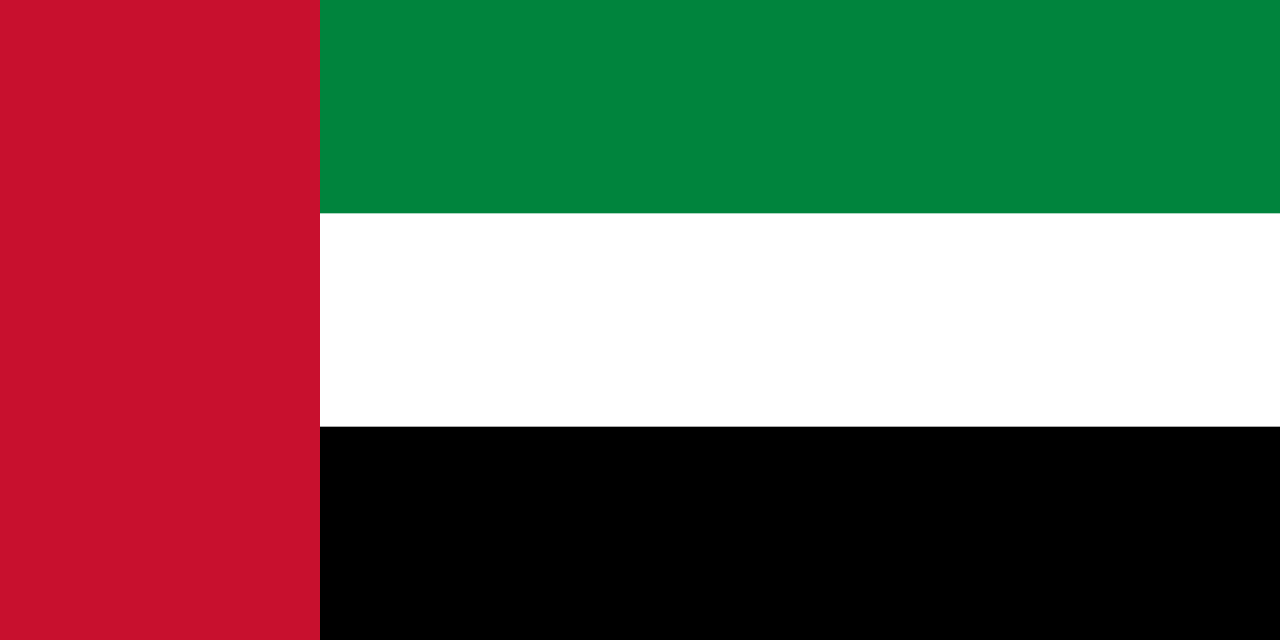
The political culmination of this wealth arrived in 1971, when the British formally withdrew from their commitments east of Suez. Rather than fracturing into vulnerable, isolated city-states, six of the Trucial sheikhdoms—Abu Dhabi, Dubai, Sharjah, Ajman, Umm Al Quwain, and Fujairah—joined together to form a unique federal polity: the United Arab Emirates. The seventh emirate, Ras Al Khaimah, joined the federation shortly thereafter. This new nation bypassed the traditional evolutionary stages of modern statehood, transitioning directly from a collection of tribal protectorates into a wealthy, highly centralized federal monarchy. At the apex of this political structure sat the Federal Supreme Council, composed of the seven ruling emirs, who jointly appointed the federal president—a position historically held by the ruler of Abu Dhabi—and a prime minister to run the government.
In the decades that followed, the UAE forged an identity that was both deeply conservative and aggressively cosmopolitan. Holding the world’s seventh-largest oil and natural gas reserves, the federation—and Dubai in particular—nevertheless recognized the vulnerability of relying solely on finite natural resources. In the twenty-first century, the country engineered the most diversified economy in the Gulf Cooperation Council, transforming Dubai and Abu Dhabi into global epicenters of finance, high-end tourism, aviation, and international real estate.
This hyper-modern exterior, however, rests on a highly unusual demographic and social architecture. Of the more than eleven million people residing in the Emirates, a mere eleven percent are native Emirati citizens. The vast majority of the population consists of foreign expatriates and migrant workers, largely from South Asia, who power the construction, service, and corporate sectors. While Arabic remains the official language and Islam the state religion, English has become the de facto lingua franca of business and daily life in these glittering, polyglot metropolises.
This demographic imbalance is mirrored by a complex political duality. Administratively, the UAE ranks as the highest in its region on the Human Development Index, offering its citizens exceptional standards of housing, healthcare, education, and physical safety. Yet, this high quality of life exists alongside a highly controlled political environment. The UAE is an authoritarian state where the modern instruments of civic expression are tightly managed. International human rights organizations consistently rate the country poorly on human freedom, pointing to the severe repression of the freedoms of assembly, association, and speech. Activists and government critics have faced imprisonment, surveillance, and forced disappearance, while the state security apparatus closely monitors the public sphere.
From its ancient origins as a vital node in the Bronze Age copper trade of the Magan civilization, to its centuries as a maritime crossroads contested by Portuguese, Dutch, and British empires, the coast of the eastern Arabian Peninsula has always survived by looking outward. Today, as a recognized middle power in global affairs, a member of BRICS, and a crucial dialogue partner in the Shanghai Cooperation Organisation, the United Arab Emirates occupies a position of influence far disproportionate to its size. It stands as a profound paradox of the modern world: a deeply traditional tribal federation that has successfully recast itself as a primary laboratory for the globalized future.