Place · 900s CE · East African Civilizations
Kilwa Kisiwani
- Also known as
- Große Moschee (Kilwa Kisiwani)
- Ilha Quíloa
- Kilva Kisivanis
- Kilva-Kisivani
- Kilwa
- Kilwa
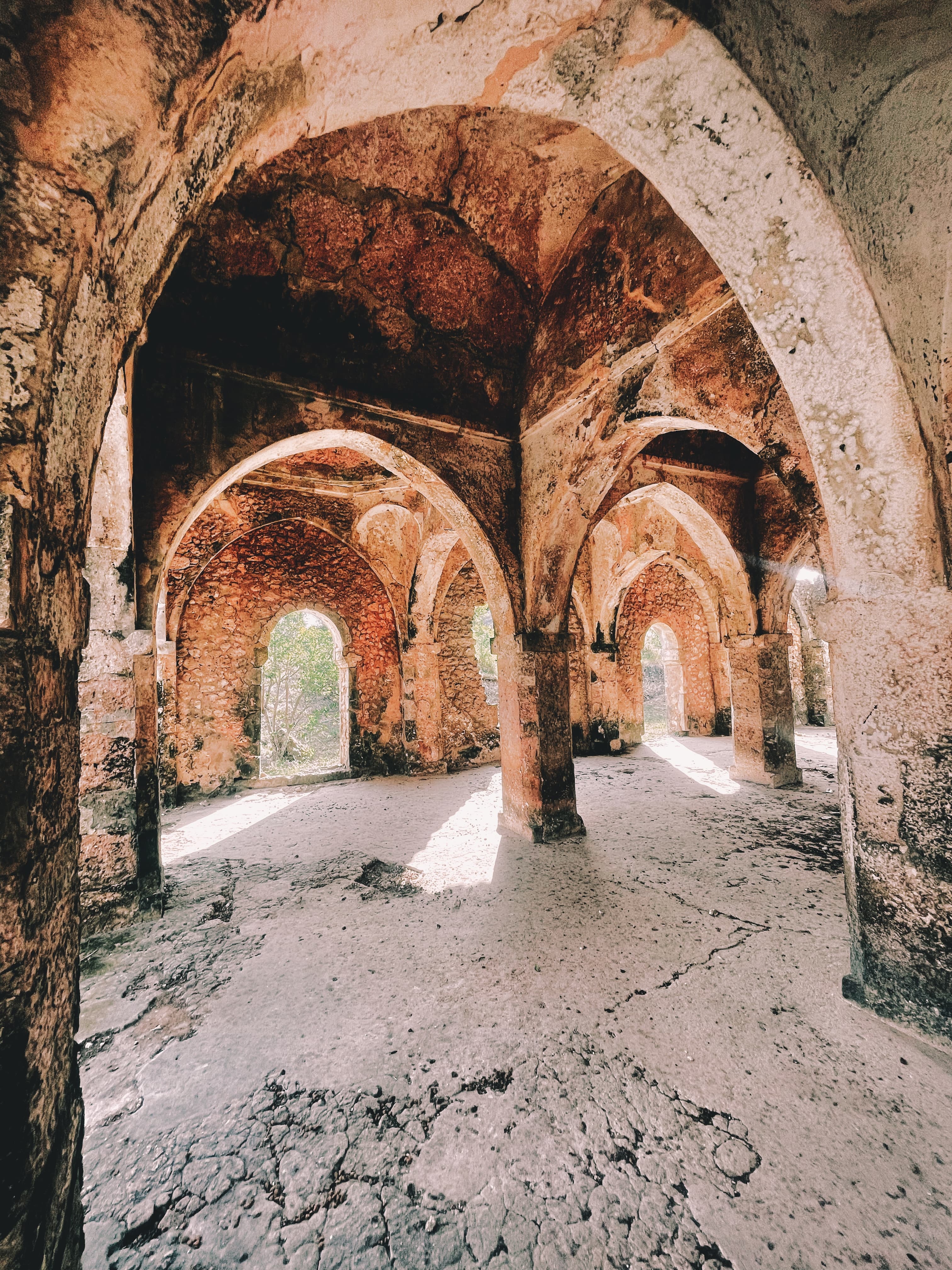
Long before modern borders defined the East African coast, the seasonal monsoon winds of the Indian Ocean carried merchants, wealth, and ideas to a small island just nine degrees south of the equator.
Nine degrees south of the equator, where the Mavuji River estuary dissolves into the Indian Ocean, a tiny island of low-quality limestone topsoil and ancient freshwater wells sits in quiet isolation. Today, Kilwa Kisiwani is home to barely more than a thousand residents who navigate its roadless, twelve-square-kilometer expanse on foot or by motorcycle, relying on solar power and small boats to connect them to the Tanzanian mainland. Yet beneath the feet of this resilient, modern hamlet lies the calcified skeleton of a medieval metropolis. For five centuries, this island was the glittering nerve center of the Kilwa Sultanate, a Swahili maritime empire whose authority stretched the entire length of the East African coast. It was a place where merchants from the African interior met sailors from the Persian Gulf, India, and China, trading gold and ivory for fine celadon and glazed earthenware. When the legendary Moroccan traveler Ibn Battuta stepped ashore in 1331 CE, he was so struck by its stone-built grandeur and sophisticated design that he declared it one of the most beautiful cities in the world.
The rise of Kilwa, which carbon-14 dating places at the start of the ninth century CE, was dictated by the rhythmic breathing of the Indian Ocean—the seasonal reversal of the monsoon winds that carried foreign dhows to its harbors and swept them back home months later. Though early European observers often sought to attribute the city's sudden wealth to foreign colonization, Kilwa’s roots were fundamentally African. Its growth was fueled by its strategic position. In the twelfth century, local spinners were already processing cotton grown in the region's suitable soils to manufacture sails and textiles, as evidenced by recovered spindle whorls. By the thirteenth century, Kilwa had seized absolute control over the gold trade flowing from Sofala in modern-day Mozambique. With this immense wealth came a sophisticated political administration capable of overseeing a bustling port, controlling the movement of goods, and organizing complex urban spaces. The city’s physical architecture evolved in tandem with its treasury. Before the thirteenth century, Kilwa’s residents lived in modest wattle-and-daub houses; with the influx of gold, ivory, spices, tortoiseshell, coconut oil, and incense, the elite began constructing permanent, monumental buildings out of square blocks of coral limestone.
This architectural boom produced some of the most remarkable stone structures of the medieval African coast, chief among them the Great Mosque of Kilwa. The earliest northern prayer hall of this mosque, built between 1131 and 1170 CE, was a rectangular masterpiece of engineering. Its flat roof, made of coral tiles embedded in mortar and adorned with painted decorative concentric circles of red and black, was supported by nine hexagonal columns carved from single tree trunks. In the early fourteenth century, Sultan al-Hasan ibn Sulaiman expanded the mosque, adding a grand dome that captivated Ibn Battuta, alongside a highly ornamented mihrab featuring pilasters, a fluted half-dome vault, and protruding coral blocks designed to hold a fixed wooden minbar. The Sultan also constructed the nearby palace of Husuni Kubwa, an sprawling clifftop complex that epitomized the golden age of the sultanate. To sustain this urban density, Kilwa’s residents relied on a highly developed water management system, drawing from freshwater wells that remain in use over a thousand years later, and supplementing their seafood-heavy diet with agricultural produce brought from the higher grounds of the mainland.
Connected to
5 links to entries not yet ingested in the Library.