Organization · 1991 CE · Persian Empires
Tajikistan
- Also known as
- An Táidsíceastáin
- Datschikischtaan
- Daz-giz-gwz-swh-danj
- Dazgizgwzswhdanj
- Dziłtah Hóteelnii Bikéyah
- i-Tajikistan
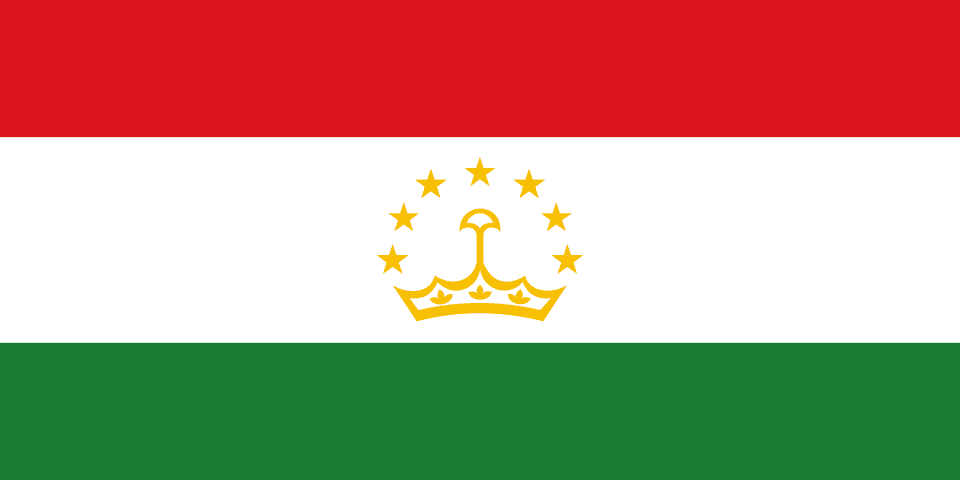
To look at a map of modern Tajikistan is to trace a geography defined by more than ninety percent mountain terrain and a labyrinth of borders drawn during the Soviet era.
In 1924, when Soviet cartographers sat down to draw the borders of Central Asia, they performed a quiet act of geographic and cultural dissection. They created the Tajik Autonomous Soviet Socialist Republic as a subordinate enclave within the Uzbek Soviet Socialist Republic, but they did so by shearing the Tajiks away from their historic urban heartlands. Bukhara and Samarkand—cities that had served as the brilliant twin capitals of Islamic Persian culture for a thousand years—were handed to Uzbekistan. Instead, the newly designated homeland of the Tajiks was anchored in Dushanbe, a dusty mountain village of barely one thousand souls. Five years later, on 5 December 1929, this artificial entity was elevated to a full constituent republic of the Soviet Union. To populate this new mountain republic and make it viable, Soviet planners annexed the northern agricultural plains of the Sughd region. They had created a country out of sheer will, isolated peaks, and a displaced population, setting in motion a twentieth-century transformation that would culminate on 9 September 1991, when Tajikistan declared itself an independent sovereign state amidst the smoking ruins of the Soviet Union.
To understand the profound disorientation of Tajik independence in 1991 is to understand how deeply the Soviet state had restructured what it meant to be Tajik. For centuries, the Persian-speaking peoples of Central Asia were the custodians of a vast literary and cultural sphere that stretched from Istanbul to Calcutta. Under the Samanid Empire of the ninth and tenth centuries, independent of Arab Abbasid rule, Persian culture had experienced a golden age of revival. It was the Samanids who patronized the legendary poets Rudaki and Daqiqi, and who oversaw the first complete translation of the Qur'an into Persian, anchoring Sunni Islam deep within the region's consciousness. Even as political power shifted to Turkic dynasties like the Kara-Khanids, and later to the Mongol and Timurid empires, the Perso-Arab Islamic culture remained the prestigious lingua franca of administration, high literature, and urban commerce.
The arrival of the Russian Empire in the nineteenth century, driven by an insatiable hunger for cotton-growing territories to feed its mills, began to chip away at this ancient order. Following the 1917 Russian Revolution, local basmachi guerrillas waged a fierce, tragic four-year war against the Bolshevik armies to maintain their independence, witnessing their mosques and villages burned before being brutally suppressed. What followed under Soviet rule was not merely political subjugation, but an ambitious campaign of cultural engineering. To sever the Tajiks from their historical ties to Iran and Afghanistan, Soviet authorities systematically dismantled the unity of the Persianate world. They took the local Persian dialect, rich with regional vocabulary and pronunciation, and deliberately codified it into a distinct national language renamed "Tajiki." To ensure that future generations could not read the classic poetry of their ancestors or contemporary works from across the border, they abolished the traditional Arabic script. It was replaced first by a Latin-based alphabet in 1928, and then by Cyrillic in 1940. Russian became the undisputed language of administration and inter-ethnic communication, while the practice of Islam, Christianity, and Judaism was aggressively repressed through anti-religious campaigns, church and mosque closures, and the persecution of believers.
Connected to
- in country · containsTajikistan1991 CE
- containsZoroastrianism1500 BCE
+ 5 further connections to entries not yet ingested