The shadow of a legendary father is a difficult landscape to navigate, yet Cambyses II expanded the borders of the Achaemenid Empire farther than Cyrus the Great ever managed.
In the spring of 525 BCE, an army stood on the edge of the Sinai, peering across the shimmering, lethal expanse that separated the Levant from the Delta of Egypt. To invade Egypt from the east was to wager an empire on water. The desert was a fortress of heat and sand, impassable to any massive host without a miracle of logistics. Yet the young Persian King of Kings, Cambyses II, had secured his miracle. Through a strategic treaty with the local Arab chieftains, he had arranged a vast, rolling pipeline of water camels to sustain his soldiers across the wastes. Beyond the desert lay Pelusium, the eastern gate of the Nile, where the young Pharaoh Psamtik III waited with the massed bronze-clad hosts of Egypt. According to legend, Cambyses secured his victory not merely by steel, but by a psychological masterstroke: he arrayed cats, dogs, and sheep—beasts sacred to the Egyptian pantheon—along his front lines, paralyzing the defenders who feared angering their gods. True or mythic, the battle at Pelusium was a rout. Memphis fell soon after, and with its capitulation, the last grand, independent empire of the ancient Near East was absorbed into the rapidly expanding horizon of the Achaemenids.
For centuries, the memory of Cambyses II was preserved largely through the ink of his enemies. To the Greek historian Herodotus, writing decades later, Cambyses was the archetypal foreign tyrant: a ruler driven mad by his own absolute power, a desecrator of temples who stabbed the sacred Apis bull in a fit of rage, and a reckless commander who marched his men into the southern deserts of Kush and the western sands of the Siwa Oasis only to watch them starve or vanish beneath the dunes. This "Lost Army" of Cambyses became an enduring trope of imperial hubris. Yet modern historical excavation and the recovery of contemporary Egyptian hieroglyphs reveal a far more calculating, pragmatic, and culturally fluent sovereign. Cambyses was not a madman tearing down the institutions of the Nile; he was the dutiful son of Cyrus the Great, executing a grand geopolitical blueprint that had been drafted long before his accession.
This blueprint had been nurtured during Cambyses’ early years of tutelage in the heart of Mesopotamia. The eldest son of Cyrus and his queen Cassandane, Cambyses was raised to inherit a multi-ethnic empire that was still inventing its own administrative grammar. In 538 BCE, following his father’s conquest of Babylon, the young prince was thrust into the public eye during the New Year festival, receiving the royal sceptre in the Esagila temple from the hands of the god Marduk himself. He was appointed governor of northern Babylonia, a nine-month apprenticeship in the art of ruling ancient, proud urban elites. Though his father briefly revoked the governorship for reasons lost to history, Cambyses was soon elevated to co-ruler. When Cyrus marched east to his death against the nomadic Massagetae of Central Asia in 530 BCE, the transition of power was remarkably smooth. Secure on the throne, Cambyses turned his gaze toward the Mediterranean and the Nile, determined to complete his father’s dream of unifying the lands of the Trans-Euphrates.
+ 12 further connections to entries not yet ingested
The conquest of Egypt was not a sudden whim, but a masterclass in preparation. Recognizing that Egypt’s strength lay in its naval alliances, Cambyses systematically dismantled its security network. He built the first proper Achaemenid navy using the shipwrights and sailors of Phoenicia and Asia Minor. He won over Polycrates, the tyrant of Samos, who had previously been allied with the pharaoh Amasis II, and took Cyprus from Egyptian control. By the time Amasis died in 526 BCE, leaving his green successor Psamtik III to inherit the kingdom, the trap was already sprung.
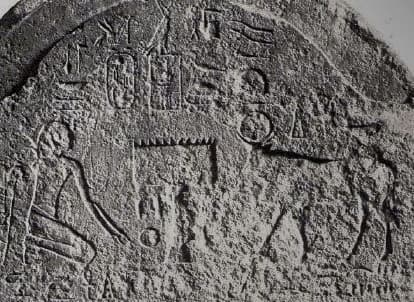
Once Egypt was won, Cambyses did what the Achaemenids did best: he adopted the local idiom of power. Rather than ruling as an alien occupier, he took the traditional titles of the pharaohs, styling himself the "King of Upper and Lower Egypt" and a "descendant of Ra, Horus, and Osiris." He spun a sophisticated genealogical fiction, claiming his mother was actually an Egyptian princess named Nitetis, the daughter of the former pharaoh Apries—thereby framing his conquest not as a subjugation, but as a legitimate restoration of dynastic line. At Sais, inside the temple of the goddess Neith, Cambyses knelt, took his crowns, and performed sacrifices to the native gods.
The dark legends of his sacrilege are flatly contradicted by the stone records of Egypt itself. The story of Cambyses slaughtering the sacred Apis bull is undone by a massive granite sarcophagus found in the Serapeum of Memphis. Dedicated in the sixth year of his reign, the sarcophagus bears an inscription showing Cambyses paying homage to the deceased bull-god Apis-Osiris, wishing him "all life, perpetuity, and prosperity." The real source of the Egyptian priesthood’s later hostility was not religious madness, but fiscal policy. According to the Egyptian Demotic Chronicle, Cambyses slashed the exorbitant state revenues that the temples had traditionally enjoyed from the pharaohs, leaving only three major sanctuaries with their full entitlements. It was an economic reform, akin to those attempted by native pharaohs before him, but one that earned him the eternal enmity of the scribes who wrote the histories.
While his administration of Egypt was calculated, his ambitions further south and west met with mixed fortunes. To protect his southern border, Cambyses established a permanent garrison at Elephantine, near the first cataract of the Nile, and launched campaigns to keep the Kingdom of Kush in check. Though Greek sources painted these expeditions as unmitigated catastrophes born of imperial madness, archaeological finds tell a different story. The Persians successfully garrisoned Dorginarti, deep in Nubian territory, and later Persian reliefs at Persepolis show Nubian delegations bearing tribute, indicating that Cambyses succeeded in establishing a durable sphere of influence in the south.
The end of Cambyses' reign was as sudden as it was mysterious. In the spring of 522 BCE, while still in Egypt, word reached him of a massive rebellion in the Persian heartland. His younger brother, Bardiya—or perhaps an impostor named Gaumata claiming to be Bardiya—had seized the throne. Hastily gathering his forces, Cambyses began the long march back to Persia to secure his crown. He never made it. While passing through Syria, in a town likely identified as modern Hama, the King of Kings suffered a deep wound to his thigh. Whether it was an accident with his own sword or the work of an assassin, the wound turned gangrenous. Three weeks later, Cambyses II died childless, leaving his empire in the throes of a succession crisis that would eventually be resolved by the rise of Darius the Great.
Cambyses left behind a sprawling, unified empire that now stretched from the Aegean to the Nile and into the borders of India. Though his reign was brief—only eight years of sole rule—it was the crucible in which the Achaemenid Empire proved it could absorb and govern the oldest civilization in the Mediterranean world, establishing a template of imperial integration that would endure for two centuries.