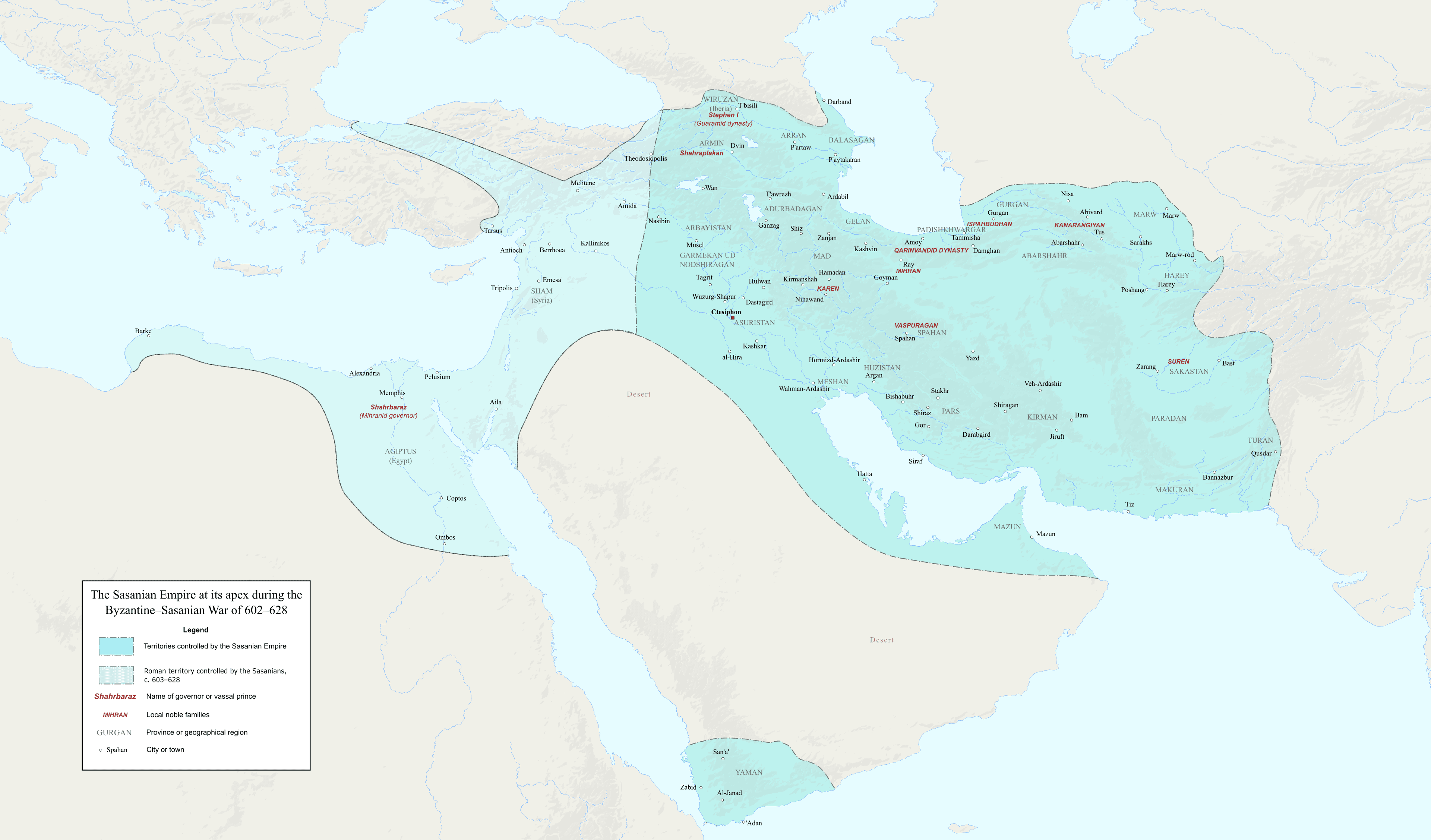
In 224 CE, Ardashir I overthrew the Parthian king Artabanus IV at the Battle of Hormozdgan, initiating a four-century reign that would elevate Eranshahr—the Empire of the Iranians—to the height of its power in late antiquity.
In the early third century CE, the landscape of southern Iran was defined by a quiet, ancient silence. Near the ruins of Persepolis, the crumbling monuments of the Achaemenid Persian Empire—the dynasty of Cyrus and Darius, shattered half a millennium earlier by Alexander the Great—stood as stone ghosts. For nearly five centuries, the Parthian Arsacids had ruled the Iranian plateau, but theirs was a loose, decentralized confederation of kingdoms, prone to internal friction and increasingly vulnerable to the relentless pressure of Rome. To a local governor named Ardashir, ruling from the southern province of Pars, the Parthians were caretakers who had lost their grip on the sacred fire of Iran. By 224 CE, Ardashir had systematically subdued his neighbors, defied his Parthian overlords, and met the last Arsacid king, Artabanus IV, at the Battle of Hormozdgan. Artabanus was slain, the Parthian capital of Ctesiphon fell, and Ardashir I was crowned Shahanshah—"King of Kings." He named his new empire Ērānšahr, the Empire of the Iranians, establishing a dynasty that would endure for more than four centuries under the name of his ancestral patriarch, Sasan.
This was not merely a change of rulers; it was a conscious, zealous restoration of Persian identity. Ardashir and his successors believed they held a divine mandate to reclaim the lost boundaries and glory of the Achaemenids. To secure this mandate, the Sasanians abandoned the loose feudal structure of the Parthians in favor of a highly centralized, complex government bureaucracy. Where the Parthians had been culturally Hellenized and religiously pluralistic, the Sasanians championed Zoroastrianism as a legitimizing, unifying ideal. Fire temples, housing the sacred flames that symbolized the purity of Ahura Mazda, were constructed throughout the realm under the watchful eyes of an increasingly powerful and organized priesthood.
The immediate consequence of this ideological shift was a dramatic escalation of hostilities on the empire's western frontier. Unlike their predecessors, the Sasanians did not merely defend their borders against Rome; they aggressively sought to expel the Romans from Asia. Under Ardashir’s son and successor, Shapur I, this confrontation reached an unprecedented peak of violence and triumph. Shapur, a brilliant military strategist, invaded Roman Mesopotamia and captured Carrhae and Nisibis. When the young Roman emperor Gordian III marched down the Euphrates to halt the Persian advance in 244 CE, his forces were shattered at the Battle of Meshike, and Gordian was killed. His successor, Philip the Arab, was forced to buy a humiliating peace with a massive payment of 500,000 denarii and annual tributes.
+ 12 further connections to entries not yet ingested
Shapur’s greatest triumph, however, came in 260 CE. At the Battle of Edessa, the Roman army was utterly defeated and the Roman emperor Valerian himself was captured alive—an event unprecedented in Roman history. Valerian spent the remainder of his life as Shapur's prisoner. To ensure this victory would never be forgotten, Shapur ordered grand monumental rock reliefs carved into the cliffs of Naqsh-e Rostam and Bishapur, depicting the Roman emperor kneeling in submission before the Persian King of Kings on horseback. Thousands of Roman prisoners of war, including skilled engineers and builders, were marched into the Iranian heartland to build public works, including Shapur's famous dam bridge at Shushtar.
Yet, the Sasanian state was not merely an engine of war. It was a highly sophisticated cultural furnace. While early rulers like Shapur I exhibited a degree of religious pragmatism—Shapur befriended the Babylonian rabbi Samuel and protected the prophet Mani, the founder of Manichaeism—subsequent reigns saw the consolidation of a strict Zoroastrian orthodoxy. Under the influence of the powerful high priest Kartir, who served several successive kings, the state turned on religious minorities. Mani was executed under Bahram I, and his followers, along with Christians, Jews, and Buddhists, faced waves of persecution as the priesthood sought to align the spiritual destiny of the empire entirely with the crown.
This internal consolidation, however, could not shield the empire from the volatile nature of late antique geopolitics. The late third century CE brought severe reversals. The Roman emperor Carus sacked Ctesiphon in 283 CE, and a subsequent war led by the Sasanian king Narseh ended in a devastating defeat against the Roman Caesar Galerius in 298 CE. In the rugged terrain of Armenia, which favored the Roman infantry over the heavy Sasanian cavalry, Narseh’s forces were routed. The Romans captured Narseh’s camp, his treasury, his wife, and his entire harem.
The resulting Peace of Nisibis in 299 CE was a bitter humiliation for Ērānšahr. Under the terms dictated by Diocletian and Galerius, the Sasanians ceded five provinces west of the Tigris River, surrendered control over the kingdoms of Armenia and Caucasian Iberia, and agreed that the Roman-held city of Nisibis would serve as the sole gateway for trade between the two empires. The Tigris became a heavily fortified boundary, and a defeated Narseh, broken by the loss of his family and territory, abdicated the throne a year later, leaving an empire beset by internal unrest and surrounded by formidable foes.
Despite these setbacks, the Sasanian Empire proved incredibly resilient. Over the course of its four-century existence, it established itself as one of the two great superpowers of Western Eurasia, a peer of Rome and later Constantinople, with whom it engaged in an endless, cyclical dance of war, diplomacy, and cultural exchange. From their winter capital at Ctesiphon, situated on the fertile banks of the Tigris in modern-day Iraq, the Sasanians governed an empire that, at its height, stretched from the Levant and the Caucasus to the borders of India and the plains of Central Asia.
The legacy of the Sasanian Empire ultimately transcended its military fortunes. It represented a golden age of Iranian civilization. Its complex administration, artistic traditions, and architectural innovations—such as the massive, unreinforced brick arch of the Taq Kasra palace in Ctesiphon—influenced cultures from Western Europe to China. Even when the empire finally collapsed in the mid-seventh century CE, exhausted by a devastating, decades-long war with the Byzantine Empire and overwhelmed by the rapid, unexpected expansion of the early Islamic conquests, its spirit survived. The conquering Muslims did not merely dismantle the Sasanian world; they absorbed it. Sasanian statecraft, administrative bureaucracy, court etiquette, art, music, and philosophy became the foundational building blocks of the nascent Islamic civilization, ensuring that the cultural achievements of Ērānšahr would continue to shape the medieval world long after the last King of Kings had fallen.