Organization · 1960 CE · Trans Saharan Trade
Mali
- Also known as
- Cộng hoà Mali
- Cộng hòa Mali
- Francia-Szudán
- IMali
- IMali
- lo gugdemulu
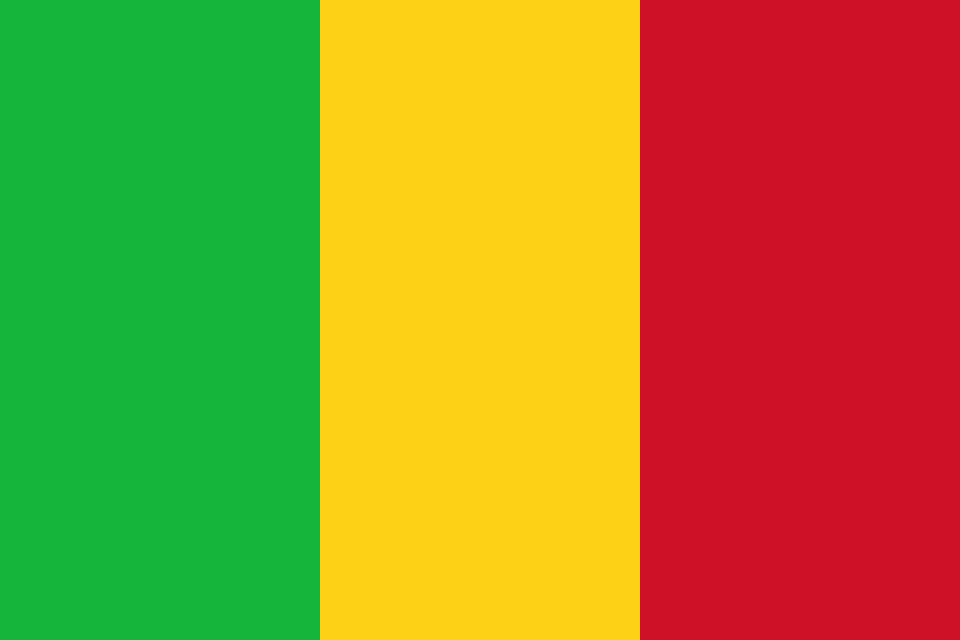
The modern Republic of Mali is anchored in a geography of stark contrasts, its northern borders reaching deep into the middle of the Sahara Desert while its populous south is nourished by the Niger and Senegal rivers.
On September 22, 1960, a new nation emerged into the crisp, expectant air of the West African Sahel, bearing a name that was itself a reclamation of lost majesty. Officially, the Sudanese Republic—a territory that had spent the previous six decades as a landlocked colony of France—rechristened itself the Republic of Mali. The name was chosen with deliberate, almost poetic gravity. Derived from the Mandinka language, "Mali" translates to "the place where the king lives," carrying a profound, ancient connotation of strength. In reclaiming this word, the young state was not merely marking its independence; it was anchoring its identity to the memory of the great medieval Mali Empire, which at its fourteenth-century zenith under Mansa Musa had been the wealthiest state in Africa, a globally renowned cradle of Islamic scholarship, and the golden trade hub of the trans-Saharan world.
Yet the reality of 1960 was far removed from the legendary riches of the ancient Mande kings. The modern Republic of Mali that stepped onto the world stage was a sprawling, landlocked expanse of over 1.2 million square kilometers, its northern reaches stretching deep into the hyper-arid wastes of the Sahara Desert, while its southern, more populous half rested in the Sudanian savanna. Here, the great Niger and Senegal rivers snaked through the soil, providing the lifelines for a population of just 4.1 million people. It was a country born into profound poverty, its economy almost entirely dependent on subsistence agriculture, cotton, and the untapped promise of its gold reserves. The path to this independence had been swift and fractured. Just two years prior, in November 1958, the colony of French Sudan had voted to become an autonomous republic within the French Community. By January 1959, seeking strength in unity, it joined with coastal Senegal to form the Mali Federation. This union, however, was brief and fragile. On June 20, 1960, the federation officially gained independence from France, only for Senegal to withdraw just two months later in August. Left alone, the leaders in Bamako chose to forge ahead, declaring the birth of the sovereign Republic of Mali.
At the helm of this new state was Modibo Keïta, a charismatic leader who had previously campaigned passionately against French colonial authoritarianism, advocating for a free and democratic African future. Once in power, however, Keïta pivoted sharply. Confronting the monumental task of nation-building with an uneducated population—of which almost sixty percent was under the age of twenty-five—Keïta adopted a militant Marxist-Leninist ideology, adapting it into a philosophy of "African socialism." He believed that Mali could bypass the developmental stage of capitalism entirely. His government quickly established a highly centralized one-party state under the Sudanese Union–African Democratic Rally (US-RDA), outlawing all political opposition. Those who dared to challenge the new regime, such as Mamadou Faïnké, were arrested and sentenced to life in prison. Keïta nationalized Mali's economic resources, established strict state control over foreign investments, and aligned the young republic closely with the Eastern Bloc, turning away from the capitalist West in a bid to construct a self-sustaining, socialist society from the ground up.
Connected to
- in country · containsMali1960 CE
- had as citizenSundiata Keita1190 CE
- containsTimbuktu
+ 4 further connections to entries not yet ingested