Organization · 1962 CE · Trans Saharan Trade
Algeria
- Also known as
- A-lu-che-jiah-ī-lù
- Aildiria
- Alazëri
- Alcheria
- Aldjereye
- ALG
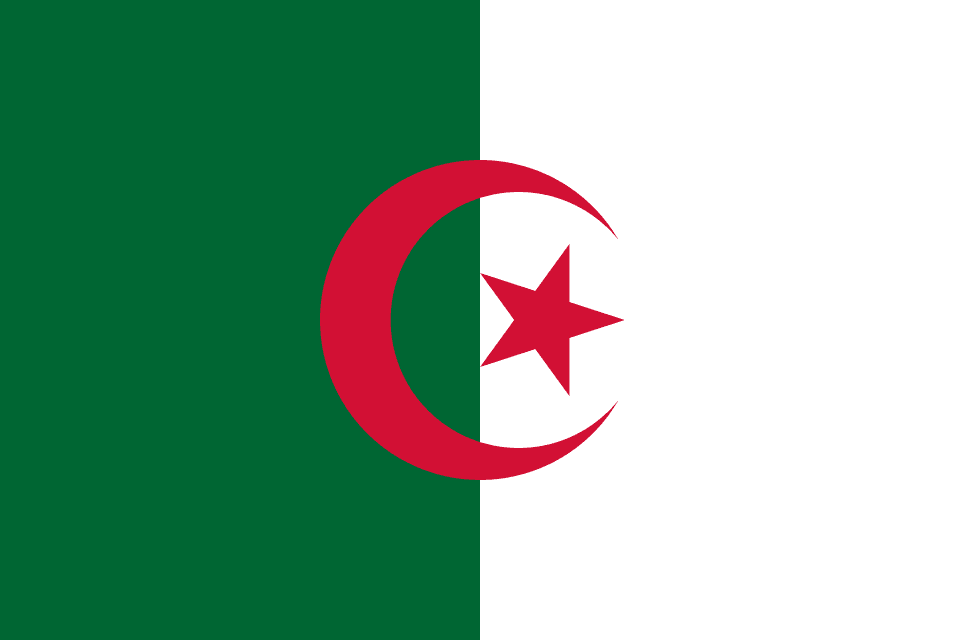
For millennia, the vast territory of Algeria has served as a crossroads where empires collided and merged, from the ancient Phoenicians, Numidians, and Romans to the Arab Muslim migrations that reshaped its cultural fabric from the seventh century onward.
In the early days of July 1962, the streets of Algiers transformed into a roaring sea of green, white, and red. The transition from one of the most fiercely defended territories of the French empire to an independent republic was not merely a political handover; it was a profound, convulsive rupture. For over a century, the jagged Mediterranean coastline and the vast desert hinterland of this North African territory had been bound to France by an administrative fiction that treated three Algerian departments—Oran, Algiers, and Constantine—not as colonies, but as integral soil of the metropole itself. When that bond finally sheared, it ended a war of staggering brutality and closed a long cycle of conquest, settlement, and resistance that had remade the geography of the Maghreb. The birth of the modern Algerian state in 1962 was the climax of a struggle against a colonial system that had systematically sought to displace the indigenous population, alter the landscape, and subsume an ancient cultural crossroads into the modern European project.
To understand the scale of the transformation in 1962 is to look back to the arrival of French forces in 1830. When the invading fleet first anchored off the inhospitable, current-swept northern coast, they encountered a society shaped by centuries of maritime power and complex political autonomy. Under the Regency of Algiers, established in 1516 as a largely independent tributary of the Ottoman Empire, the territory had developed its own distinct administrative borders, defensive systems, and a sovereign political identity. Yet the French conquest, formally consolidated by annexation in 1848 though not fully pacified until the turn of the twentieth century, sought to systematically dismantle this structure. What followed was a massive influx of European settlers who claimed the fertile valleys of the Tell—the rich agricultural strip nestled between the Mediterranean and the high, arid plateaus of the interior. As colonial estates spread across alluvial plains like the Mitidja, the indigenous Arab and Berber populations were systematically marginalized. Through warfare, introduced diseases, and resulting starvations, the native population declined by as much as a third by the mid-1870s. For decades, the colony was celebrated by its proponents as a potential granary, a Mediterranean garden, and a training ground for the French military. But to the millions of disenfranchised Algerians living in the shadow of the Atlas Mountains, it was a landscape of deep dispossession.
The pressure cooker of colonial rule finally cracked in the mid-twentieth century. The catalyst arrived in May 1945, when nationalist celebrations at Sétif and Guelma erupted into clashes, followed by a severe and disproportionate state crackdown that left thousands of Algerians dead. This violence shattered any remaining illusions of peaceful reform, igniting a revolutionary current that culminated in the outbreak of the Algerian War of Independence in 1954. For eight years, the conflict raged across the country’s dramatic and punishing topography—from the urban labyrinth of the Algiers Casbah to the formidable, pine-crested ridges of the Kabylia mountains and the scorching reaches of the Saharan Atlas. It was a war of absolute positions, characterized by guerrilla skirmishes in the deep, rocky canyons of the Aurès and brutal counter-insurgency campaigns in the northern forests. When the Evian Accords finally brought a ceasefire and a referendum on self-determination in 1962, the cost of liberation was written in the ruined villages of the interior and the sudden, panicked exodus of nearly a million European settlers, who abandoned their homes and farms in a matter of weeks, leaving behind a nation exhausted, traumatized, and entirely free.
Connected to
- in country · containsAlgeria1962 CE
- containstrans-Saharan trade
+ 5 further connections to entries not yet ingested