Place · 1956 CE · Trans Saharan Trade
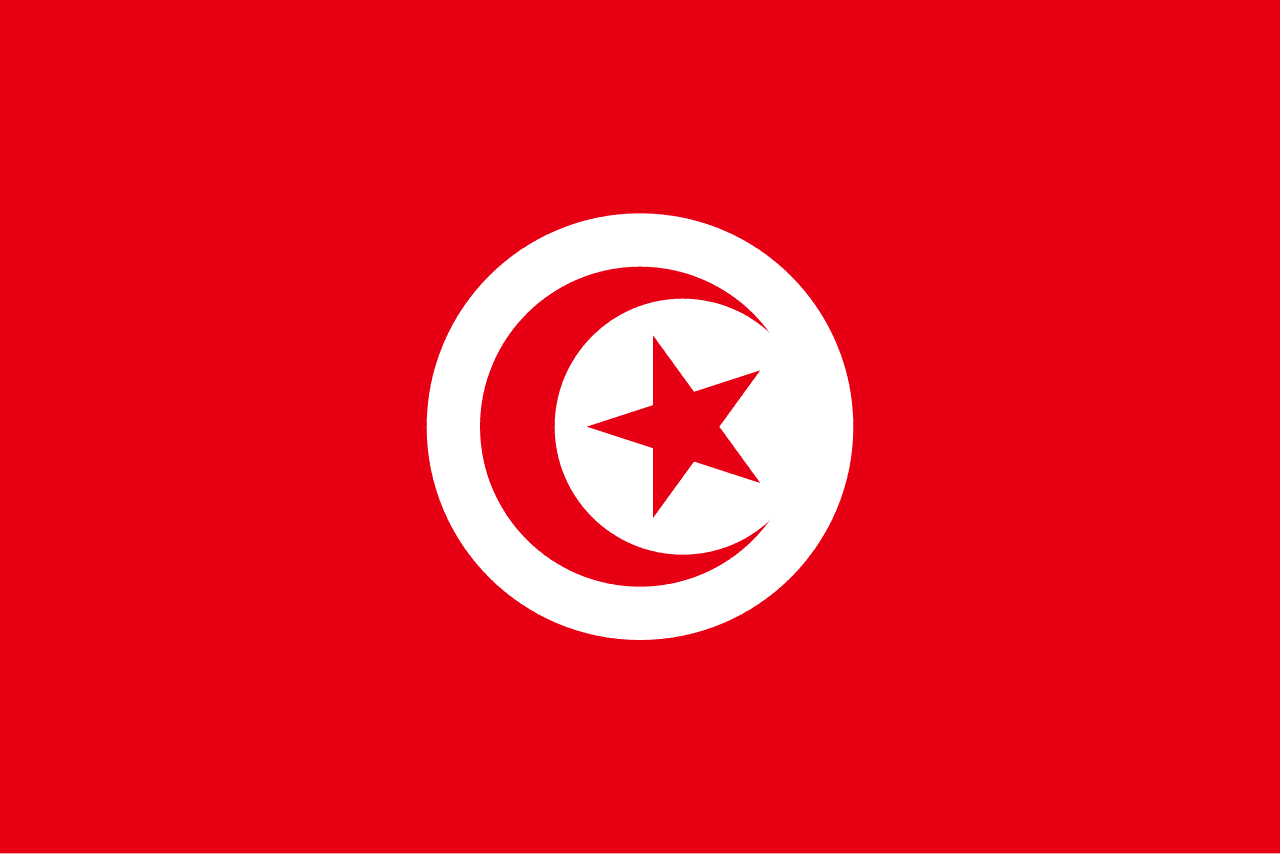
Tunisia
- Also known as
- An Túinéis
- Cộng hòa Tunisia
- Cộng hòa Tuy-ni-di
- Den tunisiske republikk
- Ghą́ą́ʼaskʼidii Biłikahii Bikéyah Yázhí
- Gweriniaeth Tiwnisia
Where the Sahara desert meets the deep blue of the Mediterranean, Tunisia sits at the geographic hinge where the eastern and western basins of the sea collide.
High on the sun-bleached cliffs of Cape Angela, the northernmost tip of the African continent, the land drops precipitously into the deep blue of the Mediterranean Sea. From this vantage point, Europe is not a distant abstraction but a neighbor just beyond the horizon; the Italian islands of Sicily and Sardinia lie a short voyage away, and Malta sits sentinel to the east. This geographic reality has defined the territory of modern-day Tunisia for millennia. It is a narrow, vital hinge where the western and eastern basins of the Mediterranean meet, a fertile strip of arable land sandwiched between the Atlas Mountains and the vast, silent wastes of the Sahara. Along its coast, where the Majerda River forms extensive plains near the ancient ruins of Utica, the landscape mirrors the olive groves and pine-forested hills of southern Spain and Italy. Further south, the land transitions into a bleaker, wind-swept central plateau covered in esparto grass, before dropping into the blinding white salt crusts of the southern depressions—the vast seasonal lakes known as shats—and finally dissolving into the dunes of the desert. For thousands of years, this compact geography, measuring just over one hundred and sixty thousand square kilometers, has acted as an irresistible magnet and a crucible for empires.
The story of this land did not begin with the great empires of antiquity, but with the indigenous Berbers, semi-nomadic agriculturalists who cultivated the humid coastal plains as early as the fifth millennium BCE. Yet the world would come to know this coast through the eyes of seafaring merchants from the Levant. In the ninth century BCE, Phoenician settlers from Tyre, led by the legendary queen Dido, established Carthage on a protective promontory near the modern capital of Tunis. Carthage rapidly evolved from a mercantile colony into a formidable maritime empire, its power symbolized by the widespread worship of the goddess Tanit, whose simple, arms-outstretched icon still marks the stones of ancient ruins. For centuries, the Carthaginians dominated the western Mediterranean, challenging the Greek city-states of Sicily and eventually pushing the young Roman Republic to the brink of ruin during the Second Punic War, when Hannibal famously carried the conflict to the gates of Rome itself. But the geopolitical gravity of the Mediterranean ultimately favored the Italian peninsula. In 146 BCE, at the conclusion of the Third Punic War, Roman legions systematically destroyed Carthage, renaming the conquered territory "Africa" and integrating it as a vital agricultural province. Under Roman rule, which lasted for nearly eight centuries, the region flourished, leaving behind engineering marvels like the colossal amphitheater of El Jem and the vast aqueducts fed by the perennial mountain springs of Zaghwan. It became a center of early Christian thought, producing influential figures like the Berber bishop Donatus Magnus, before enduring brief eras of Germanic Vandal invasion and Byzantine reconquest under the eastern emperor Justinian I.
Connected to
- containsCarthage9th c. BCE
- in country · containsTunisia1956 CE
+ 8 further connections to entries not yet ingested