Event · 661 CE – 750 CE · Islamic Caliphates
Umayyad Caliphate
- Also known as
- Bani Umayah
- Bani Umayyah
- Bani Umayyah
- Cailifeacht Umayyad
- Califado Omíada
- Califat de Damas
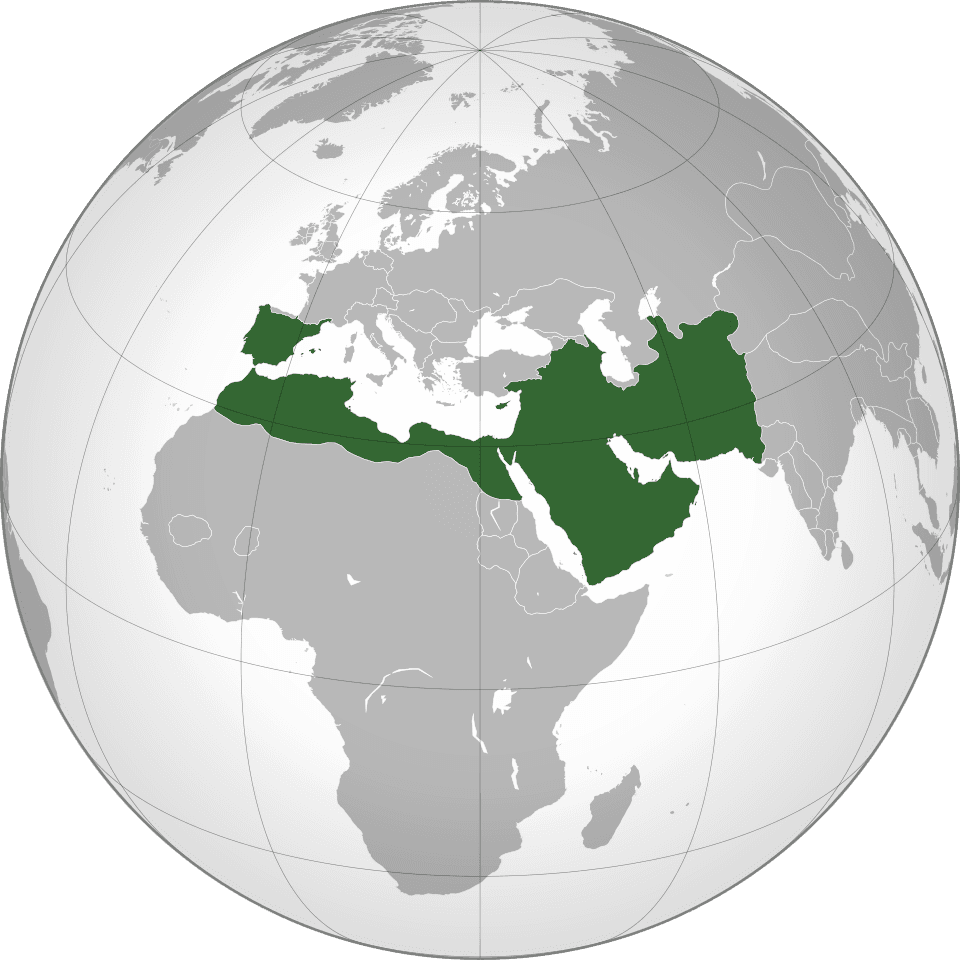
When Mu'awiya ibn Abi Sufyan established hereditary rule in 661 CE, he transformed a young religious movement into a sprawling global empire.
By the middle of the seventh century, the sands of the Syrian Desert held a secret that would transform a spiritual movement into the largest land empire the world had seen since Rome. Unlike the early companions of the Prophet Muhammad who had governed from the austere, pious clay-brick quarters of Medina, Mu'awiya ibn Abi Sufyan looked out from Damascus. For twenty years as governor, he had watched the fractious tribal landscape of the Middle East from this ancient, sophisticated metropolis. When the first major civil war of the Islamic world, the First Fitna, culminated in the assassination of the fourth caliph, Ali, in 661 CE, and the subsequent abdication of Ali’s son Hasan, Mu'awiya stepped into the vacuum. He did not merely claim the title of caliph; he changed its nature. Under his hand, the seat of Islamic power permanently migrated from the Arabian Peninsula to Syria, establishing the Umayyad Caliphate and inaugurating a hereditary dynasty that would stretch its borders from the shores of the Atlantic to the banks of the Indus.
The rise of the Umayyads was a triumph of the old Meccan aristocracy. Decades earlier, the Banu Umayya, a wealthy merchant clan of the Quraysh tribe, had led the bitter resistance against Muhammad's message. But with the capitulation of Mecca in 630 CE, the family, under the patriarch Abu Sufyan, embraced the new faith with pragmatism, trading their fierce opposition for administrative and military roles in the expanding state. Under the third caliph, Uthman ibn Affan—himself an Umayyad—this integration became systemic. Uthman systematically placed his kinsmen in the governorships of newly conquered provinces like Egypt, Iraq, and Syria, believing his clan possessed a unique capacity to rule. His overt nepotism provoked a violent backlash from early converts and local garrisons, ending with Uthman's murder in 656 CE and triggering the civil war. When Mu'awiya emerged victorious from this chaos, he recognized that survival depended on transforming a loose tribal confederation into a structured, institutionalized state.
To govern an empire that now spanned ancient civilizations, the Umayyads relied on the machinery of the empires they had replaced. Damascus, with its deep-seated Roman, Byzantine, and Aramaean administrative traditions, became the perfect laboratory. Rather than imposing immediate, sweeping cultural changes, the early Umayyad caliphs ruled with a surprising degree of pragmatism and religious toleration. In Syria, where the majority of the population remained Christian, Mu'awiya kept the existing Byzantine administrative bureaucracy intact, employing Christian scribes, tax collectors, and advisors. Prominent among them was the family of John of Damascus, whose ancestors had served the Byzantines. This policy of accommodation was not merely practical; it was essential for securing the loyalty of a populous, wealthy, and strategically vital province. Under this system, Christians and Jews were protected as , allowed to practice their faiths in exchange for the payment of the , a poll tax, while Muslims paid the for charitable distribution.
Connected to
- followed byAbbasid Caliphate750 CE
- followsByzantine Empire395 CE
- containsCarthage9th c. BCE
- religionIslam631 CE
- containsMecca